








Story By: Felix Ernest Odamtten / Mohammed Faisal Mustapha….
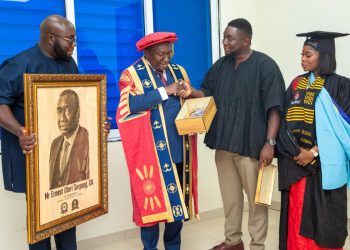
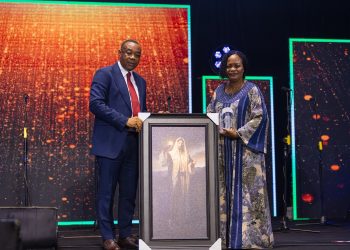
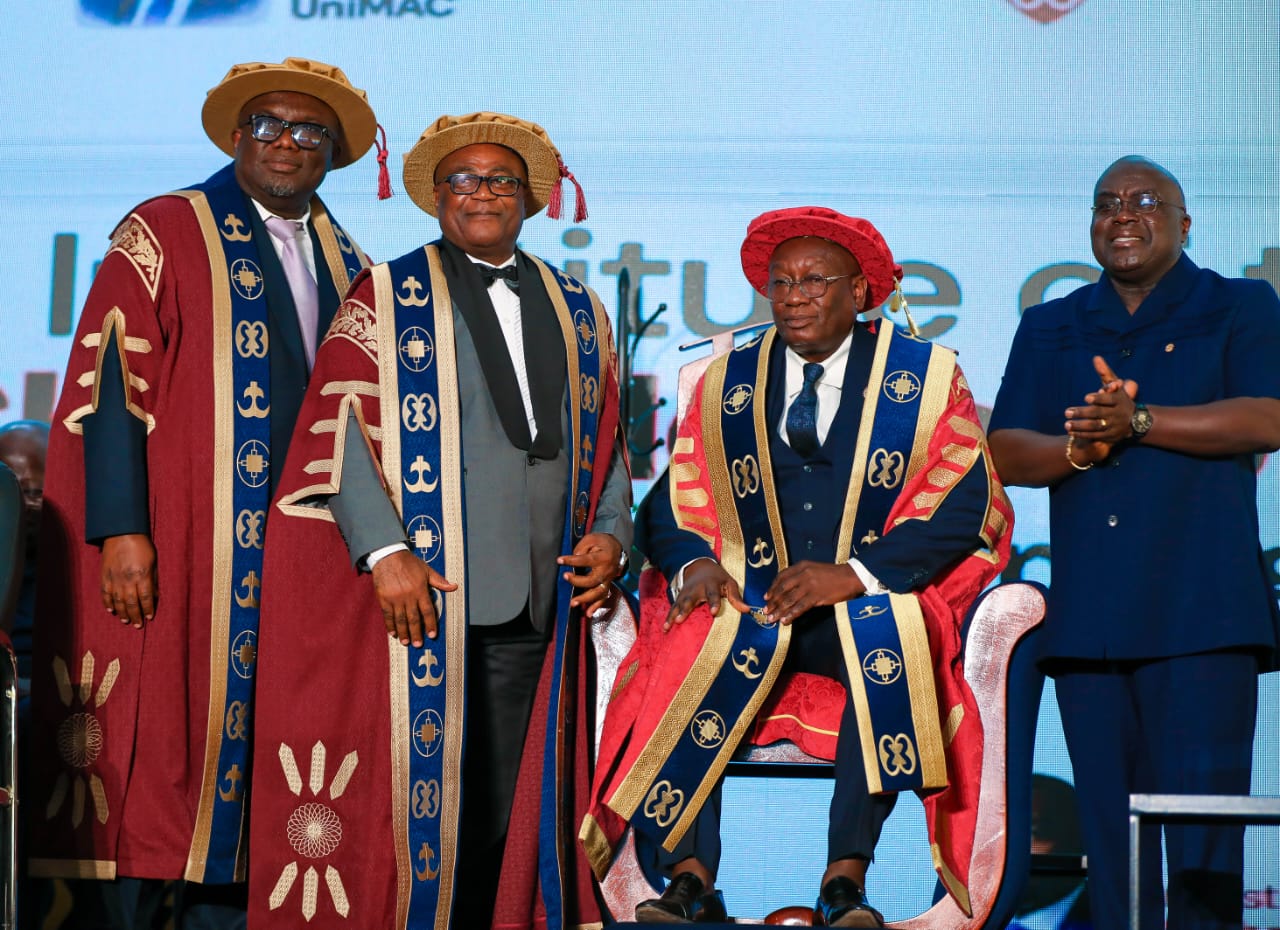
The investiture of Dr. Ernest Ofori Sarpong as the first Chancellor of the University of Media, Arts and Communication (UniMAC) has ushered in a defining moment in the institution’s history, with the distinguished Ghanaian entrepreneur pledging to mobilise leadership, investment and strategic partnerships to transform the university into a globally respected centre of academic excellence, innovation and creative enterprise.
In a compelling address that outlined an ambitious vision for the future, Dr. Ofori Sarpong pledged to work towards strengthening the university’s institutional capacity, expanding its infrastructure, deepening industry collaboration and creating opportunities for students and staff to compete successfully in an increasingly interconnected world.
“Together with you, we will make UniMAC great.”
He described his appointment as both an extraordinary privilege and a significant responsibility, recognising that becoming the first Chancellor placed him in a unique position to establish a legacy that would influence the university’s direction and leadership standards for generations.
“To be the first is a privilege, but it also means I inherit no established path to follow.”
For Dr. Ofori Sarpong, the challenge extends beyond occupying a ceremonial leadership position. It is about helping to build a university whose influence reaches beyond the classroom, shaping national conversations, advancing professional standards and contributing meaningfully to Ghana’s development and Africa’s growing presence in the global knowledge economy.
“Buildings alone cannot make a university great. Its greatest asset remains its people.”
He said his responsibility was to consolidate these historic achievements while positioning the university to respond to emerging opportunities in media, communication, technology, languages and the creative arts. His vision, he indicated, is to build an institution whose academic reputation, professional relevance and international partnerships command recognition across Africa and beyond.
He observed that media, language and communication had become strategic national assets, with far reaching implications for democratic governance, economic development, cultural identity and Ghana’s international influence. He particularly highlighted the growing significance of artificial intelligence and digital transformation, which are reshaping professional practices and demanding new approaches to education.
He also highlighted the need for improved student accommodation, accessibility and a more conducive campus environment, arguing that the university’s physical facilities should reflect its historical contribution and future ambitions. According to him, a university seeking international recognition must provide an environment that inspires learning, research, creativity and innovation.
To address these needs, he pledged to support efforts to mobilise financial and material resources from government, corporate Ghana, development partners, alumni, philanthropists and other stakeholders. He emphasised that the transformation of UniMAC must become a collective national responsibility rather than an undertaking left solely to university management.
However, the Chancellor was quick to point out that physical infrastructure, although essential, was not the ultimate measure of an outstanding university. He maintained that its greatest strength lay in the quality, commitment and professional competence of its people.
He advocated stronger research capacity, international academic partnerships, professional development and an institutional culture that rewards excellence and innovation. His position comes amid government efforts to strengthen research and innovation in tertiary institutions, including the announcement by the Deputy Minister of Education of an initial GH¢100 million seed capital for the establishment of the National Research Fund.
On the future of education and employment, Dr. Ofori Sarpong warned that universities could no longer afford to prepare graduates for a professional environment that was rapidly changing.
He called for deliberate efforts to equip students with the competencies required to navigate artificial intelligence, digital communication, emerging creative technologies and evolving global industry standards.
He nevertheless cautioned that technological advancement must not come at the expense of professional ethics, critical thinking, responsible communication and integrity. In his view, the future of media and creative education must balance technological competence with the human values that sustain public trust and professional credibility.
He called for strategic partnerships with reputable universities, professional bodies and international institutions, expressing the ambition to make UniMAC a preferred destination for students across Africa and a recognised source of highly skilled professionals for employers around the world.
A central pillar of his vision is the establishment of stronger relationships between academia and the private sector. He identified journalism, strategic communication, public relations, film production, translation, foreign languages, advertising, digital content creation and the broader creative economy as sectors where closer collaboration could produce significant benefits.
Dr. Ofori Sarpong maintained that university education must extend beyond preparing young people to search for employment. Rather, graduates should acquire the entrepreneurial mindset, practical competencies and business development skills necessary to establish enterprises, generate employment and contribute directly to economic growth.
His position reflects a similar appeal by the Chief of Staff, Dr. Julius Debrah, who urged UniMAC to prioritise entrepreneurship and equip graduates with the capacity to create businesses and employ others.
Dr. Debrah observed that the appointment of an experienced businessperson as Chancellor presented an important opportunity to bridge the longstanding gap between academic training and private sector requirements.
Building on that proposition, Dr. Ofori Sarpong proposed stronger industry partnerships that would create practical opportunities for students through internships, industry sponsored research, professional mentorship, scholarships and business development support for promising student entrepreneurs and alumni.
Beyond conventional academic programmes, the Chancellor expressed a strong desire to see UniMAC assume a leading role in developing Ghana’s film, music, theatre, communication and creative industries. He believes the institution has the intellectual and professional capacity to nurture talents capable of producing internationally competitive content, establishing successful creative businesses and projecting Ghanaian culture to the wider world.
At a time when African countries are seeking to expand their influence in the global creative economy, he said UniMAC must become an important centre for developing the skills, ideas and enterprises required to translate the continent’s cultural wealth into sustainable economic opportunities.
Dr. Ofori Sarpong further pledged to promote unity, accountability, integrity, responsible management and continuous institutional improvement throughout his tenure. He expressed confidence that close cooperation among the Governing Council, university management, faculty, administrative staff, students, alumni and external stakeholders would provide the foundation for achieving the institution’s long term ambitions.
His concluding appeal was directed at government, corporate institutions, international development partners, alumni and philanthropists to invest in the university’s future, stressing that the success of UniMAC would have implications extending far beyond its campuses.
“Together with you, we will make UniMAC great,” he declared, delivering a message of collective responsibility, institutional ambition and confidence in the university’s potential.
For UniMAC, the first Chancellorship represents an opportunity to redefine its place in Ghana’s higher education landscape and strengthen its contribution to Africa’s media, communication and creative industries. The expectations surrounding Dr. Ofori Sarpong’s tenure will therefore be measured not only by the promises made at his investiture but, more importantly, by the partnerships established, opportunities created and lasting institutional transformation achieved.