

















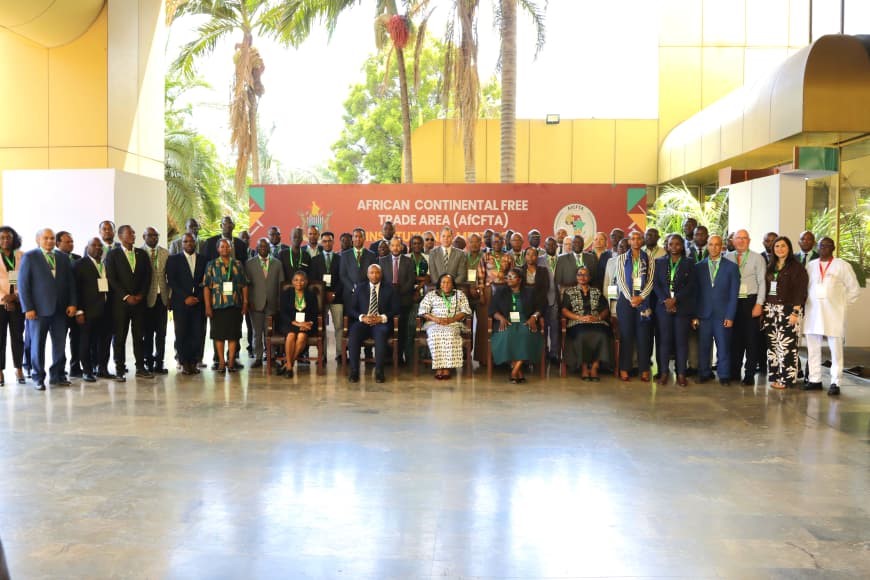
Senior trade officials from across Africa have gathered in Harare, Zimbabwe, to advance the implementation of the African Continental Free Trade Area (AfCFTA) Agreement and strengthen efforts to make cross-border trade easier and more accessible for African businesses.
The 23rd Meeting of the AfCFTA Committee of Senior Trade Officials, which opened on Tuesday, 24 November 2026, brings together representatives of State Parties for three days of technical deliberations ahead of the meeting of the AfCFTA Council of Ministers later this week.
Hosted by the Government of Zimbabwe, the meeting represents an important step in the continent’s efforts to translate its trade commitments into practical economic opportunities for businesses and citizens.
Discussions will focus on several critical areas of AfCFTA implementation, including rules of origin, non-tariff barriers, trade in services, investment, digital trade, customs cooperation, dispute settlement, intellectual property rights, trade statistics and national implementation of the Agreement.
The participation of women and young people in trade also features prominently on the agenda, reflecting the importance of inclusive economic integration in Africa’s development aspirations.
Speaking on behalf of the AfCFTA Secretariat, the Director of Coordination and Programmes, Dr. Tsotetsi Makong, underscored the urgency of accelerating the implementation of the Agreement amid growing uncertainties in the global trade, finance and investment environment.
He highlighted the need for Africa to address longstanding structural challenges inherited from its historical trading arrangements, which continue to affect the continent’s ability to harness its economic potential.
Making the Single African Market Work for Businesses
Although largely technical, the issues under consideration have significant implications for African businesses, particularly micro, small and medium-sized enterprises (MSMEs) seeking to expand beyond their domestic markets.
Progress on rules of origin, for instance, will help businesses determine whether their products qualify for preferential tariffs under the AfCFTA, while addressing non-tariff barriers and improving customs procedures could reduce the difficulties associated with moving goods across African borders.
Similarly, advancing implementation in digital trade, investment and trade in services could unlock new commercial opportunities and strengthen the participation of African entrepreneurs in regional and continental value chains.
The meeting is expected to produce actionable recommendations for consideration by the AfCFTA Council of Ministers, helping to bridge the gap between negotiated commitments and their effective implementation.
As Africa navigates an increasingly uncertain global economic environment, strengthening intra-African trade remains an important avenue for building economic resilience, promoting industrialisation, creating employment and reducing external dependence.
The Harare meeting therefore represents another significant step towards transforming the vision of a single African market into a practical economic reality, where African businesses can trade more easily, expand their operations and contribute to the continent’s shared prosperity.