
















Ghana is targeting 70 per cent population coverage with fifth-generation (5G) mobile technology by March 2027, as government steps up efforts to strengthen the country’s digital infrastructure and expand access to advanced telecommunications services.
Minister for Communication, Digital Technology and Innovations, Samuel Nartey George, says the telecommunications industry will play a critical role in achieving the target, alongside government’s broader ambition to position Ghana as a competitive digital economy.
He said the sector’s impressive economic performance underscores its importance to the country’s digital transformation agenda, particularly as government rolls out major initiatives in technology, innovation and artificial intelligence.
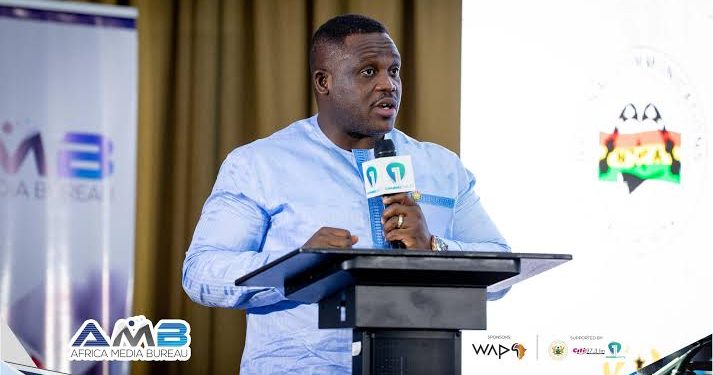
Speaking at the Ghana Chamber of Telecommunications’ 15th Anniversary Gala and Recognition Night, Mr George disclosed that the telecommunications sector recorded a growth rate of 27.2 per cent by mid-2026, exceeding its full-year growth projection of 25 per cent.
The performance also makes telecommunications the strongest-performing component of the services sector.
According to the minister, the industry has consistently outperformed growth expectations, recording 20.2 per cent growth in 2025 against an initial projection of 17.2 per cent.
“Last year, we were billed to grow at 17.2%. End of year last year, we grew at 20.2%. This year, we are billed to grow at 25%. By mid-year, we’ve grown 27.2% already,” he stated.
Mr George attributed the growth partly to improved collaboration between government and telecommunications operators, particularly in creating a favourable policy and investment environment.
He cited recent spectrum allocations in the 700MHz, 2.3GHz and 3GHz bands as important interventions intended to increase network capacity, improve connectivity and accelerate the deployment of next-generation mobile technologies.
“That is the result of cooperation and policy,” he said.
The minister urged industry players to recognise their strategic responsibility in supporting government’s digitalisation programmes, including the One Million Coders Programme and the National Artificial Intelligence Strategy.
He stressed that the success of these initiatives would depend largely on reliable and accessible telecommunications infrastructure.
“Your networks carry our ambition,” he told industry stakeholders.
The government’s 5G expansion target forms part of a wider strategy to improve digital connectivity, strengthen technology-driven businesses and create opportunities for innovation across the country.
The minister’s remarks come at a time when telecommunications infrastructure is increasingly becoming central to economic activity, public service delivery and Ghana’s ambition to accelerate its digital transformation.