
















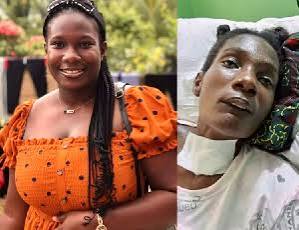
Sandra Baafi Boateng, a 25-year-old nurse who sustained severe head injuries during the Ghana Armed Forces (GAF) recruitment stampede at the Baba Yara Sports Stadium in Kumasi, has reportedly died after battling for her life for nearly a year.
Her death marks a tragic end to a prolonged medical ordeal following the November 12, 2025, incident, which claimed several lives and left many others injured during a recruitment exercise organised by the Ghana Armed Forces.
Sandra was among the victims who suffered critical injuries when thousands of applicants reportedly surged towards the recruitment centre, triggering a stampede at the stadium in the Ashanti Regional capital.
The incident overwhelmed the available emergency response arrangements, leaving several applicants injured and requiring urgent medical attention.
Sandra sustained serious head injuries and was subsequently rushed to the hospital for emergency treatment. Her condition was considered critical, necessitating prolonged medical care and close monitoring by health professionals.
She initially received intensive treatment at the Komfo Anokye Teaching Hospital (KATH) in Kumasi before being transferred to the 37 Military Hospital in Accra for further specialised medical attention.
Her treatment reportedly involved several months of hospitalisation as medical personnel worked to stabilise her condition and manage complications arising from the injuries.
After spending an extended period in medical care, she was eventually discharged to continue her recovery under home-based care.
However, despite the efforts made to save her life and support her recovery, Sandra reportedly passed away, leaving her family, friends and loved ones devastated.
Her death has renewed attention on the devastating consequences of the recruitment stampede and the long-term challenges confronting victims who sustained life-threatening injuries.
The tragedy had triggered widespread public concern over the safety arrangements surrounding mass recruitment exercises, particularly the management of large crowds at designated recruitment centres.
It also generated calls for improved crowd-control measures, adequate emergency medical preparedness and stronger coordination between security agencies and health facilities during major public recruitment activities.
Beyond the immediate casualties, the incident exposed the financial, emotional and psychological difficulties families of severely injured victims could face while caring for their loved ones over extended periods.
Sandra’s prolonged medical battle had attracted public sympathy, with concerns raised about the need for sustained government support for victims whose lives were permanently affected by the incident.
Her reported death is likely to renew demands for accountability, improved recruitment procedures and adequate assistance for families of those who suffered serious injuries.
The Ghana Armed Forces and the relevant authorities are expected to face renewed scrutiny over measures introduced to prevent a recurrence of the tragedy.
Sandra Baafi Boateng’s death represents another painful reminder of the human cost of the recruitment stampede and the need to ensure that public recruitment exercises are conducted with the highest standards of safety and preparedness.