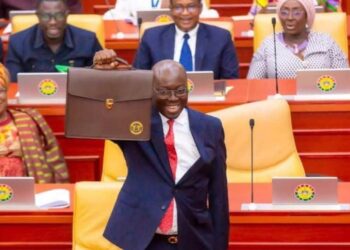















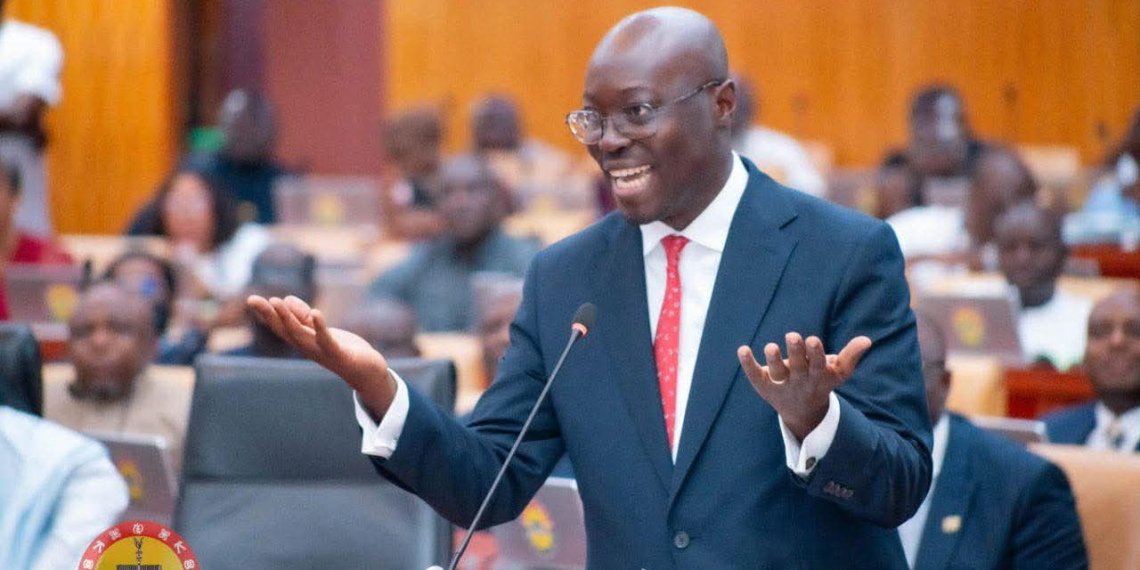
Government is targeting at least five per cent economic growth in 2027, alongside an increase in capital investment to GH¢89.7 billion, as Finance Minister Dr Cassiel Ato Forson prepares to present the 2027 Budget Statement and Economic Policy to Parliament.
The proposed fiscal framework seeks to consolidate the gains from economic stabilisation while creating room for infrastructure development, industrial expansion and job creation under the government’s New Economy agenda.
The budget, scheduled for presentation on Thursday, November 12, will outline government’s revenue mobilisation strategy, expenditure priorities and economic reforms for the coming year.
Under the proposed macroeconomic targets, overall real Gross Domestic Product (GDP) growth is expected to reach a minimum of five per cent, with non-oil GDP growth also projected at five per cent.
Government has set an end-period inflation target of eight per cent, within the Bank of Ghana’s medium-term target band of six to 10 per cent.
The fiscal framework also targets a primary surplus of 0.5 per cent of GDP, compared with the 1.5 per cent target for 2026, suggesting a more moderate approach to fiscal consolidation.
Gross international reserves are expected to increase to at least six months of import cover, while public debt is projected at 43 per cent of GDP.
The targets come against the backdrop of improving economic indicators in 2026, with real GDP growth reaching six per cent in the second quarter, exceeding the 4.8 per cent full-year target.
Inflation also declined to 5.5 per cent in October, while the primary balance recorded a surplus of 0.9 per cent of GDP in the second quarter.
Gross international reserves stood at 4.2 months of import cover in August, exceeding the three-month minimum target.
Revenue and spending framework
Government is projecting total revenue and grants of GH¢314 billion, representing 17.3 per cent of GDP, to finance its programmes and statutory obligations.
Domestic revenue is expected to contribute GH¢310.8 billion, including gross non-oil tax revenue of GH¢264.3 billion.
The revenue strategy is expected to prioritise improved tax compliance, stronger customs administration, expansion of the tax base and measures to address revenue leakages.
Deputy Finance Minister Thomas Nyarko Ampem has indicated that government does not intend to introduce new taxes in the 2027 Budget, with the focus instead on expenditure rationalisation and savings from reduced public spending.
On expenditure, compensation of employees is projected at GH¢104.1 billion, while capital expenditure is estimated at GH¢89.7 billion.
Grants to other government units are expected to reach GH¢76.3 billion, with interest payments projected at GH¢61.3 billion.
The allocation to capital expenditure will be particularly important in determining how much fiscal room government can create for infrastructure and other development projects while meeting its wage and debt-servicing obligations.
US$10bn New Economy programme
A major feature of the government’s medium-term development strategy is the proposed US$10 billion New Economy investment programme covering 2027 to 2030.
The initiative is designed to accelerate industrialisation, expand domestic production, promote value addition and generate employment.
Priority sectors include commercial agriculture and agribusiness, energy, critical minerals, textiles and garments, tourism, creative arts and pharmaceutical manufacturing.
The budget is also expected to provide further details on financing and implementation arrangements for the programme, including strategies to mobilise domestic resources and attract private-sector investment.
Government’s flagship initiatives, including the Big Push infrastructure programme, the 24-Hour Economy and the Gold Refining Initiative, are also expected to feature in the spending framework.
The Big Push has a programmed allocation of GH¢27.5 billion from domestic resources and the Annual Budget Funding Amount.
The Gold Refining Initiative, meanwhile, seeks to establish local refining capacity of at least one metric tonne of gold weekly.
Fiscal reforms and accountability
Beyond economic growth and infrastructure investment, the 2027 Budget is expected to outline reforms to strengthen public financial management and improve accountability in the use of state resources.
Among the proposed measures are plans to make the Fiscal Council fully operational from 2027 and restore uncapped statutory transfers to the National Health Insurance Scheme, GETFund, the Road Maintenance Trust Fund and the Ghana National Petroleum Corporation.
The reforms are expected to strengthen fiscal oversight and improve the flow of statutory funds to their designated institutions.
The International Monetary Fund has also stressed the importance of stronger project appraisal, competitive procurement and tighter expenditure controls to ensure value for money under the New Economy programme.
Ultimately, the success of the 2027 fiscal framework will depend on government’s ability to translate its growth targets and investment commitments into tangible economic outcomes.
Businesses and households will be looking for evidence that improved macroeconomic stability can translate into stronger private-sector activity, sustainable employment, increased productivity and improved living standards without undermining fiscal discipline.