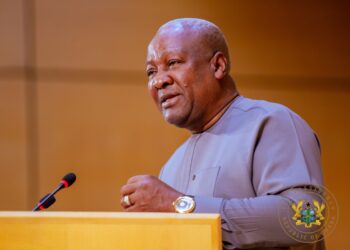















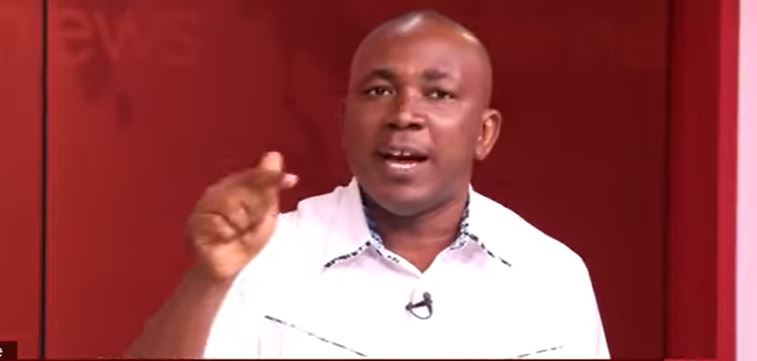
Economics Professor Godfred Alufar Bokpin has urged the government to move beyond expenditure cuts and prioritise infrastructure investment and productive capacity, warning that economic stability will mean little if improvements are not reflected in the daily lives of Ghanaians.
He said although government had made progress in restoring macroeconomic stability, its reliance on spending restrictions was slowing the translation of economic gains into tangible benefits for households and businesses.
Speaking on Joy News’ PM Express on Tuesday, Prof Bokpin cited the poor state of road infrastructure and long travel times as examples of challenges that make declining inflation difficult for ordinary citizens to appreciate.
“If somebody is spending nine to 12 hours to travel from here to Kumasi, inflation of 5.2% means nothing to that person,” he said.
He also referred to the difficulties commuters experience on the Accra-Tema Motorway, arguing that improvements in economic indicators must be accompanied by better infrastructure and public services.
According to him, the approach adopted to restore macroeconomic stability would take time to improve living conditions because it had focused heavily on reducing demand rather than expanding the economy’s ability to produce.
“It’s simply because the approach we have adopted in restoring macroeconomic stability is going to take a while to reflect in the lives of Ghanaians,” he stated.
Prof Bokpin argued that while spending cuts could help reduce inflationary pressures, they could also constrain economic growth if applied in a country facing significant infrastructure deficits.
“If you choose that approach, you will get the result, but the impact will not be felt by Ghanaians,” he cautioned.
He maintained that Ghana needed substantial investment in infrastructure and other growth-supporting sectors to address structural weaknesses and create the conditions for sustainable economic expansion.
“So, for a country that is saddled with a huge infrastructure deficit, imposing restrictions on the growth drivers of the economy, such a country cannot celebrate extensive austerity expenditure cuts,” he added.
2027 Budget faces expectations for economic transformation
The economist’s comments come ahead of the presentation of the 2027 Budget by Finance Minister Dr Cassiel Ato Forson on Thursday, November 12.
The Finance Minister is expected to outline government’s New Economy programme, a four-year framework aimed at shifting the country’s economic focus towards productive investment, industrial expansion and structural transformation.
The proposed initiative is expected to build on the gains from the government’s economic recovery programme and direct resources towards sectors capable of expanding domestic production and creating jobs.
The Minority in Parliament has, however, questioned the proposed programme’s financing arrangements and demanded accountability for existing flagship initiatives.
It has also raised concerns about the disconnect between falling inflation and the cost of living faced by households.
Despite his concerns about the pace at which economic recovery is reaching citizens, Prof Bokpin acknowledged government’s progress in stabilising the economy during its first two years.
He cited declining inflation and interest rates, as well as the cedi’s relative resilience despite renewed pressure.
“To that extent, and to the extent that that is what we are set out to achieve in the first two years of the administration, I would say they’ve done quite well in restoring macroeconomic stability,” he said.
He indicated that the next phase of government’s economic management should focus on moving from stabilisation to transformation, with greater attention to infrastructure development, production and improvements in living standards.