










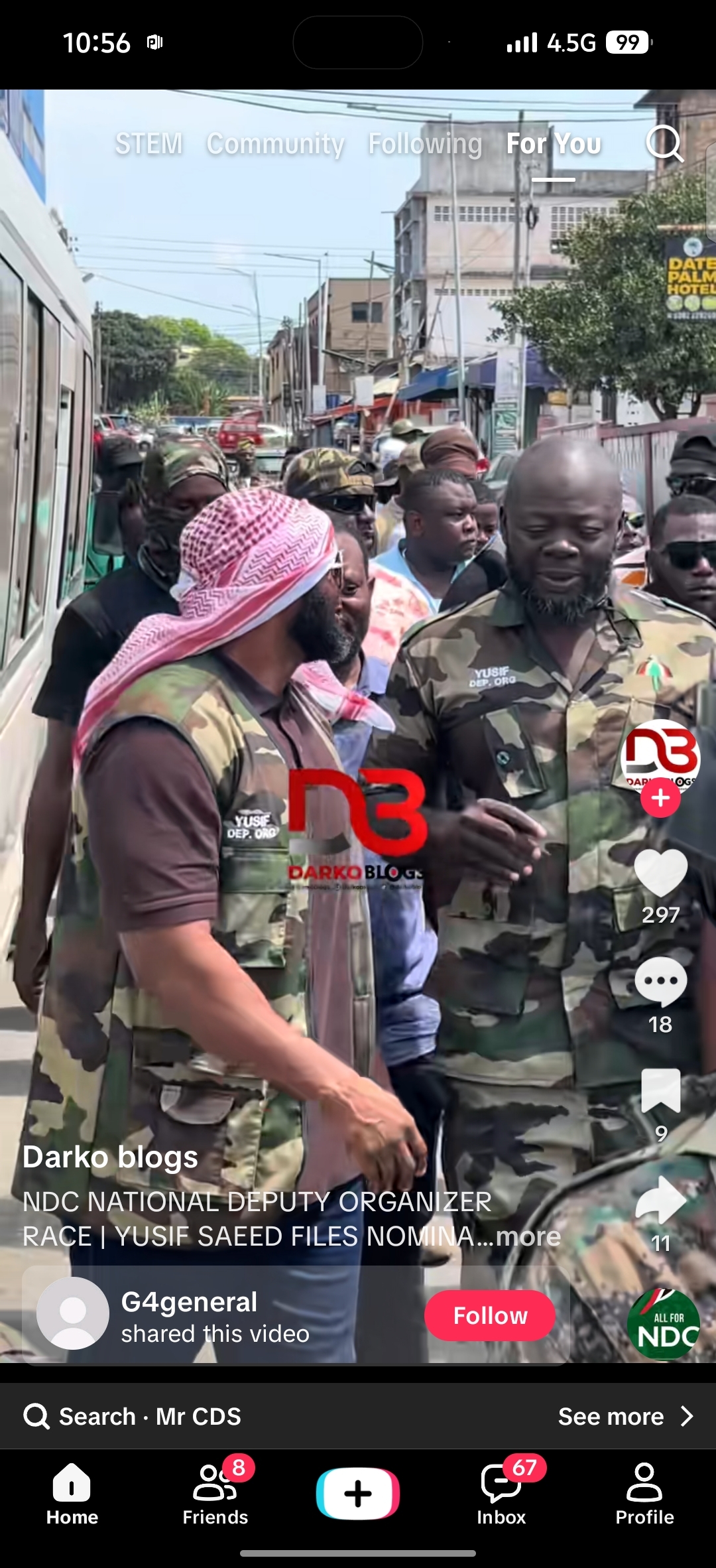
Serious concerns have been raised over the appearance of individuals dressed in military uniforms and allegedly carrying firearms during the filing of nominations by aspirants seeking various positions in the National Democratic Congress (NDC) national executive elections.
The disturbing development has reignited questions about public security, the misuse of military uniforms and the growing tendency for individuals to resort to intimidation and displays of force during internal political party activities.
Reports and allegations surrounding the incident suggest that some of the individuals in military uniforms were not serving members of the Ghana Armed Forces, but allegedly included known political party foot soldiers and individuals described as land guards.
If these allegations are established, the incident represents a serious breach of public order and raises fundamental questions about how individuals who are not authorised military personnel could openly wear military uniforms and allegedly carry firearms at a political gathering.
Ghana is a constitutional democracy governed by laws, not a country where political activities should become opportunities for armed intimidation, the unlawful display of weapons or the impersonation of security personnel.
The incident demands urgent attention from the Ghana Armed Forces, the Ghana Police Service and the relevant national security authorities.
**The military high command must answer some fundamental questions:**
1. Were the individuals in military uniforms serving members of the Ghana Armed Forces?
2. If they were not military personnel, how did they obtain and openly wear military uniforms?
3. Were the alleged firearms legally licensed, and were the individuals authorised to carry them at the venue?
4. Were serving military personnel aware of the presence of these individuals?
5. What measures are being taken to investigate the alleged impersonation of military personnel and the possible misuse of military attire?
The Ghana Armed Forces must not allow its respected uniform and institutional identity to be exploited for political intimidation or personal security arrangements by unauthorised individuals.
The police and national security agencies must also establish whether any laws were breached and ensure that those found culpable are held accountable, regardless of their political affiliations or connections.
It is particularly troubling that an exercise meant to facilitate democratic participation within a political party could be overshadowed by allegations of armed men in military attire.
Ghana cannot afford to normalise such conduct. Today, it may happen during an internal party election; tomorrow, the same practice could find its way into other public gatherings, political campaigns and national electoral activities.
Political competition must never become a licence for lawlessness.
The question Ghanaians deserve answers to is simple: **Are we gradually building a nation where political affiliation, connections and displays of force are placed above the rule of law?**
The military high command, the police administration and national security authorities owe the public an explanation. An independent investigation is necessary to establish the facts, identify those involved and prevent a recurrence.
The sanctity of Ghana’s security institutions and the safety of the public must not be compromised.