











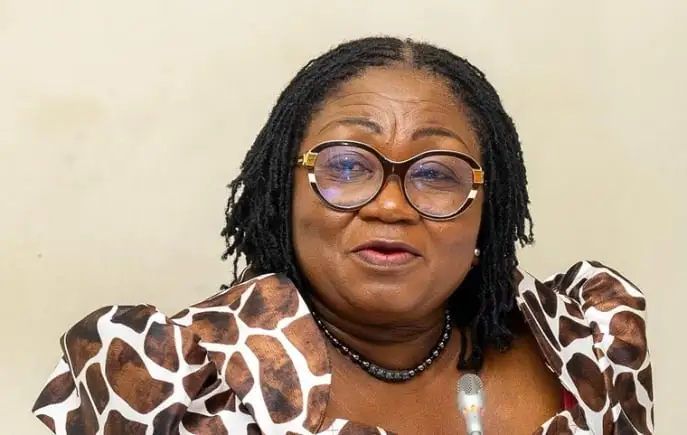
Deputy Minority Leader Patricia Appiagyei has challenged the government to demonstrate how its GH¢48 billion allocation to the education sector in the 2027 Budget will translate into improved learning outcomes, employable graduates and better-equipped schools.
She argued that increased budgetary allocations alone would not guarantee meaningful progress unless government could show measurable improvements in the quality of education and the skills acquired by students.
Contributing to the budget debate in Parliament, the Asokwa MP said the country’s education system must be assessed beyond enrolment figures, infrastructure development and examination participation.
She stressed the need to determine whether students were acquiring relevant knowledge, teachers were adequately supported and schools had the facilities required to deliver quality education.
Appiagyei also expressed concern about the growing disconnect between academic qualifications and the practical skills required by employers.
She called for stronger integration of technical and vocational education, digital skills, entrepreneurship and problem-solving into the national curriculum to prepare young people for the changing demands of the economy.
Appiagyei demands accountability on Women’s Development Bank
The Deputy Minority Leader also questioned the practical benefits of the GH¢3.4 billion allocated to the Ministry of Gender, Children and Social Protection, particularly for women-owned businesses.
While acknowledging government’s commitment to establishing a Women’s Development Bank with a reported GH¢400 million capitalisation, she insisted that the initiative must move beyond announcements.
She called for affordable lending products, transparent eligibility requirements and measurable targets to ensure women entrepreneurs could access the financial support they needed.
She further urged government to address barriers limiting women’s access to capital, land, technology, markets and public procurement opportunities.
Appiagyei also advocated a gender-responsive budgeting framework to track the impact of public expenditure on women across government ministries and institutions.
“Gender must not remain the responsibility of the Ministry of Gender alone. It must become a national development responsibility,” she said.
Questions district assemblies’ funding
The Asokwa MP further raised concerns about the adequacy and timely release of funds to Metropolitan, Municipal and District Assemblies (MMDAs).
She questioned how much of the resources allocated to local government institutions actually reached the districts, arguing that the budget did not provide sufficient clarity on the transfers.
According to her, government must demonstrate how funding for the assemblies would translate into tangible development projects, including roads, markets, sanitation facilities, healthcare infrastructure and improved schools.
She called for stronger fiscal decentralisation, improved local revenue mobilisation and measurable performance indicators to assess the work of district assemblies.
“Development cannot be decentralised in name while financial decision-making and implementation remain excessively centralised,” she stated.
Warns over GRIDCo’s role in industrialisation
On the energy front, Appiagyei identified the performance of the Ghana Grid Company (GRIDCo) as critical to the country’s industrialisation agenda.
She argued that government’s plans to expand manufacturing, promote local production and implement the 24-hour economy would depend heavily on a reliable and efficient electricity transmission system.
The MP maintained that education, women’s economic empowerment, energy security and effective local governance were interconnected and must be addressed as essential components of national development.
“A woman cannot grow her business without access to capital and reliable electricity,” she said.