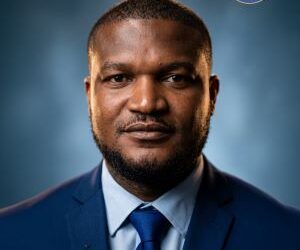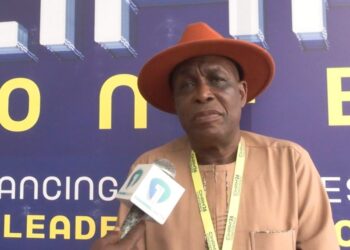
















The Executive Director of the Africa Sustainable Energy Centre (ASEC), Ing. Justice Ohene Akoto, has called for the scrapping of the GH¢1 fuel levy and far-reaching reforms at the Electricity Company of Ghana (ECG), arguing that consumers should not continue paying for the inefficiencies of the power distribution company.
He says government must address the structural weaknesses driving the energy sector’s recurring debts instead of relying on additional levies and repeated financial injections to keep the system running.
Speaking on the Asaase Breakfast Show on Wednesday, November 11, Mr Akoto described the fuel levy as a temporary measure that shifts the financial burden of an inefficient energy system onto ordinary Ghanaians.
He argued that the levy was introduced when international crude oil prices were declining and the cedi was performing relatively well against the US dollar, creating a false sense of security about the sector’s financial position.
According to him, subsequent increases in global oil prices exposed the weaknesses in the arrangement and forced government to intervene to cushion consumers against rising petroleum prices.
Mr Akoto maintained that the underlying problem remained ECG’s inability to collect a significant portion of the revenue owed to it.
He claimed that the company was failing to mobilise more than 30 per cent of its expected revenue, yet continued to accumulate debts that government ultimately had to address.
“What I called was that it was a lazy approach to resolving an issue that has not been resolved,” he said.
He questioned why consumers should be made to pay additional charges when the operational and revenue collection problems responsible for the sector’s financial difficulties had not been adequately addressed.
“So why then do you leave a system that has not been fixed, that keeps going into debt, and then you come and burden the ordinary Ghanaian for an inefficient system that has not been resolved?” he asked.
The ASEC director proposed the privatisation of ECG’s revenue mobilisation and commercial operations to improve efficiency, strengthen collections and reduce the company’s dependence on government support.
He recalled that his organisation had submitted proposals for the restructuring of ECG’s commercial operations through a seven-member committee, with implementation initially expected by the third quarter of 2026.
However, he questioned the delay in executing the recommendations and urged government to demonstrate its commitment to the proposed reforms.
Mr Akoto said improved revenue collection would enable ECG to meet its obligations to independent power producers and fuel suppliers without requiring repeated government bailouts.
“We don’t want to hear that we are just being able to pay the debt. We want to hear that the fundamental structural issues have been resolved and that debt will be paid by itself,” he stated.
He warned that the continued allocation of public funds to settle energy-sector liabilities was depriving other critical sectors, including education and health, of resources.
“There’s so much money that we are pushing into the energy sector that we could equally push into other sectors. We see the education sector struggling. We see the health sector struggling. But here’s the case: we keep making losses in the energy sector and pushing money over there. It’s just like pouring water in a basket,” he said.
Beyond ECG’s financial challenges, Mr Akoto called for a review of electricity tariffs to make power more affordable for manufacturers and improve the competitiveness of Ghanaian businesses.
He cited electricity costs of about US$0.16 per kilowatt-hour for factories in Ghana, compared with approximately US$0.017 in China and Vietnam, arguing that the disparity puts local industries at a disadvantage.
He particularly mentioned the aluminium industry, including VALCO, where international commodity prices limit manufacturers’ ability to transfer higher production costs to customers.
He therefore urged government to consider tariff adjustments that would support industrial growth without undermining the financial sustainability of the energy sector.
On renewable energy, Mr Akoto expressed concern that it accounts for only about two per cent of Ghana’s energy mix, despite an earlier target of increasing the share to 10 per cent by 2030.
He questioned the country’s plans to add another 2,000 megawatts of thermal generation capacity without a corresponding increase in investment in renewable energy.
According to him, the 2027 Budget should outline concrete measures to restructure ECG, abolish the GH¢1 fuel levy, reduce industrial electricity costs and accelerate renewable energy development.
He maintained that addressing these structural issues was essential to ending the energy sector’s dependence on government bailouts and creating a more sustainable and competitive electricity market.