












Ghana risks failing to translate its recent economic gains into better living conditions for businesses and households unless government maintains strict spending discipline and effectively implements its 2027 Budget, KPMG Ghana has cautioned.
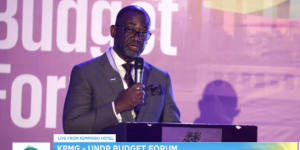
Country Managing Partner of KPMG Ghana, Andrew Akoto, said improved macroeconomic stability alone would not guarantee economic prosperity, stressing that the real test of the budget would be its impact on businesses, entrepreneurs and ordinary citizens.
Speaking at the KPMG-UNDP Budget Forum on Thursday, November 19, 2026, he said government must move beyond announcing policies and allocating resources to ensure that its commitments deliver measurable economic benefits.
“The question before us today is therefore not simply whether the numbers add up. It is whether the choices set out in the budget can change the lived experiences of businesses, households and entrepreneurs,” he stated.
Mr Akoto highlighted the proposed US$10 billion New Economy initiative as a major opportunity to accelerate Ghana’s economic transformation.
The four-year programme is expected to target strategic sectors, including commercial agriculture, energy, infrastructure, minerals and value addition, tourism, pharmaceuticals and technology.
However, he cautioned that the success of the initiative would depend on its ability to create real opportunities, stimulate business growth and improve the livelihoods of Ghanaians rather than the size of its financial allocations.
He further warned that the economic progress recorded so far could be threatened by rising expenditure pressures as the country approaches another political cycle.
Mr Akoto also identified external uncertainties, including fluctuations in commodity prices and geopolitical disruptions, as potential threats to Ghana’s economic outlook.
He therefore emphasised the need for sustained fiscal discipline and effective implementation of the 2027 Budget to protect recent economic gains and ensure that improved stability translates into tangible benefits for the private sector and households.
His comments place the spotlight on budget execution as a critical test of the government’s economic transformation agenda.