










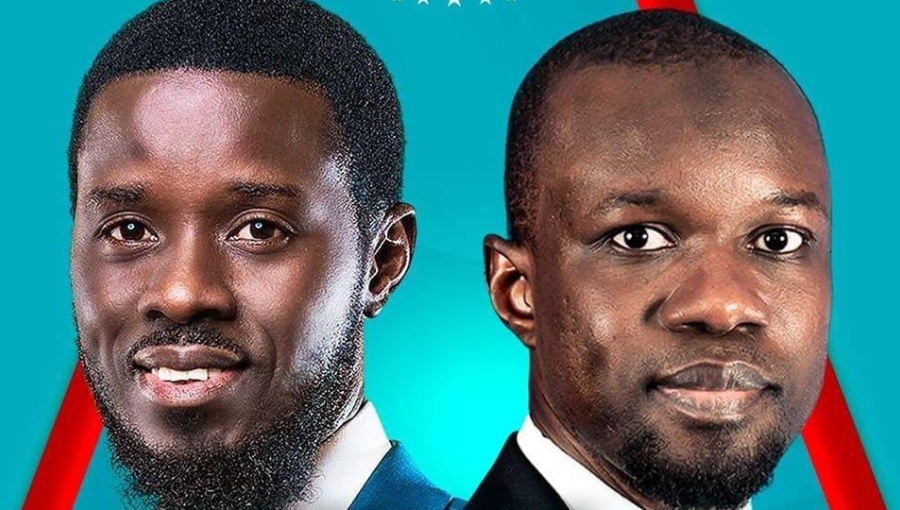
Senegal’s efforts to secure a proposed US$2.2 billion International Monetary Fund (IMF) support programme have been thrown into uncertainty following an escalating confrontation between President Bassirou Diomaye Faye and lawmakers over the country’s fiscal policy.
The latest development saw President Faye push through a rejected 2026 supplementary budget by presidential decree, bypassing the National Assembly after lawmakers rejected the proposed spending framework.
The decision, formalised under Decree No. 2026-2416 on November 19, has intensified disagreements within the country’s ruling political establishment and raised questions about the constitutional authority behind the President’s action.
In a statement, the presidency said Mr Faye had acted in his capacity as guardian of the constitution and guarantor of the proper functioning of public institutions and continuity of the state.
An accompanying explanatory report cited Article 68 of the Constitution, which allows a finance bill that has not been definitively voted on within 60 days to be implemented by decree.
However, the interpretation has been challenged by lawmaker Amadou Ba, who argued that the provision could not be applied to a supplementary budget that Parliament had expressly rejected.
Political divisions deepen
The controversy follows Parliament’s rejection of the supplementary budget on November 3 through a procedural motion introduced by Mr Ba, a member of the ruling Pastef parliamentary group.
The motion initially recorded 109 votes in favour but was subsequently corrected to 126 after 17 delegated votes were added.
Pastef controls 130 of the National Assembly’s 165 seats, making the rejection particularly significant given that the party brought President Faye to power.
Mr Ba argued that the supplementary budget raised fundamental questions about the reliability of the government’s fiscal projections, while lawmakers also criticised the administration for failing to provide documents requested during scrutiny.
The confrontation reflects widening divisions between President Faye and Ousmane Sonko, Pastef’s leader and former Prime Minister, whom the President dismissed in May. Mr Sonko subsequently became President of the National Assembly.
The disagreements have also affected the 2027 budget process, with lawmakers on November 18 rejecting the first part of the proposed budget covering government revenue, expenditure authorisations and borrowing.
Mr Sonko said the rejection meant Parliament could not proceed with consideration of the remaining sections.
Lawmakers reportedly objected to the 2027 budget framework because it was built on assumptions contained in the rejected 2026 supplementary budget.
IMF funding at risk
The political impasse comes at a critical time for Senegal, which is seeking to restore access to international financing after revelations of previously undisclosed government borrowing under former President Macky Sall.
An audit uncovered significant debt misreporting, prompting the IMF to revise Senegal’s central government debt at the end of 2023 to 99.7 per cent of GDP from an earlier figure of 74.4 per cent.
The Fund also estimated public and semi-public debt at 132 per cent of GDP at the end of 2024.
On September 1, 2026, Senegal reached a staff-level agreement with the IMF on a proposed 36-month, US$2.2 billion Extended Credit Facility.
However, the arrangement is yet to receive approval from the IMF Executive Board, with the country required to complete corrective measures addressing debt misreporting, provide financing assurances and establish an acceptable budget framework.
On November 12, IMF spokesperson Julie Kozack reiterated that Senegal must implement the policies agreed with Fund staff through its own legal and institutional procedures.
She declined to comment directly on whether the President could bypass Parliament to implement the budget.
The controversy is therefore raising concerns about Senegal’s ability to complete the fiscal reforms required to secure the proposed financing.
Deficit projections worsen
The 2026 supplementary budget also increases pressure on the country’s already strained public finances.
Under the revised framework, Senegal’s projected fiscal deficit rises to 7.6 per cent of GDP, equivalent to CFA francs 1,735.2 billion (approximately US$3.1 billion), from 5.4 per cent of GDP under the original budget.
The government has also reduced its 2026 economic growth forecast from five per cent to 2.7 per cent, citing higher energy costs and deteriorating economic conditions.
Senegal’s international bonds were reportedly little changed following the announcement of President Faye’s decision, according to Reuters.
The unfolding dispute leaves the government facing the dual challenge of managing its fiscal difficulties and resolving an increasingly bitter institutional confrontation that could complicate access to urgently needed international financing.