














Minerals Commission Warns Chinese Nationals Over Galamsey, Threatens 25-Year Jail Term Anddeportation
Story By: Nii Okpoti Odamtten / Mohammed Faisel Mustapha….
The Minerals Commission has issued a stern warning to Chinese nationals engaged in illegal small scale mining in Ghana, declaring that offenders risk between 20 and 25 years’ imprisonment, followed by deportation, as the government intensifies its campaign against illegal mining, popularly known as galamsey. The Commission has simultaneously called on the Chinese Government to deepen cooperation with Ghanaian authorities to dismantle the financial, logistical and operational networks sustaining the destructive practice.
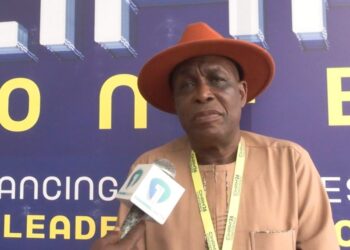
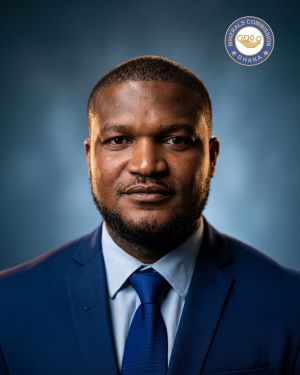
The warning was delivered by the Chief Executive Officer of the Minerals Commission, Hon. Isaac Tandoh, during a keynote address at the China- Ghana Mining Cooperation Conference held at the Kempinski Hotel in Accra on Tuesday, November 10, 2026. The high level gathering brought together government officials, China’s Ambassador to Ghana, H.E. Cong Song, mining investors, traditional authorities and other industry stakeholders to deliberate on the future of bilateral mining cooperation.
Addressing the conference, Mr Tandoh described illegal mining as an existential threat to Ghana’s environmental sustainability, water security and national development. He expressed particular concern over the repeated involvement of Chinese nationals in unlawful mining operations, warning that the activities of a few individuals must not be allowed to undermine the longstanding diplomatic and economic relationship between Ghana and China.
He emphasised that Ghana’s Minerals and Mining Act, 2006 (Act 703), as amended, reserves small scale mining licences exclusively for Ghanaian citizens. Under the legal provisions he outlined, foreign nationals who engage in unauthorised small scale mining risk imprisonment ranging from 20 to 25 years, in addition to deportation. He maintained that Ghana’s natural resources must be exploited within the boundaries of its laws, irrespective of the nationality, financial influence or commercial standing of those involved.
The Commission’s CEO also condemned the practice of fronting, through which foreign individuals or companies allegedly use Ghanaian citizens or locally registered entities to acquire mineral rights unlawfully. He warned that such arrangements undermine the country’s regulatory framework and compromise efforts to ensure that Ghana’s mineral wealth delivers meaningful benefits to its citizens. He further disclosed that enforcement operations had resulted in the arrest of several Chinese nationals along major river systems, including the Birim and Tano, as authorities intensified efforts to dismantle illegal mining networks.
In a move aimed at creating lawful opportunities for local operators, Mr Tandoh announced that the Commission had designated blocked-out areas for allocation to compliant Ghanaian small-scale miners. The initiative, he explained, was intended to strengthen legitimate mining activities, improve regulatory oversight and provide an alternative to illegal operations that continue to devastate communities and contaminate critical water resources.
He further disclosed that provisions were being made for a medium scale mining category that would create opportunities for Chinese and other foreign investors to participate legally through joint ventures with Ghanaian partners, with foreign investors permitted to hold stakes of up to 40 per cent under the proposed arrangement. The initiative, he said, would provide a structured investment pathway while safeguarding Ghanaian ownership interests, strengthening local participation and ensuring that foreign capital operates within the country’s regulatory framework.
Turning to international cooperation, Mr Tandoh urged the Chinese Government to regard illegal mining activities involving its nationals in Ghana as a priority bilateral enforcement issue. He welcomed an emerging framework discussed at the 2026 China Mining Conference, under which Chinese nationals who violate Ghanaian mining laws could face consequences not only under Ghana’s legal system but also through relevant Chinese regulatory and enforcement mechanisms governing their citizens abroad.
He called for the proposed dual enforcement framework to be operationalised without delay, insisting that deportation must never become an escape route from legal accountability. According to him, meaningful cooperation must extend beyond arrests and removals to include the identification and dismantling of the financial networks, equipment suppliers and logistical channels that make illegal mining possible. He stressed that galamsey was an organised economic activity sustained by substantial financing, machinery and supply chains, some of which extended beyond Ghana’s borders.
Mr Tandoh also highlighted the importance of China’s technological expertise in supporting Ghana’s fight against illegal mining. He called for stronger intelligence sharing, technical cooperation and the deployment of appropriate technological solutions to trace financial transactions, identify equipment supply routes and expose the individuals and institutions facilitating unlawful mining operations.
The Minerals Commission CEO challenged the Association of China Ghana Mining to assume greater responsibility for promoting regulatory compliance among its members and the wider Chinese mining community. He said the association must move beyond the promotion of commercial interests to become an active partner in identifying, discouraging and reporting illegal mining activities. A responsible industry association, he maintained, should expose unlawful conduct rather than shield individuals whose actions threaten the industry’s credibility.
While reaffirming the Commission’s commitment to enforcing Ghana’s mining laws without fear or favour, Mr Tandoh stressed that a sustainable mining industry could not be achieved through enforcement alone. He urged Chinese investors to prioritise responsible investments that generate decent employment for Ghanaians, promote skills and technology transfer, protect the environment and advance the country’s local content objectives. He said legitimate investors would continue to receive the support of the Commission, provided their operations respected Ghanaian laws and national development priorities.
Reflecting on the historical foundations of Ghana-China relations, Mr Tandoh recalled the more than six decades of diplomatic and economic cooperation between the two countries, tracing their friendship to the leadership of Ghana’s first President, Dr Kwame Nkrumah, and China’s Chairman Mao Zedong. He acknowledged the contribution of Chinese capital, technology and expertise to Ghana’s mining industry, noting the country’s emergence as Africa’s largest gold producer and the world’s sixth largest, with major Chinese companies, including Zijin, Chifeng and Shandong, playing significant roles in the sector.
He cited Zijin’s acquisition of the Akyem Mine approximately a year earlier, claiming that the company had increased production by 20 per cent without expanding its workforce or upgrading existing infrastructure. He also described Shandong Gold’s Ghanaian operation as the best performing mine within the company’s global portfolio. These developments, he said, demonstrated the potential of responsible foreign investment to strengthen production, improve operational efficiency and contribute to Ghana’s position in the global gold industry.
Nevertheless, Mr Tandoh cautioned that the benefits of bilateral mining cooperation must not be undermined by individuals who disregard the laws of their host country. He described the Association of China-Ghana Mining as an important institutional platform for constructive dialogue on responsible investment, regulatory compliance and sustainable development, but insisted that the integrity of the relationship depended on mutual respect, transparency and accountability. Ghana, he stressed, valued its friendship with China but would not permit the unlawful conduct of a minority to damage the partnership or compromise China’s reputation as a responsible global investor.
Concluding his address, Mr Tandoh declared: “Illegal mining has no place in this partnership, and those who engage in it, whatever their nationality, must face the full weight of the law.” He said Ghanaian communities deserved a mining partnership that delivered prosperity rather than pollution, created legitimate livelihoods instead of criminal networks and ensured that the country’s mineral wealth translated into tangible benefits for its people. He reaffirmed the Minerals Commission’s commitment to working with China and all legitimate investors to build a transparent, environmentally responsible and sustainable mining industry anchored in mutual respect and shared prosperity.