














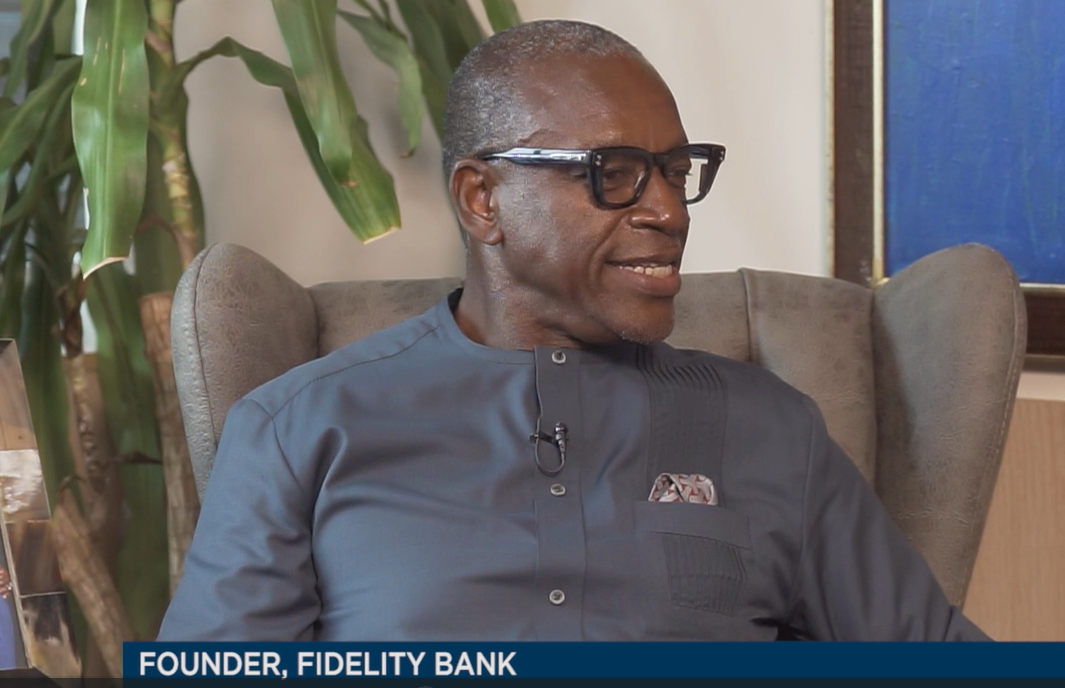
Ghanaian businesses could be missing out on available bank financing because many lack the expertise and capacity to develop projects that meet lending requirements, founder of Fidelity Bank, Edward Effah, has said.
He argues that the challenge facing the country’s private sector is not necessarily a shortage of funds within banks but a limited supply of viable projects capable of attracting credit.
Speaking in an interview with Bernard Avle on Channel One TV’s The Point of View on Monday, November 9, 2026, Mr Effah said banks had consistently received fewer bankable projects than the volume of funds they were willing to lend.
He said that over the past decade, financial institutions had maintained sufficient capital to finance more businesses, but many loan applications failed to meet the necessary requirements.
Mr Effah identified inadequate business development expertise and the inability of entrepreneurs to prepare credible proposals as major obstacles preventing businesses from accessing available financing.
He disclosed that banks’ loan-to-deposit ratios averaged about 50 per cent, indicating that a substantial proportion of deposits was being invested in government securities and other assets rather than lent to businesses.
According to him, banks would prefer to channel more funds into lending because financing viable businesses remains a major source of revenue for financial institutions.
He explained that banks would reduce their investments in government securities if more credible projects were available to finance.
However, Mr Effah acknowledged that the history of economic shocks in Ghana had made financial institutions more cautious about lending.
He cited the Domestic Debt Exchange Programme (DDEP), the energy crisis, the banking sector crisis and repeated depreciation of the cedi as developments that had affected banks’ financial positions and risk appetite.
Reflecting on Fidelity Bank’s 20-year operations, he disclosed that the bank had written off GH¢1.4 billion in losses arising from its exposure to government securities under the DDEP.
He also said the bank incurred another GH¢1 billion write-off during the 2016 energy crisis.
Mr Effah added that regulatory changes and technological disruptions had further complicated lending decisions, requiring banks to strengthen their assessment of potential borrowers.
He stressed that financial institutions must balance their role in supporting business growth with the need to protect depositors’ funds and maintain financial stability.
He said the viability of a project, the credibility of its promoters and the quality of its business plan remained essential considerations in determining whether a business qualified for bank financing.