









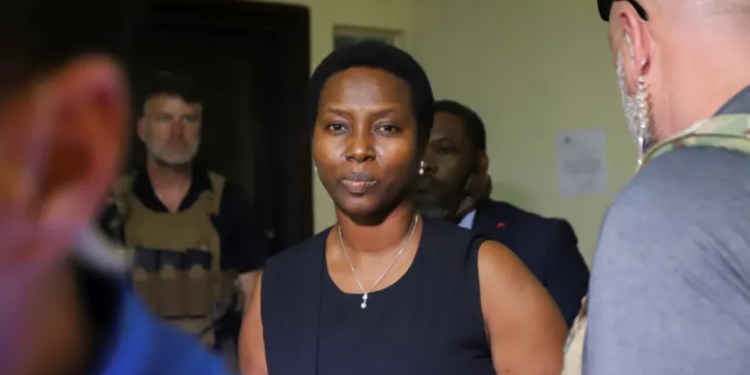
Martine Moise, widow of assassinated Haitian President Jovenel Moise, has entered the race to lead the troubled Caribbean nation as it prepares for its first presidential election in 10 years.
Her name appeared on the website of Haiti’s Provisional Electoral Council (CEP) on Sunday among 33 registered candidates for the election, whose first round is scheduled for July next year.
Moise is one of three women seeking the presidency, joining a field that includes former presidents Michel Martelly and Jocelerme Privert, former Prime Minister Claude Joseph and former Foreign Minister Dominique Dupuy.
She has not publicly commented on her decision to contest, although she indicated in a post on X last week that she believes Haiti needs a different approach to politics.
“Haiti will rise again on its own two feet, because politics needs to be done differently,” she wrote, while accusing opposition figures of contributing to the country’s decline.
Her entry into the race comes against the backdrop of prolonged political instability and worsening insecurity, with powerful armed gangs controlling large parts of the capital, Port-au-Prince, and surrounding areas.
Haiti last held a presidential election in 2016. Subsequent leaders repeatedly postponed elections, citing security concerns.
Martine Moise is also a key witness in proceedings in a Miami court involving suspects accused of participating in the July 2021 assassination of her husband, who served as president from 2017 until he was killed.
Jovenel Moise was shot in his bedroom by Colombian mercenaries posing as agents of the United States Drug Enforcement Administration. His wife was seriously wounded in the attack and flown to Florida for treatment.
The assassination triggered a prolonged political crisis, with successive transitional administrations struggling to restore stability as armed gangs expanded their influence.
The security crisis has left about 1.5 million people displaced and more than 22,000 dead, many of them killed by security personnel.
International forces have been deployed to support Haitian security agencies in their fight against the gangs. The latest deployment involved soldiers from El Salvador, following an order by President Nayib Bukele to send about 2,000 troops.
In a recent operation, Haitian security forces regained control of the country’s main stadium, which had been occupied by gangs for two years. The facility is expected to serve as an operational base for security forces seeking to advance into gang-controlled areas.
Several presidential hopefuls, including Martelly and Privert, have also faced international sanctions over allegations of supporting armed gangs, claims both former presidents deny.