













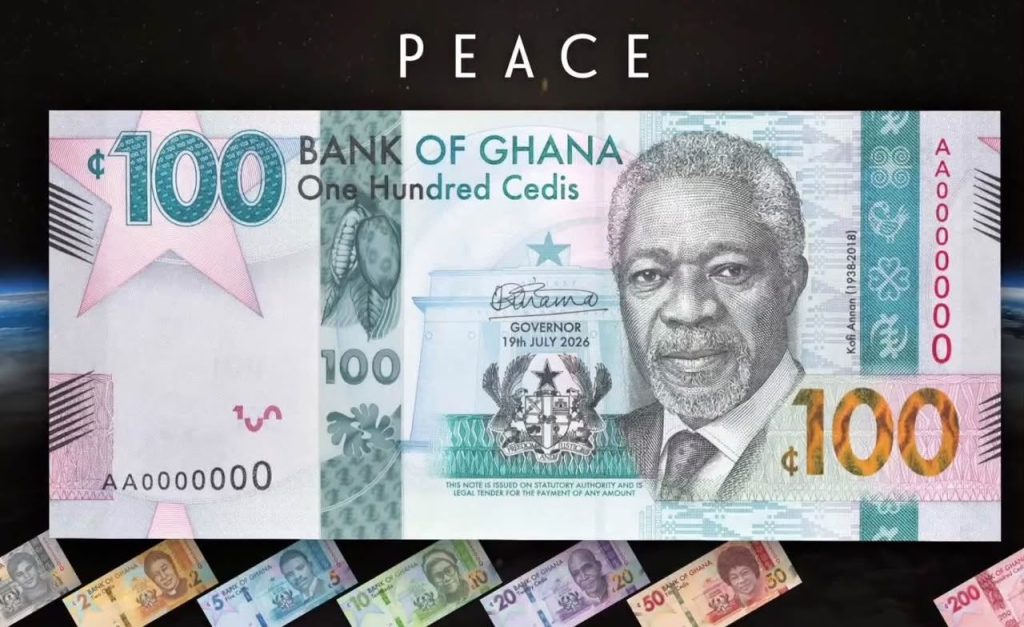
Ghana’s new Heritage Series banknotes will celebrate the country’s history, national heroes, cultural identity and economic contributions, with eight distinguished personalities featured across the denominations from GH¢1 to GH¢200.
The new banknotes, unveiled by President John Dramani Mahama at the Bank of Ghana’s headquarters in Accra on Thursday, November 12, 2026, are expected to enter circulation on December 1, 2026.
The redesigned currency introduces a new approach to celebrating Ghana’s national identity, with each denomination carrying a specific national theme, a notable Ghanaian personality, an important landmark and an Adinkra symbol representing its underlying message.
According to details released about the Heritage Series, the personalities featured on the notes represent different aspects of Ghanaian society, including commerce, religious freedom, education, justice, arts and entertainment, nationalism, peace and sovereignty.
Eight Personalities Featured on Ghana’s New Cedi Notes
The new Heritage Series comprises eight denominations, each designed to recognise an individual whose contributions have shaped Ghana’s history and development.
GH¢1 – Agnes Oforiwa Tagoe-Quarcoopome (Commerce)
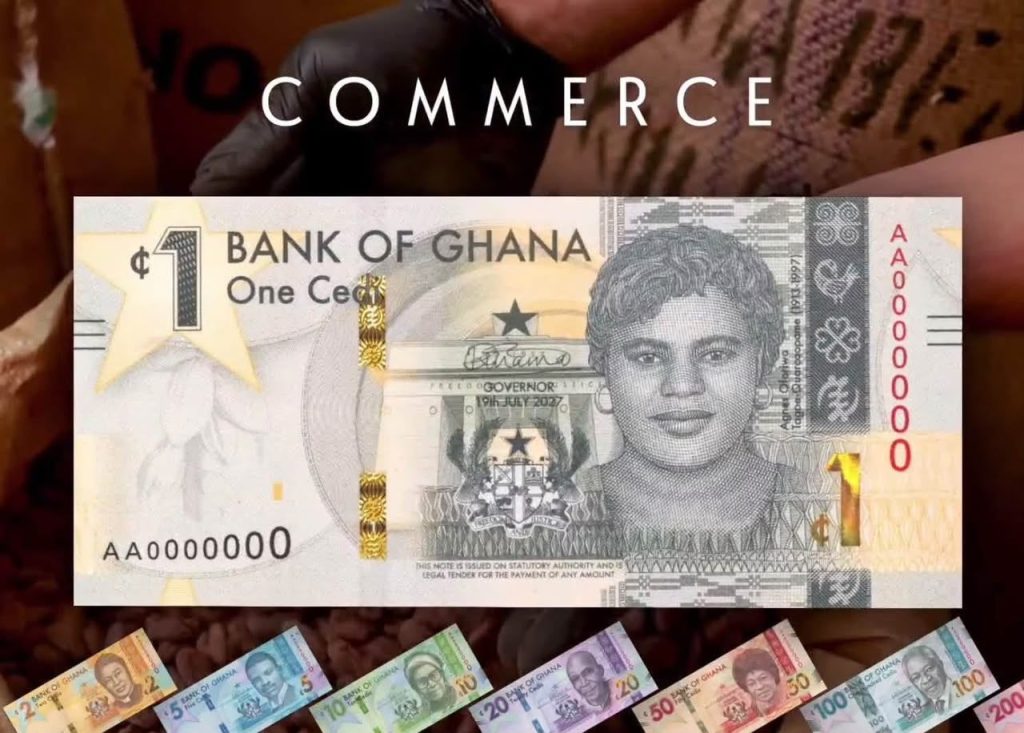
The GH¢1 note honours Agnes Oforiwa Tagoe-Quarcoopome (1913–1997), an Accra-based market woman and trader remembered for supporting Kwame Nkrumah’s independence campaign.
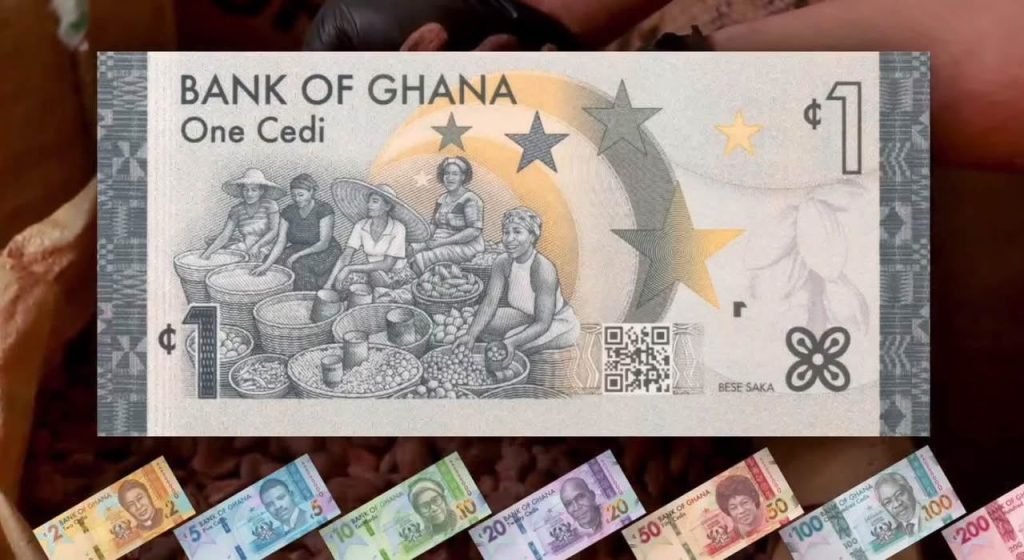
The reverse side features market women trading foodstuffs, recognising the important role of traders in Ghana’s economy. Its Adinkra symbol, Bese Saka, represents abundance, prosperity and trade.
GH¢2 – Cardinal Peter Poreku Dery (Religious Freedom)
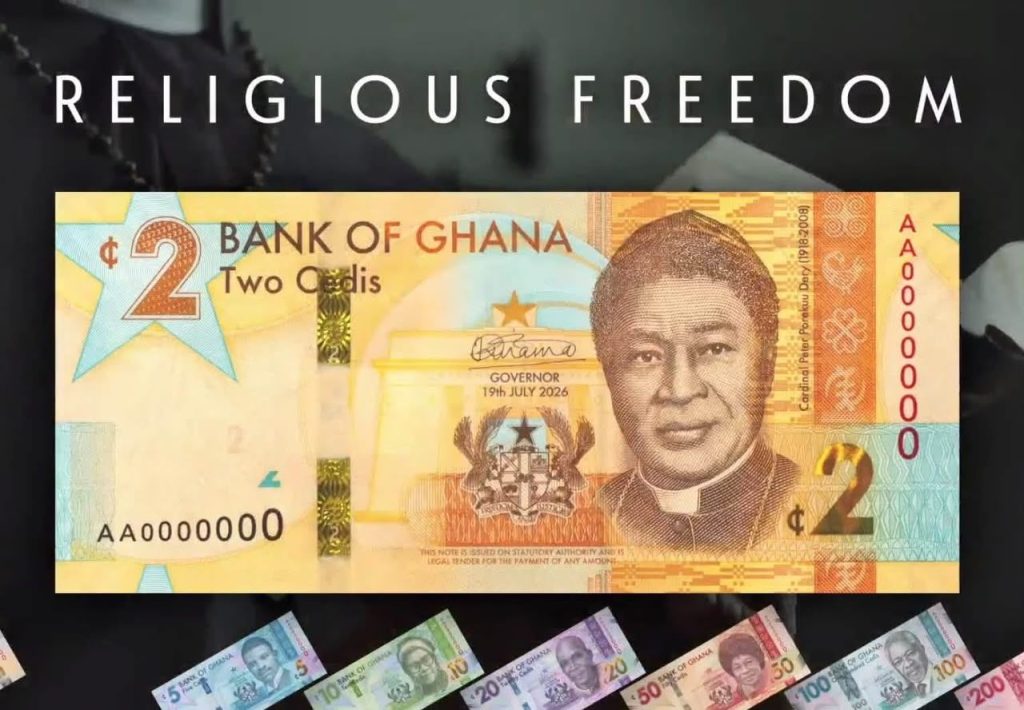
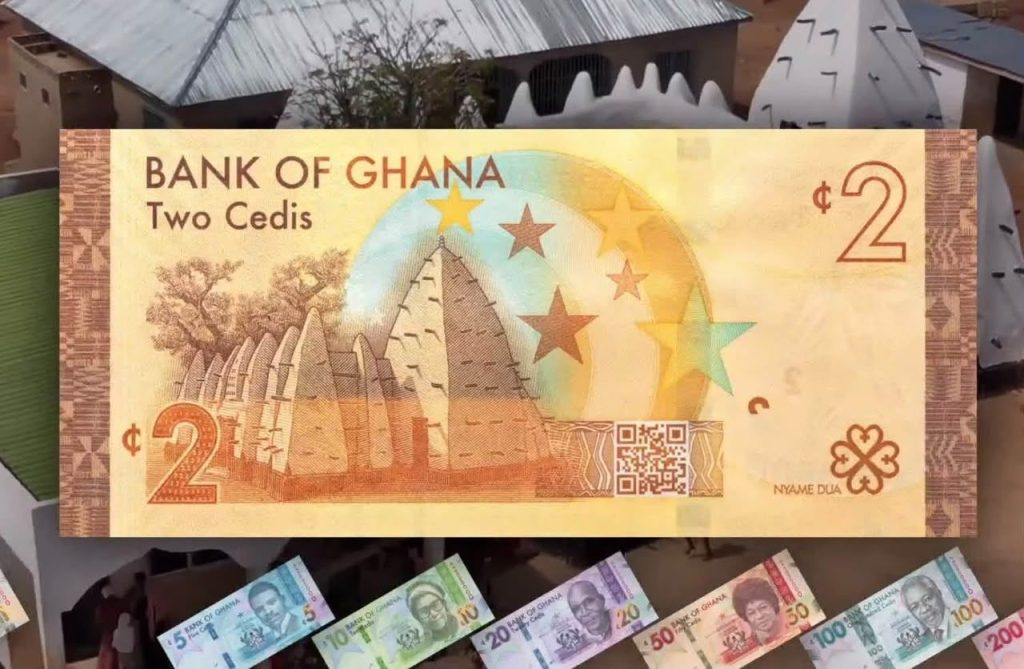
The GH¢2 note features Cardinal Peter Poreku Dery (1918–2008), a prominent Catholic cleric who served as Archbishop of Tamale and became a cardinal in 2006.
The reverse side showcases the historic Larabanga Mosque in the Savannah Region, one of West Africa’s oldest mosques. The pairing highlights religious coexistence and freedom.
Its Adinkra symbol, Nyame Dua, meaning “Tree of God”, represents God’s presence and protection.
GH¢5 – Dr James Emman Kwegyir Aggrey (Education)
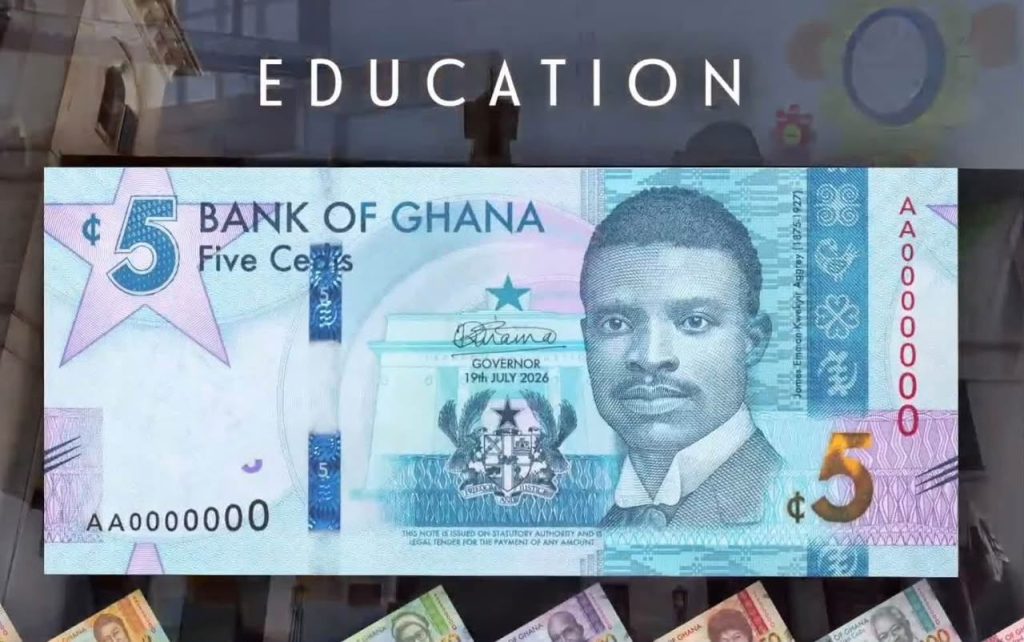
The blue GH¢5 note celebrates Dr James Emman Kwegyir Aggrey (1875–1927), an influential Ghanaian educator remembered for his contribution to education and his famous piano-keys illustration of racial harmony.
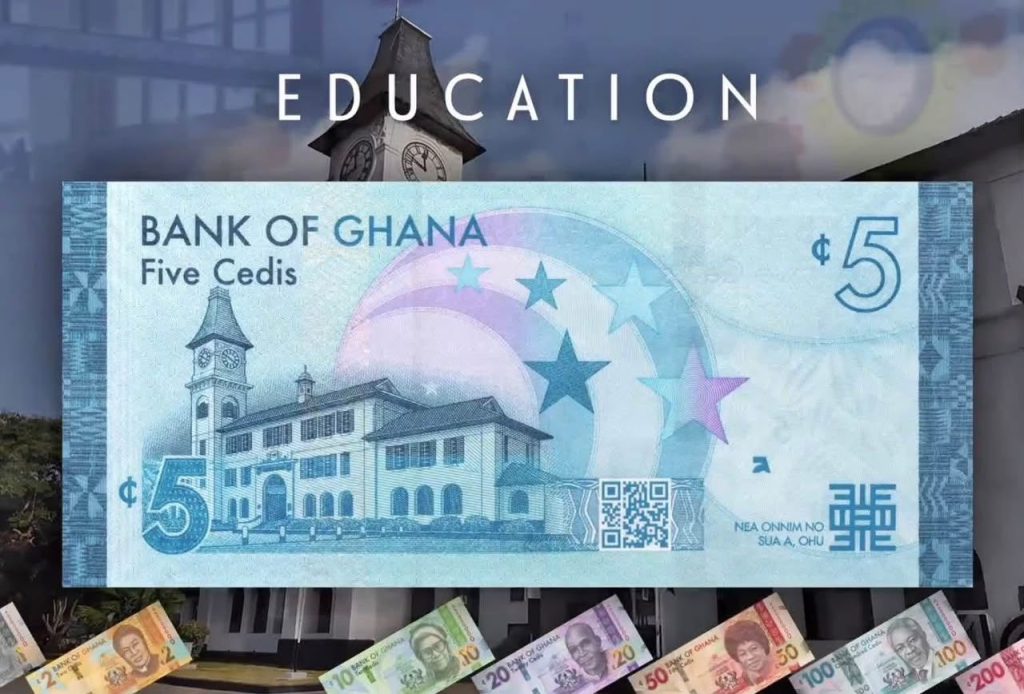
The reverse side features the clock-tower building of Achimota School in Accra, an institution he helped establish.
The Adinkra symbol, Nea Onnim No Sua A, Ohu, conveys the message that anyone who does not know can acquire knowledge through learning.
GH¢10 – Justice Annie Jiagge (Justice and Equality)
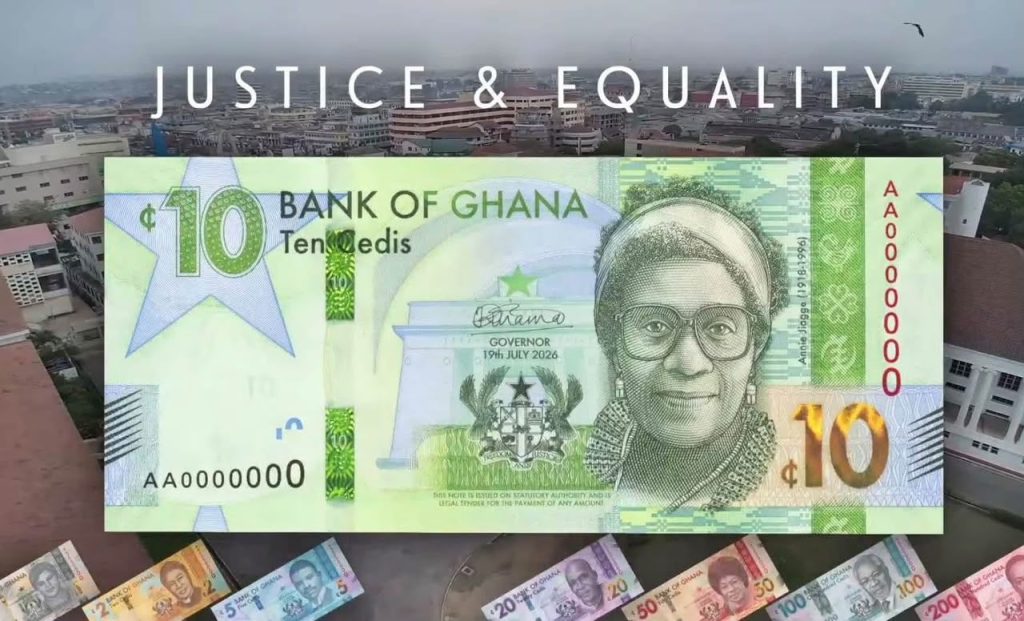
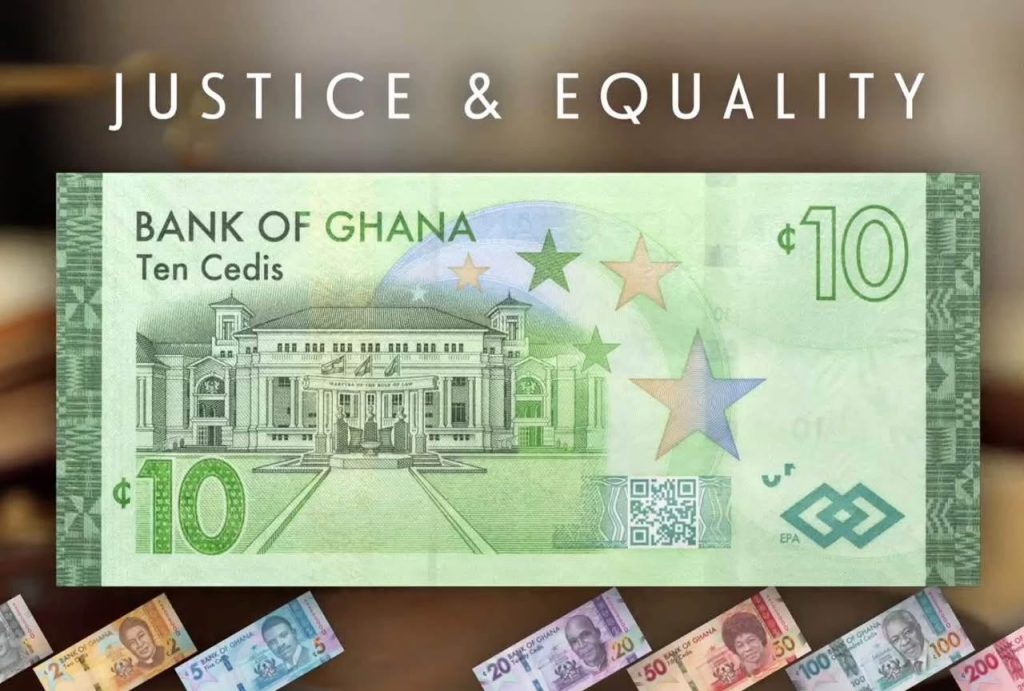
The GH¢10 note honours Justice Annie Jiagge (1918–1996), a pioneering Ghanaian judge and women’s rights advocate whose work contributed to the advancement of gender equality internationally.
She played a significant role in drafting the United Nations Declaration on the Elimination of Discrimination against Women.
The reverse side features Ghana’s Supreme Court building and the Martyrs of the Rule of Law monument. Its Adinkra symbol, Epa, represents law and justice.
GH¢20 – Dr Ephraim Amu (Arts and Entertainment)
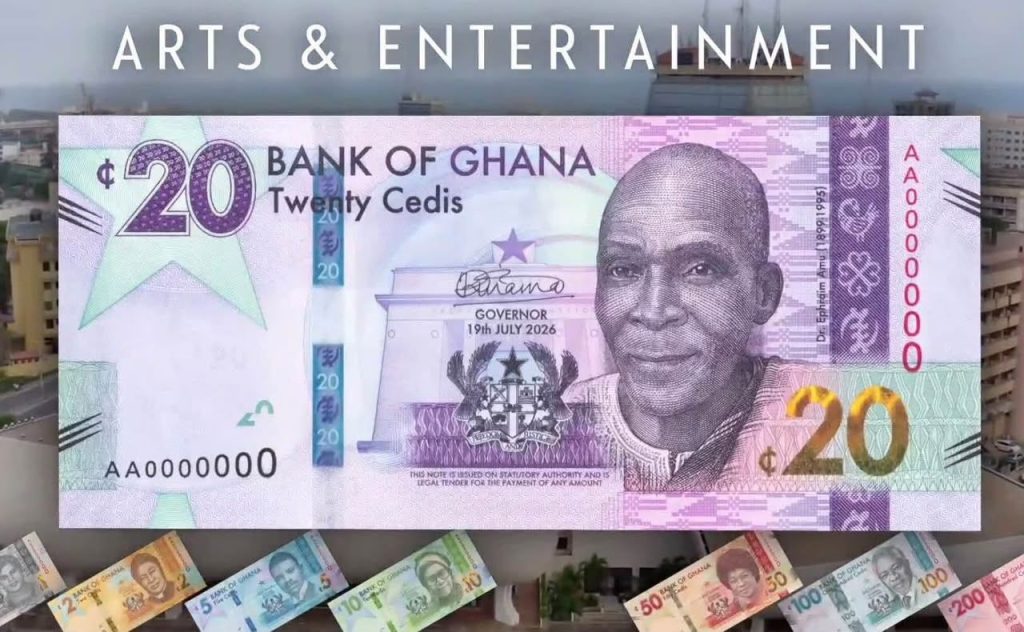
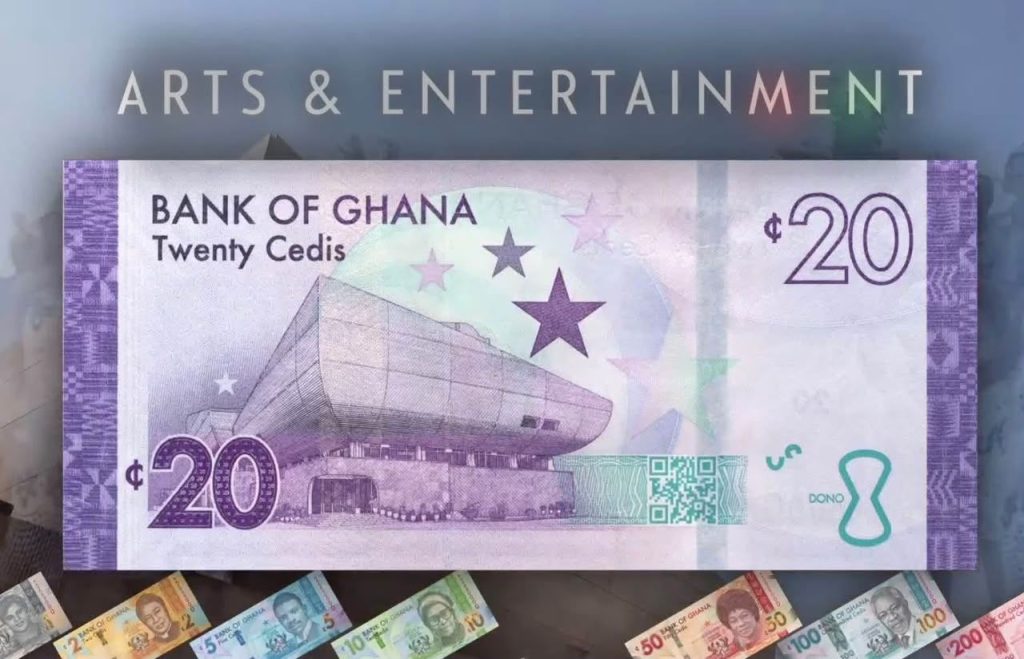
The purple GH¢20 note celebrates Dr Ephraim Amu (1899–1995), a renowned Ghanaian composer and one of the pioneers of Ghanaian choral music.
He is widely remembered for composing the patriotic song “Yɛn Ara Asaase Ni”, which remains an important part of Ghana’s cultural identity.
The National Theatre in Accra appears on the reverse side, while the Dono, a traditional talking drum, represents praise, goodwill and rhythm.
GH¢50 – Theodosia Okoh (Nationalism)
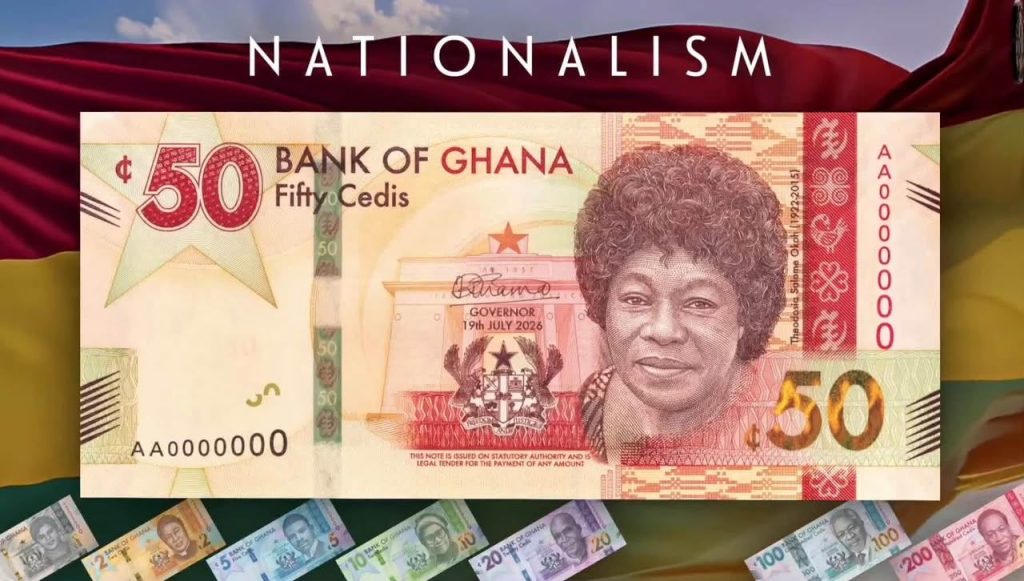
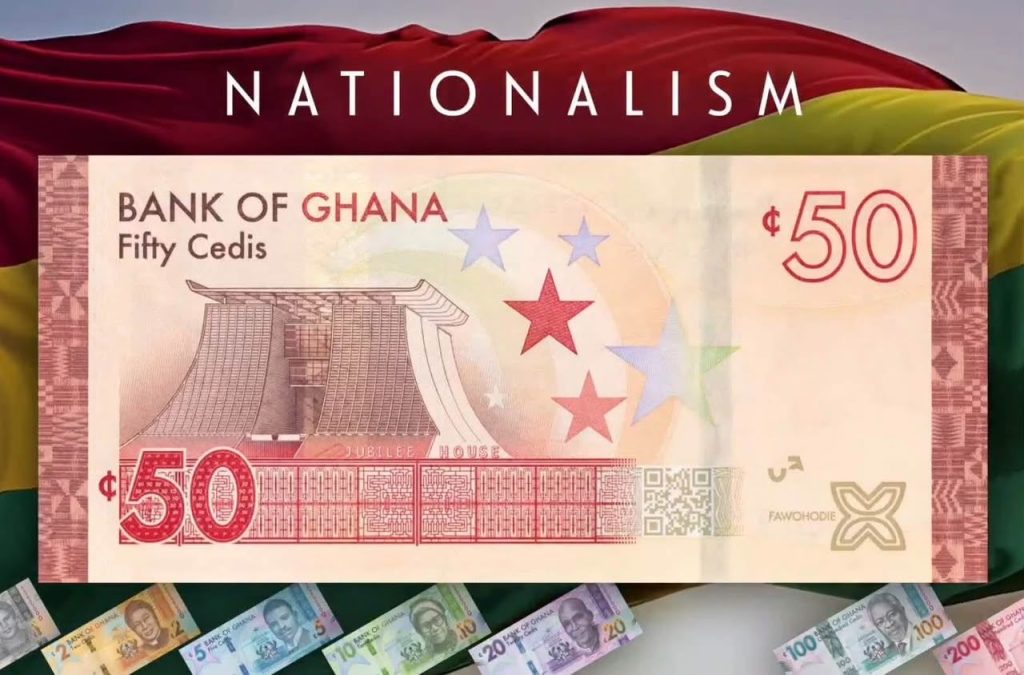
The GH¢50 note recognises Theodosia Okoh (1922–2015), the designer of Ghana’s national flag, which features the red, gold and green colours and the Black Star.
Her contribution to Ghanaian national identity makes her an important figure in the country’s history.
The reverse side displays Jubilee House, Ghana’s presidential seat. Its Adinkra symbol, Fawohodie, represents independence and freedom.
GH¢100 – Kofi Annan (Peace)
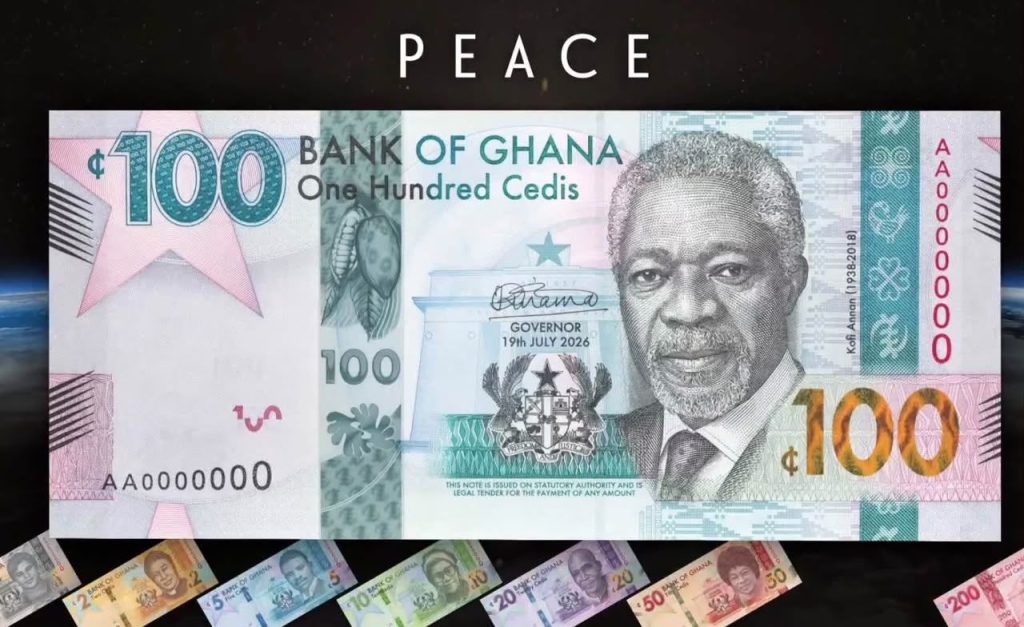
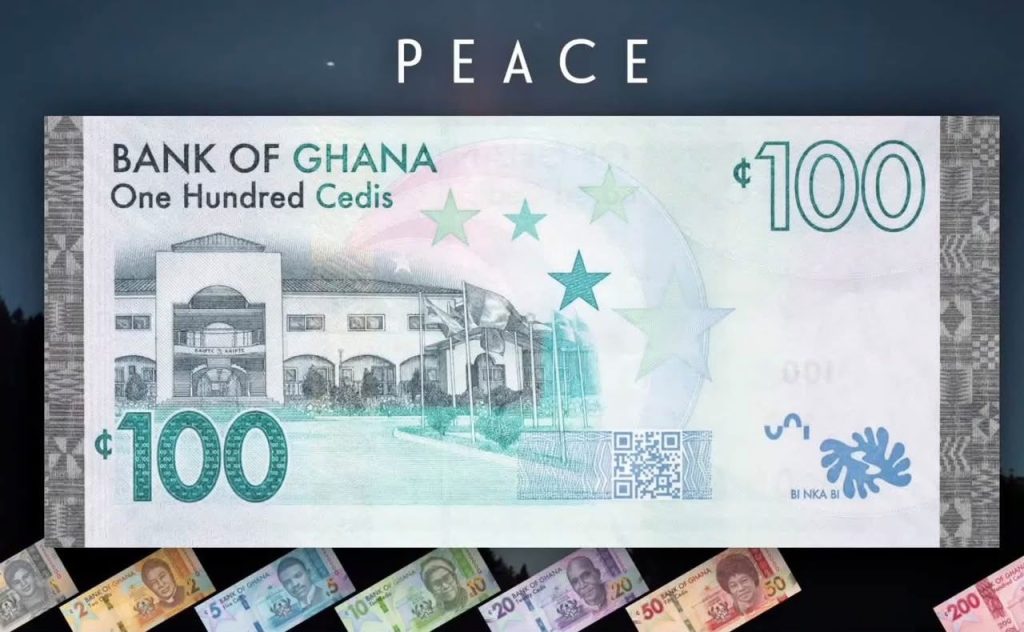
The turquoise GH¢100 note features Kofi Annan (1938–2018), Ghana’s internationally renowned diplomat who served as the seventh Secretary-General of the United Nations and received the 2001 Nobel Peace Prize.
The reverse side showcases the Kofi Annan International Peacekeeping Training Centre in Accra, an institution that trains military personnel, police officers and civilians for international peace operations.
Its Adinkra symbol, Bi Nka Bi, meaning “no one should bite another”, represents peace, harmony and peaceful coexistence.
GH¢200 – Dr Kwame Nkrumah (Sovereignty)
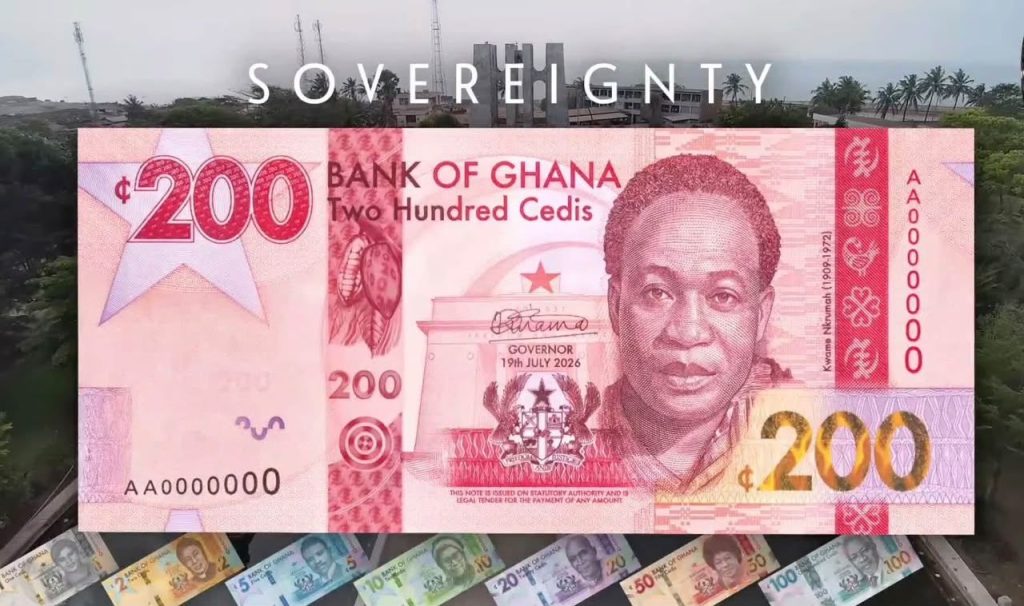
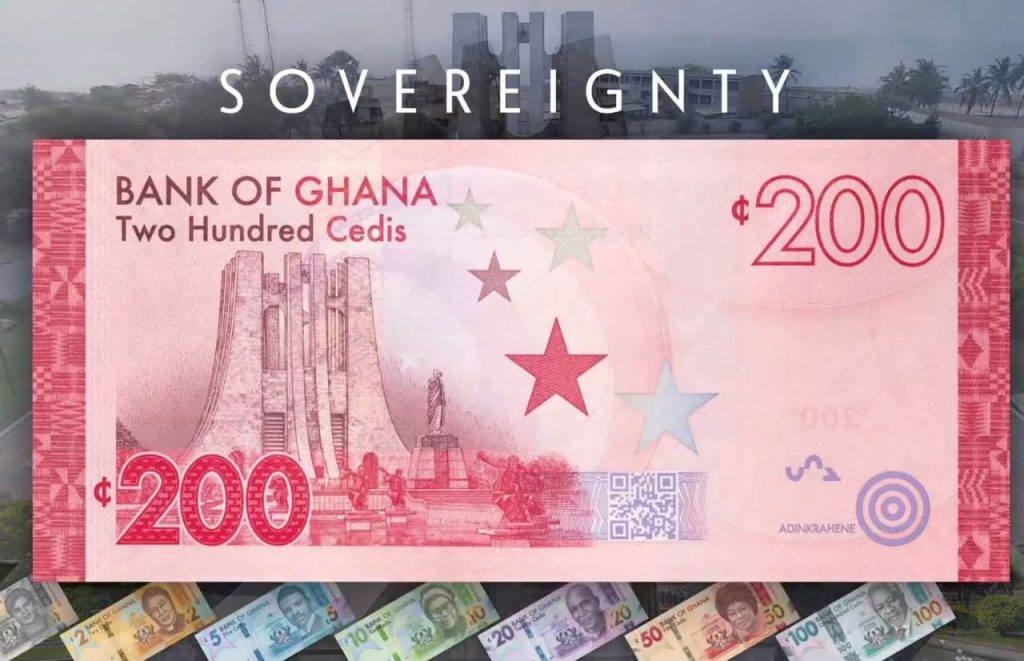
The highest denomination, GH¢200, honours Ghana’s first President, Dr Kwame Nkrumah (1909–1972), who led the country to independence from British colonial rule on March 6, 1957.
The reverse side features the Kwame Nkrumah Memorial Park in Accra, where his mausoleum and statue are located.
Its Adinkra symbol, Adinkrahene, often described as the chief of Adinkra symbols, represents greatness, leadership and authority.
What Makes the New Heritage Series Different?
Beyond the personalities and landmarks, the new banknotes incorporate several design elements intended to strengthen Ghana’s currency and reflect its cultural heritage.
All eight denominations feature common design elements, including the Bank of Ghana’s name, the national coat of arms, the Black Star and Adinkra symbols.
The reverse sides also incorporate QR codes and kente-inspired borders, adding distinctive Ghanaian cultural elements to the currency.
The redesign combines national history with modern currency features, highlighting the contributions of individuals from different backgrounds and sectors of society.
When Will the New Ghana Cedi Notes Enter Circulation?
The Bank of Ghana has announced that the new Heritage Series banknotes will enter circulation on December 1, 2026.
However, the introduction of the new notes does not mean the immediate withdrawal of the existing currency. The old and new banknotes will circulate alongside each other during a gradual transition.
This arrangement is intended to give individuals, businesses and financial institutions sufficient time to adjust to the redesigned currency without disrupting everyday financial transactions.
Ghanaians are therefore not required to rush to exchange their existing banknotes.
The Bank of Ghana has also encouraged the public to handle the new notes responsibly by avoiding practices such as spraying, crumpling, stapling or turning them into money bouquets.
The introduction of the Heritage Series represents an effort to make Ghana’s currency more than a medium of exchange by using it to celebrate the country’s history, cultural identity and national achievements.