
















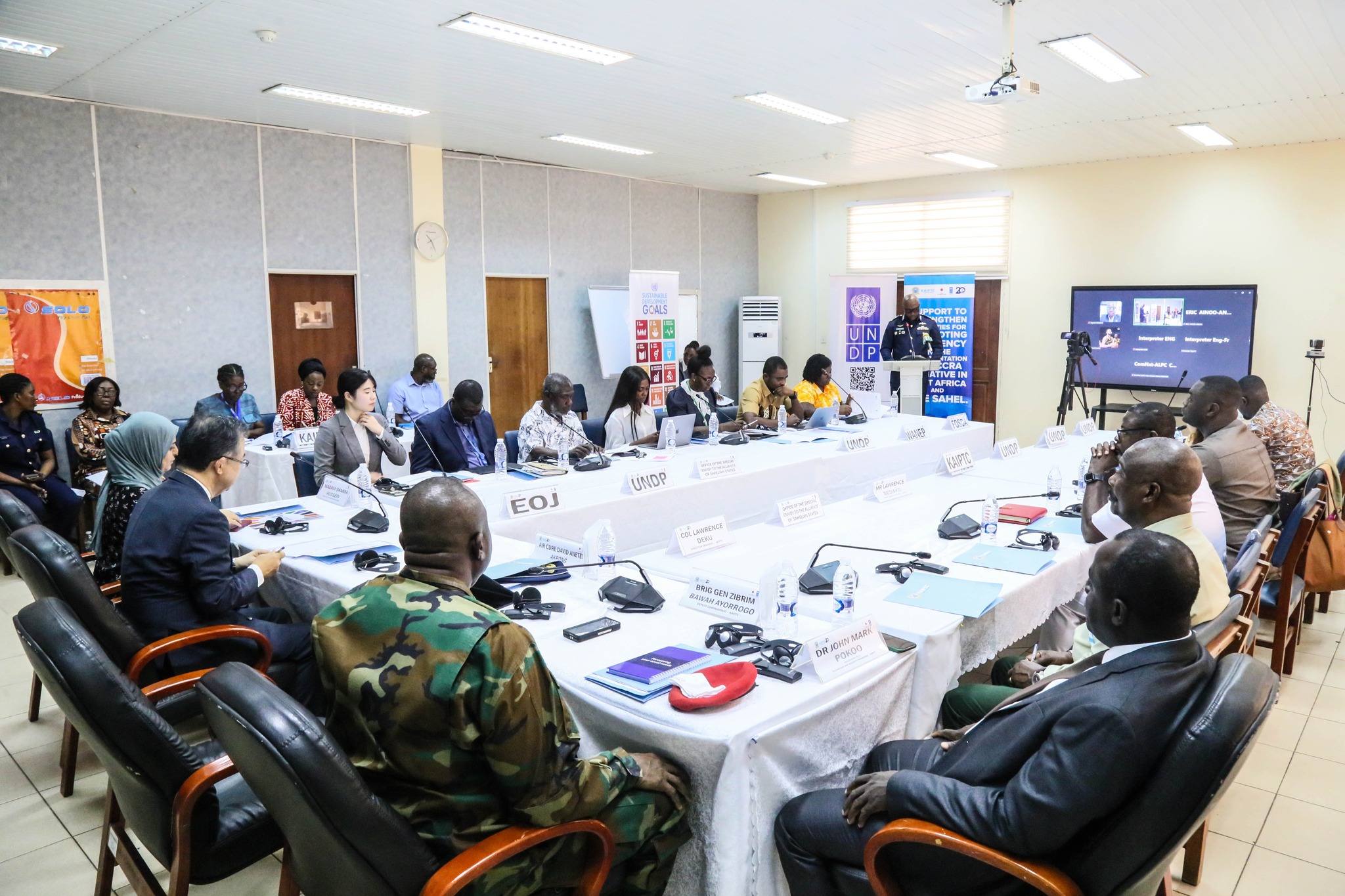
The Kofi Annan International Peacekeeping Training Centre (KAIPTC), working with the Government of Japan and the United Nations Development Programme (UNDP), has wrapped up a year-long project that placed community resilience at the heart of the fight against terrorism and violent extremism in West Africa.
Running from March 2024 to March 2025, the initiative focused not only on training state security actors but also on empowering communities across the Sahel and coastal West Africa to resist extremist influence, build trust, and collaborate with authorities.
According to Ms. Shaima Hussien, UNDP Ghana’s Deputy Resident Representative, the worsening security situation in the Sahel has made it urgent to strengthen local communities. The 2025 Global Terrorism Index shows the region now accounts for more than half of global terrorism deaths, with extremist violence steadily spilling into coastal states.
“Building resilience at the grassroots is critical. This project supported communities through training, dialogue and research to enhance early warning, promote inclusive governance, and encourage cooperation between citizens and security institutions,” Ms. Hussien said.
Field research in Tamale and Lomé, along with consultative meetings across seven participating states, fed into training courses in Accra and Bamako and a regional policy seminar in Abuja. These engagements provided practical, context-specific tools to help community actors identify risks and report suspicious activities.
Brigadier General Zibrim Ayorrogo Bawah, KAIPTC’s Deputy Commandant, stressed that the Accra Initiative’s strength lies in its collaborative and preventive approach. “By equipping both state and non-state actors, we are helping communities resist radicalisation while also enhancing inter-agency cooperation across borders,” he said.
The Japanese Ambassador to Ghana, Mr. Hiroshi Yoshimoto, praised the project’s focus on locally driven solutions, noting that Japan’s support for the Accra Initiative aligns with its philosophy of empowering communities to shape their own security.
For many observers, the project has shown that countering violent extremism is not only a military task but also a social one, requiring trust-building and active citizen engagement.
With UNDP pledging continued support to strengthen early warning systems and scale up grassroots solutions, the Accra Initiative’s future could increasingly rest on how resilient communities remain at the frontline of peace and security.






