
















The Minority in Parliament says its concerns over the Bank of Ghana’s (BoG) worsening financial position are driven by the need to protect macroeconomic stability, not political interest, as debate intensifies over the central bank’s latest losses.
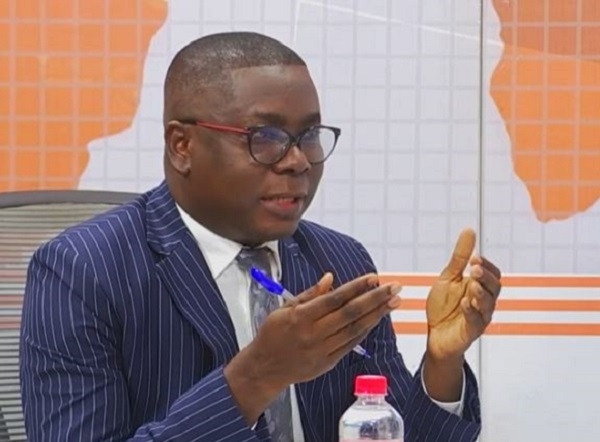
Speaking on Channel One TV’s The Point of View on Wednesday, May 6, Member of Parliament for Tano North and member of the Finance Committee, Mr Gideon Boako, said the Minority is not “gloating” over the Bank’s difficulties but is instead focused on safeguarding the institution’s role as the economy’s stabilising anchor.
He stressed that the central bank remains a critical “backstop” for the economy during financial shocks and policy imbalances.
“We are not gloating over anything, but we all want the best for the country,” he said, adding that the concerns raised are intended to strengthen confidence in the financial system.
His remarks follow the publication of the Bank of Ghana’s 2025 financial statements, which showed a loss of GH¢15.6 billion, an increase from GH¢9.48 billion in 2024. The Bank has now recorded four consecutive years of losses, including GH¢60.9 billion in 2022 and GH¢10.5 billion in 2023.
Mr Boako highlighted what he described as three major red flags in the report, including the rising negative equity position of the central bank.
He also pointed to what he termed a worrying insolvency trend, although he acknowledged that some corrective steps were taken in the final quarter of 2025 to address the situation.
“There is also what appears to have been an insolvency position… even though there was a move to address it, the approach was not conventional,” he noted.
Another concern he raised was the magnitude of the losses and the accounting framework used in preparing the financial statements.
He explained that while international financial reporting standards are typically applied globally, the Bank of Ghana relied on provisions within its own enabling legislation to prepare its accounts, a factor he said has fuelled ongoing debate.
The Bank’s 2025 report also revealed a consolidated negative equity position of GH¢93.82 billion, driven by monetary policy costs, foreign exchange losses, and losses on gold-related operations.
Despite the losses, the Bank indicated that it maintained a positive policy solvency margin, suggesting its core operations remain capable of supporting monetary policy implementation.






