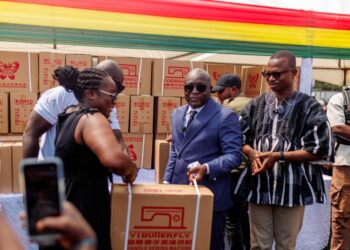
The General Agricultural Workers’ Union (GAWU) of Ghana has called for greater investment in education, social protection and rural livelihoods to tackle the underlying causes of child labour and trafficking in cocoa-growing communities.
According to Mr Andrews Addoquaye Tagoe, General Secretary of GAWU, efforts to eliminate child labour must go beyond law enforcement and address the economic and social conditions that continue to expose children to exploitation.
Speaking in an interview with the Ghana News Agency (GNA) in Kumasi, Mr Tagoe noted that despite progress made through public education campaigns, policy interventions and community-based monitoring systems, many children in cocoa-producing areas remain engaged in hazardous forms of labour.
He identified poverty, low household incomes, inadequate access to social services and limited educational opportunities as key factors driving families to involve children in farm work.
“Children belong in classrooms and not on farms undertaking dangerous tasks that can affect their education, health and physical development,” he said.
Mr Tagoe explained that some children continue to undertake risky activities such as carrying heavy loads, handling sharp tools and performing other tasks that threaten their safety and wellbeing.
While advocating stronger social interventions, he also called for stricter enforcement of laws against child labour and trafficking, stressing that offenders must be investigated and prosecuted to serve as a deterrent.
He noted that child trafficking and exploitative child labour remain criminal offences under Ghanaian law and urged law enforcement agencies to intensify efforts to identify and punish perpetrators.
The GAWU General Secretary further called for stronger collaboration among traditional authorities, parents, teachers, cocoa-buying companies, civil society organisations and government institutions to strengthen child protection systems within cocoa-growing communities.
According to him, community-based child protection mechanisms, child labour monitoring systems and climate-smart agriculture initiatives have already demonstrated their effectiveness in reducing child labour while improving household resilience and incomes.
Mr Tagoe also underscored the importance of sustained public education campaigns to help communities understand the long-term consequences of child labour and trafficking on children, families and national development.
He encouraged residents to report suspected cases of child exploitation to the appropriate authorities, warning that silence often allows such practices to continue unchecked.
He said protecting children and ensuring access to quality education were essential to safeguarding the future of Ghana’s cocoa industry and maintaining its reputation on the international market.
Mr Tagoe also stressed the need to distinguish between age-appropriate household chores and hazardous labour, noting that while children may assist with basic household responsibilities, they should never be exposed to work that could endanger their health, safety or educational development.
He called on all stakeholders, including the media, to support ongoing awareness campaigns and efforts aimed at eliminating child labour and trafficking from Ghana’s cocoa sector.