Ghana must urgently adapt to the emerging Intelligence Age by using Artificial Intelligence (AI) and institutional knowledge to improve productivity, strengthen decision-making and accelerate industrialisation, stakeholders at the Made-in-Ghana Business Summit 2026 have said.
The call was made at the summit in Accra, where participants explored how emerging technologies could help Ghana and other African countries build more competitive economies and take advantage of new opportunities in regional industrialisation.
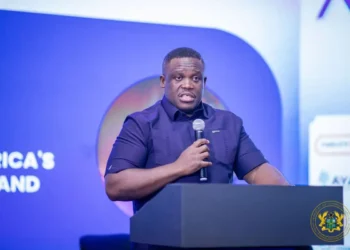
Entrepreneur and keynote speaker, Mr Kwesi Amoafo-Yeboah, said Ghana was at a critical stage in its development and could not afford to be left behind as global economies increasingly relied on intelligence-driven systems.
He said the nature of wealth creation had evolved over time, moving from dependence on land and physical machinery to information and, increasingly, the quality of decisions made by people, companies and governments.
According to him, AI must therefore be treated as more than a technology project.
He said the technology should be integrated into national strategies for industrialisation, productivity improvement, competitiveness and long-term nation-building.
Mr Amoafo-Yeboah argued that countries that would succeed in the coming decades would be those able to retain knowledge, learn continuously and apply experience efficiently across institutions and sectors.
He consequently proposed the establishment of a “National Intelligence Layer” to preserve institutional knowledge and support better decision-making in businesses and public institutions.
The discussions formed part of the Made-in-Ghana Business Summit 2026, held under the theme: “Unlocking Regional Potential: Driving Industrialisation, Youth Entrepreneurship, Job Creation and Made-in-Ghana Prosperity.”
Beyond AI, the summit placed renewed emphasis on the need to spread economic opportunities beyond Accra and develop the unique economic strengths of Ghana’s regions.
Founder and Chairman of the Entrepreneurs Foundation of Ghana (EFG), Mr Sam Ato Gaisie, said Ghana’s economic transformation would depend on expanding investment and enterprise development across the country.
He said every region had economic potential that could be harnessed to drive industrial growth, create jobs and generate wealth.
Mr Gaisie called for stronger collaboration among government, the private sector, development partners and investors to promote regional industrialisation and entrepreneurship.
The focus on AI comes as governments and businesses worldwide increasingly deploy artificial intelligence, machine learning and other digital tools to improve efficiency, innovation and decision-making.
For Ghana, the conversation is taking place against the backdrop of government efforts to promote local production, industrialisation and job creation.
Speaking on behalf of President John Dramani Mahama, Minister of Trade, Agribusiness and Industry, Mrs Elizabeth Ofosu-Adjare, said disruptions to global supply chains had created an opportunity for Ghana to strengthen its position as a manufacturing hub in the sub-region.
She said government had approved policies targeting sectors including textiles and garments, pharmaceuticals, automotive components and agribusiness to attract investment and expand domestic production.
The Minister also highlighted initiatives including the Rapid Industrialisation for Jobs Programme, Feed the Industry Initiative, the 24-Hour Economy Programme and the Accelerated Export Development Programme.
The Made-in-Ghana Business Summit is an annual platform that brings together policymakers, entrepreneurs, investors and development partners to discuss strategies for strengthening local production, expanding industrial capacity and improving Ghana’s export competitiveness.
This year’s discussions underscored the growing view that Ghana’s industrial future will depend not only on physical infrastructure and capital, but also on its ability to harness technology, retain knowledge and make smarter decisions.