
















Development projects in several mining host communities have stalled due to delays in the disbursement of mineral royalties, the Ghana Extractive Sector Multi-Stakeholder Group (MSG) has warned.
The Group said the prolonged delays were disrupting local development plans, creating uncertainty for district assemblies and communities, and undermining the purpose of the Minerals Development Fund Act, 2016 (Act 912).
Speaking at a media engagement to present the findings of the 2023 Ghana Extractive Industries Transparency Initiative (GHEITI) Report, Dr. Emmanuel Steve Asare Manteaw, a member of the MSG, said Parliament must take a more active role in ensuring that approved royalty funds are released on time.
He said many beneficiary communities were unable to continue development projects because of irregular disbursements.
“A lot of development projects in some of these beneficiary communities have come to a standstill, and the uncertainty over the timing of disbursements makes it difficult for communities to plan development activities with any confidence,” he said.
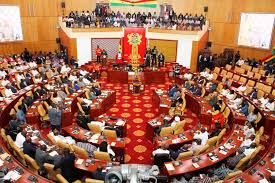
Dr. Manteaw criticised what he described as weak oversight and urged Parliament to summon the relevant state institutions responsible for the delays.
He argued that Parliament, having enacted the Minerals Development Fund Act, has a responsibility to ensure that the statutory formula for distributing mineral royalties is implemented effectively.
The MSG also called for greater transparency, including the publication of information on delayed payments, the institutions responsible, and the amounts outstanding.
In a speech delivered on his behalf, Patrick Nomo, Co-Chair of the GHEITI Multi-Stakeholder Group and Chief Director at the Ministry of Finance, said reforms to the mineral royalty regime had strengthened the management of extractive revenues.
He noted that GHEITI’s advocacy had contributed to changes in the royalty system and the institutionalisation of subnational royalty transfers through the Minerals Development Fund.
However, he acknowledged that revenue leakages and weak coordination among state institutions continue to limit the benefits that mining communities receive from Ghana’s mineral resources.
Mr. Nomo called for stronger collaboration between public institutions and improved data management systems to enhance accountability and ensure that extractive revenues translate into tangible development outcomes.
He reaffirmed the government’s commitment to using evidence from GHEITI reports to guide policy reforms and strengthen transparency in the extractive sector.
Under the Minerals Development Fund Act, mineral royalties allocated to local government are distributed through a statutory formula, with district assemblies receiving 55 per cent, mining-affected communities 25 per cent, and traditional councils 20 per cent.






