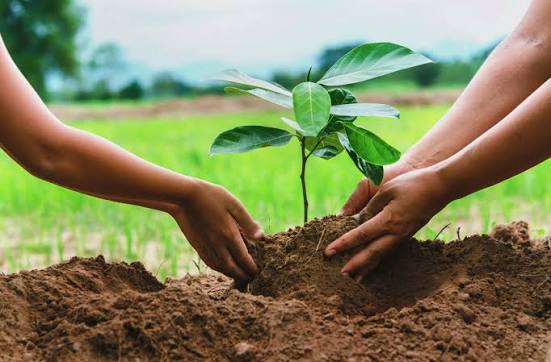
Ghana must move beyond tree-planting campaigns and place greater emphasis on protecting existing forests and ensuring the survival of newly planted trees if the country is to effectively respond to climate change, environmental researcher Dr Owusu Fordjour Aidoo has said.
He said the destruction of forest cover through illegal mining, logging, bushfires and other human activities was undermining efforts to protect the environment and increasing Ghana’s vulnerability to climate-related challenges.
Speaking to the Ghana News Agency (GNA) in Kumasi, Dr Aidoo said while afforestation and reforestation remained important, planting trees without protecting them until maturity would yield limited environmental benefits.
He called for a renewed national commitment to tree planting and forest protection, describing environmental conservation as a collective responsibility rather than an obligation solely for government.
According to him, trees play a critical role in absorbing carbon dioxide from the atmosphere and releasing oxygen, making forests an important natural defence against greenhouse gas emissions and climate change.
He said schools, churches, traditional authorities, businesses, civil society organisations and community groups could all play important roles in restoring Ghana’s declining forest cover.
Dr Aidoo expressed concern that the culture of tree planting among Ghanaians had weakened over the years and called for deliberate efforts to revive it as a continuous national practice.
He, however, stressed that the success of afforestation programmes should be measured not only by the number of seedlings planted but also by how many survive and grow into mature trees.
Regular watering, maintenance and protection from bushfires, animals and human activities, he said, were essential to ensuring the survival of young trees.
Dr Aidoo also called for increased planting and protection of trees along riverbanks and other water bodies, saying such vegetation was important for protecting aquatic ecosystems and providing habitats for birds and other wildlife.
He warned that the destruction of forests was not only an environmental concern but also posed risks to water resources, agriculture and the livelihoods of communities that depend on natural ecosystems.
Forests, he explained, help to reduce soil erosion, protect water bodies, regulate environmental conditions and maintain ecological balance by providing habitats for wildlife.
Dr Aidoo said the effects of climate change were already being experienced across communities through rising temperatures, changing rainfall patterns, floods, droughts and other extreme weather events.
“We need more trees to keep us alive and healthy and for our future generations,” he said.
The lecturer at the University of Environment and Sustainable Development (UESD) therefore urged government to intensify national afforestation and reforestation programmes while strengthening measures to safeguard the country’s remaining forests.
He also encouraged the youth to become active participants in environmental protection, stressing that they would inherit the consequences of decisions being taken today on the environment.
Traditional and religious leaders, he said, could use their influence to educate communities and followers on the importance of protecting trees and discouraging activities that contribute to forest destruction.
Dr Aidoo further called on relevant government agencies and other stakeholders to combine public education with effective enforcement of environmental laws to deter indiscriminate tree cutting, illegal mining, bushfires and other activities that degrade forests.
He urged Ghanaians to make tree planting and environmental protection part of their everyday activities rather than limiting such efforts to annual or special environmental campaigns.