













Professor Dr Otchere Addai-Mensah of the Department of Medical Diagnostics, College of Health Sciences, Kwame Nkrumah University of Science and Technology (KNUST), has questioned the apparent silence of some prominent Ghanaian religious leaders over allegations facing Foreign Affairs Minister Samuel Okudzeto Ablakwa.
He has challenged the clergy to demonstrate the same commitment to accountability they showed in 2023 when they publicly supported Ablakwa’s campaign against alleged corruption surrounding the National Cathedral project and issues involving Reverend Victor Kusi Boateng.
In an opinion article titled “The Horns of the Altar!”, Prof. Addai-Mensah argued that religious leaders must uphold accountability consistently, regardless of the political identity of individuals under scrutiny.
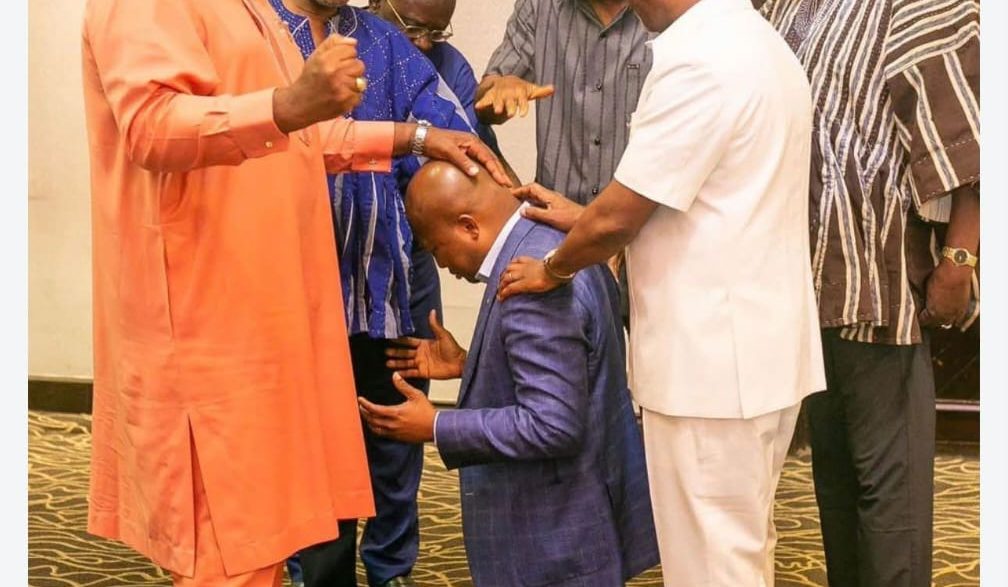
He recalled that in 2023, Archbishop Nicholas Duncan-Williams and Reverend Eastwood Anaba publicly supported calls for independent audits of the National Cathedral project, while some prominent men of God laid hands on Ablakwa in recognition of his anti-corruption campaign.
According to him, the public support helped portray the then Member of Parliament as a leading advocate for transparency and accountability.
However, Prof. Addai-Mensah said the situation had changed following questions surrounding Ablakwa’s stewardship at the Ministry of Foreign Affairs, particularly the management of funds associated with Ghana’s evacuation exercise in South Africa.
He cited reports involving GH¢49.72 million linked to the evacuation exercise, including GH¢16.4 million reportedly flagged as unaccounted for.
He also referenced controversies surrounding the issuance of service passports, including the interdiction of two officials, cancellation of 10 service passports and Minority allegations that about 300 unqualified individuals obtained special passports in exchange for payments ranging from US$10,000 to US$50,000.
Prof. Addai-Mensah questioned how Ablakwa, whose political profile was strengthened by his criticism of alleged passport irregularities, would respond to similar allegations involving the ministry under his supervision.
“The man who demanded receipts must now produce his own,” he wrote.
The academic also raised questions about Archbishop Duncan-Williams’ changing public position on the National Cathedral controversy.
He noted that the Archbishop had previously supported calls for an independent audit but declared in September 2026 that there was no corruption surrounding the project.
Prof. Addai-Mensah questioned the basis for that position and asked what evidence informed the Archbishop’s subsequent assessment.
He further contrasted the Archbishop’s public position on the National Cathedral with what he described as the absence of an equally forceful public intervention when Reverend Kusi Boateng faced allegations raised by Ablakwa.
He acknowledged that the Commission on Human Rights and Administrative Justice (CHRAJ) subsequently found no basis for allegations of financial wrongdoing and dual identities against Reverend Kusi Boateng.
The academic stressed, however, that religious leaders should not be expected to defend particular political figures or endorse allegations without evidence. Rather, he argued that their commitment to transparency must remain consistent, irrespective of who is involved.
He also insisted that Ablakwa’s previous anti-corruption activism should not shield him from scrutiny, urging the minister to submit to the same standards of accountability he had demanded of others.
Prof. Addai-Mensah called for investigations into the allegations against the Foreign Affairs Ministry, insisting that responsibility should be established through evidence rather than political considerations.
He said Ghana needed religious leaders who could speak independently of political interests and public officials willing to submit themselves to scrutiny.
“Accountability is not a partisan sacrament,” he declared, arguing that the pulpit should not become an instrument for political endorsement.
He concluded by questioning whether the religious support Ablakwa received in 2023 represented a genuine endorsement of accountability or merely reflected the political circumstances at the time.
According to him, the credibility of both religious leaders and public officials depends on their willingness to uphold the same principles consistently, even when doing so becomes uncomfortable.