














The New Patriotic Party (NPP) has challenged the Mahama administration to account for approximately GH¢650 billion in public funds spent over the past two years, insisting that several flagship government programmes have failed to deliver their promised results.
The party says the government must provide verifiable evidence of its achievements before introducing another ambitious economic programme, particularly the proposed US$10 billion New Economy initiative.
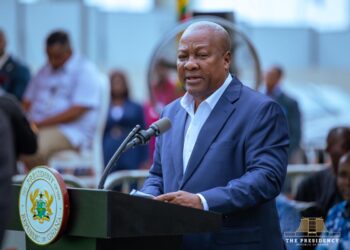
In a pre-budget statement read by former Finance Minister and Member of Parliament for Karaga, and Ranking Member on Parliament’s Finance Committee, Dr Mohammed Amin Adam, the NPP questioned the implementation of major commitments made in the 2025 and 2026 budgets.
The statement, titled ‘The 2027 Budget Must Account Before It Announces: The Fiscal Test Ghanaians Will Use to Judge It’,argued that the government had yet to demonstrate sufficient progress on its flagship employment and economic transformation programmes.
According to the NPP, the proposed New Economy initiative raises questions about the government’s ability to mobilise the necessary resources, particularly when previous commitments remain largely unfulfilled.
The party specifically questioned the performance of the 24-Hour Economy programme, which was launched in July 2025 with a projected US$4 billion investment and a government seed capital commitment of between US$300 million and US$400 million.
Under the initiative, the government projected the creation of 1.7 million jobs by the end of 2028 through the 1-3-3 model, which seeks to create three jobs across three shifts for every participating business.
However, the NPP claimed that the government had allocated only GH¢110 million to the programme in the 2026 Budget and had failed to provide a comprehensive figure for the number of jobs created.
It further questioned the status of the US$5.5 billion Joint Development Agreements announced under the initiative, arguing that signed agreements should not be presented as actual investments mobilised.
The party also raised concerns about the redesignation of the proposed 24-hour markets as District Economy Markets and the postponement of their completion to 2028.
Beyond the 24-Hour Economy, the NPP identified several other government programmes it believes have suffered implementation challenges.
These include the Women’s Development Bank, National Coders Programme, Agenda 111 hospital projects, Feed Ghana, Adwumawura youth enterprise programme, National Apprenticeship Programme and Farmer Service Centres.
On the Women’s Development Bank, the party claimed that despite budgetary commitments of GH¢51.3 million in 2025 and an additional GH¢401 million in 2026, the institution was yet to begin lending because it was still awaiting a banking licence.
It also questioned the progress of the National Coders Programme, claiming that although 40,000 people had enrolled, only about 28,000 had completed one module of the training.
The NPP further cited delays in the construction of Farmer Service Centres, indicating that work was ongoing on only 15 of the 50 centres originally targeted for 2026.
The party also questioned the government’s ability to finance the proposed US$10 billion New Economy programme, particularly against the background of what it described as weak revenue mobilisation and under-execution of capital expenditure.
It argued that the government must explain how the proposed investment would be financed, distinguishing between direct budgetary allocations, private sector equity, public-private partnerships and commercial borrowing.
The statement also raised concerns about the country’s economic performance, arguing that improvements in headline indicators such as inflation and exchange rate stability had not translated into corresponding improvements in household incomes and living conditions.
The NPP described the situation as a gap between the ‘paper economy’ and the ‘pocket economy’, insisting that economic recovery must be reflected in employment opportunities, affordable essential services and improved purchasing power.
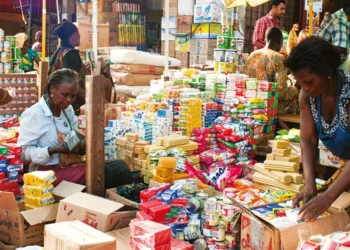
It cited increases in electricity and water tariffs, transport fares, petroleum prices and the cost of agricultural inputs as evidence of the financial pressures facing households.
The party also criticised the reduction in cocoa producer prices in February 2026, arguing that farmers had suffered a significant loss of income while outstanding payments for cocoa already delivered remained a concern.
On monetary policy, the NPP questioned the Bank of Ghana’s liquidity management operations, the cost of maintaining low inflation and the availability of credit to private businesses.
It claimed that credit to the private sector remained below eight per cent of GDP, limiting access to financing for traders, farmers and small-scale manufacturers.
The party further questioned the sustainability of the cedi’s performance, arguing that significant foreign exchange interventions and the use of gold purchases to support the currency required greater transparency.
NPP outlines demands ahead of budget
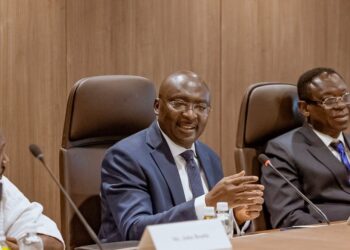
As part of its expectations for the 2027 Budget, the NPP called on Finance Minister Dr Cassiel Ato Forson to publish the full cost of the Bank of Ghana’s liquidity management operations and provide a clear plan for recapitalising the central bank.
It also demanded monthly disclosures of foreign exchange interventions, including the proportion of dollars sourced from small-scale gold trading, as well as a comprehensive gold traceability plan for GoldBod.
The party further called for a review of the minimum wage against the actual cost of essential goods and services, alongside the publication of a technical report by the Tripartite Committee.
It also wants the government to publish a verified record of jobs created under its various flagship programmes between 2025 and 2026.
On the proposed New Economy, the NPP insisted that the government must provide a comprehensive financing plan identifying the sources of funding, the amount of fresh investment and the existing expenditure commitments that could be affected.
The party maintained that the 2027 Budget must move beyond announcing new programmes and demonstrate accountability for previous commitments.
It concluded that economic management should be assessed by its impact on ordinary Ghanaians rather than headline statistics.
“Two years have passed. This Government has already taken GH¢650 billion of taxpayers’ money and has failed to deliver its flagship promises. The 2027 Budget is its opportunity to stop managing headlines, announcements and optics, and to start managing the real economy in people’s pockets,” the statement said.
The NPP stressed that before the government announces a new economic transformation agenda, it must first account for the promises and programmes introduced under its earlier budgets.
On his part, former Information Minister and Ofoase-Ayirebi MP, Kojo Oppong-Nkrumah argued that the reported decline in inflation, lower interest rates and earlier appreciation of the cedi had not translated into meaningful improvements in the living conditions of Ghanaians.
He said the government was managing the economy for “the headline, not the household; for the paper, not the pocket”, and urged Ghanaians to examine how economic figures were achieved, their cost to the country and their impact on personal finances.
On inflation, the party challenged the government’s celebration of the 5.5 per cent rate, arguing that the decline had been achieved partly through measures that restricted liquidity in the economy rather than increased production or reduced the cost of living.
It cited the Bank of Ghana’s 2025 accounts, which it said showed that the central bank locked away GH¢93.56 billion in liquidity management operations.
According to the NPP, the Bank also spent GH¢16.73 billion in 2025 to pay banks to hold cedis outside the economy, contributing to its financial losses.
The party further argued that inflation had remained below the lower end of the Bank of Ghana’s target band of 8 per cent, plus or minus two percentage points, for 11 consecutive months between December 2025 and October 2026.
It maintained that the tight monetary policy had affected businesses, traders and employment, pointing to reports of declining sales, liquidity constraints and weak performance in some household-facing services.
The NPP said unemployment, which stood at 13.1 per cent at the end of 2024, declined to 12.6 per cent in the second quarter of 2025 before rising again to 13 per cent in the third quarter.
Rising cost of living
The opposition party also questioned the government’s reliance on headline inflation to demonstrate improvements in the economy, arguing that several essential expenses had increased beyond both inflation and the rise in the minimum wage.
It cited electricity tariffs, which it said had increased by a combined 28.7 per cent since January 2025, compared with a 19.9 per cent increase in the minimum wage over the same period.
Water tariffs, according to the statement, recorded a combined increase of 13.3 per cent in 2026, while transport costs rose by 14.1 per cent between October 2025 and October 2026.
The party also pointed to increases in housing, rent and utilities, education services and overall service prices, which it said stood at 10.5 per cent, 9.4 per cent and 11.5 per cent respectively.
It argued that these increases had weakened the purchasing power of workers, particularly those whose incomes had not kept pace with the rising cost of essential services.
The NPP further criticised government-approved increases in utility tariffs, transport fares and the Ghana Card replacement fee, saying the state had contributed directly to the cost pressures confronting households.
Private sector credit remains a concern
On lending rates, the party said the reduction in interest rates had not translated into sufficient access to credit for businesses.
It claimed that private sector credit remained below eight per cent of Ghana’s gross domestic product, compared with approximately 32 per cent in Kenya and 36 per cent across sub-Saharan Africa.
The statement also alleged that banks lent only about 36 pesewas out of every cedi deposited with them, leaving traders, farmers and small-scale manufacturers struggling to secure financing.
It contrasted the current situation with the period between 2017 and 2022, when private sector credit, measured as a share of GDP, remained above 13 per cent.
According to the NPP, the figure declined to 9.4 per cent in 2023 and 8.9 per cent in 2024 before falling to about 7.4 per cent in 2025.
The party blamed the situation partly on the government’s monetary policy decisions, including maintaining the policy rate at 28 per cent until July 2025 and withdrawing significant liquidity from the financial system.
NPP questions cedi stability and gold transactions
The opposition also challenged the government’s management of the cedi, arguing that its appreciation by about 40 per cent in 2025 was supported by heavy foreign exchange interventions rather than stronger underlying economic fundamentals.
It said the cedi had subsequently lost 9.5 per cent of its value against the US dollar by September 2026 and close to 10.5 per cent by early November.
The party cited market reports indicating that the Bank of Ghana sold approximately US$9.2 billion into the foreign exchange market between January and August 2026, including US$2.01 billion in June alone.
It further claimed that the country’s international reserves declined from about US$14.5 billion in February to US$11.1 billion in August, representing a reduction of more than US$3 billion within six months.
The NPP raised concerns about the role of small-scale gold purchases in supporting foreign exchange availability, arguing that the increasing demand for gold by the state could create incentives for illegal mining if the supply chain was not properly monitored.
It cited GoldBod figures showing that small-scale gold trading generated US$1.87 billion in September and questioned whether the government had an effective system to trace the sources of the gold.
The party also argued that local industries had been affected by both the earlier appreciation of the cedi, which increased competition from imports, and its subsequent depreciation, which raised the cost of imported machinery and production materials.
Demands ahead of 2027 Budget
Ahead of the Finance Minister’s presentation of the 2027 Budget, the NPP outlined several measures it wants the government to adopt to address what it described as weaknesses in monetary and economic management.
It called on the government to publish the full cost of the Bank of Ghana’s liquidity management operations in 2026 and provide a clear plan, including timelines and funding arrangements, for recapitalising the central bank.
The party also wants monthly disclosures of foreign exchange sold into the market, the proportion sourced from small-scale gold and GoldBod’s timetable for achieving full traceability in the gold supply chain.
On the cost of living, it urged the government to align the 2027 minimum wage with the actual cost of essential goods and services and publish the Tripartite Committee’s technical report.
It further demanded an assessment of the combined impact of regulated price increases approved in 2025 and 2026 on household budgets.
The NPP also called for a comprehensive financing plan for the proposed New Economy initiative before public funds are committed to it, alongside a verified register of jobs created under government programmes in 2025 and 2026.
It said the government must additionally present a credible strategy to expand credit access for traders, farmers and small-scale manufacturers rather than concentrating only on reducing headline lending rates.