














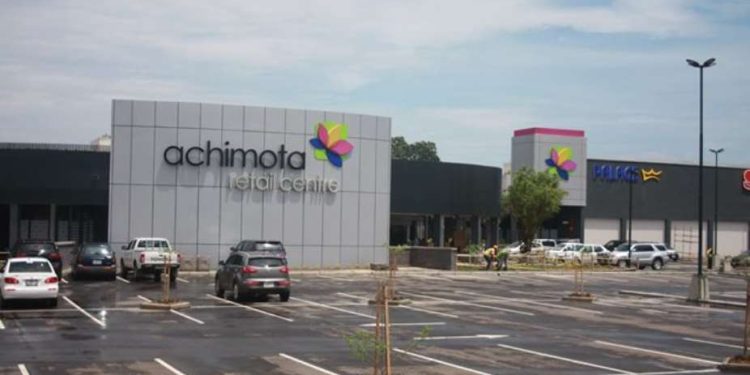
Businesses operating at Achimota Retail Centre, popularly known as Achimota Mall, have come under scrutiny by the Ghana Revenue Authority (GRA) following the discovery of widespread irregularities in their Value Added Tax (VAT) invoicing systems.
The Authority identified various compliance breaches among 14 businesses inspected during an enforcement exercise aimed at strengthening tax compliance and preventing revenue leakages.
The violations included the use of unauthorised computer systems to generate VAT invoices, failure to issue approved tax receipts and the continued application of the abolished flat-rate VAT arrangement.
Assistant Commissioner and Head of the Accra Central Tax Enforcement Unit of the GRA, Joseph Annan, disclosed this during a media engagement at the mall, indicating that almost all the businesses inspected had some form of compliance issue.
Among the companies cited was Euro Outfits, which allegedly used its own computer systems to generate invoices without obtaining the required GRA approval. The Authority has invited the company, which operates three branches, and taken its machines for further examination.
D.O.H and Spendstre Ghana Limited were also found to be generating invoices through unauthorised systems, while Scentopia was cited for allegedly issuing unauthorised invoices.
Carrefour Ghana Limited, which operates under the Shoprite name, also came under investigation over discrepancies involving its registered business name and receipt system. The GRA has taken the company’s system for examination and invited its representatives to assist with further checks.
Other businesses cited included Biju Ghana Limited, which was reportedly still charging customers under the abolished flat-rate VAT arrangement, and MaxBuy, which was using its own invoices without authorisation.
First Choice Hair and Beauty was also cited for failing to issue VAT invoices and operating under the flat-rate system without a branch certificate. The Authority has requested the company’s records to compare them with its tax declarations.
Art Kitchen and M.V. Company Limited were among other businesses found to have various compliance deficiencies, including operating without the necessary branch certificates or authorisations and failing to issue VAT invoices.
### GRA tightens invoice monitoring
Mr Annan explained that businesses intending to generate VAT invoices through their own computer systems must first obtain approval from the GRA.
He said such systems must satisfy specific requirements, including the ability to preserve transaction records for several years and maintain effective internal controls to ensure accurate reporting.
He also urged consumers to demand VAT invoices whenever they purchase goods or services from VAT-registered businesses, explaining that the practice would help ensure taxes collected are properly accounted for and transferred to the state.
The GRA official cautioned businesses that issuing VAT invoices alone did not fulfil their tax obligations, as they were also required to declare and pay the taxes collected. Payments, he said, were due immediately after declaration.
To detect violations, the Authority is deploying several enforcement methods, including invoice monitoring, test purchases, commonly known as mystery shopping, and random compliance inspections.
Mr Annan warned that businesses found violating VAT regulations would face the applicable interest and penalties. However, companies that voluntarily regularised their operations before being inspected would be spared such sanctions.
He added that the enforcement exercise would become a routine activity across GRA offices rather than an occasional operation, urging businesses to review their invoicing systems and ensure full compliance with tax laws.