















Ghana’s international reserves have declined by US$1.7 billion since the end of 2025, despite a significant improvement in the country’s trade surplus, highlighting mounting pressure on the external sector.
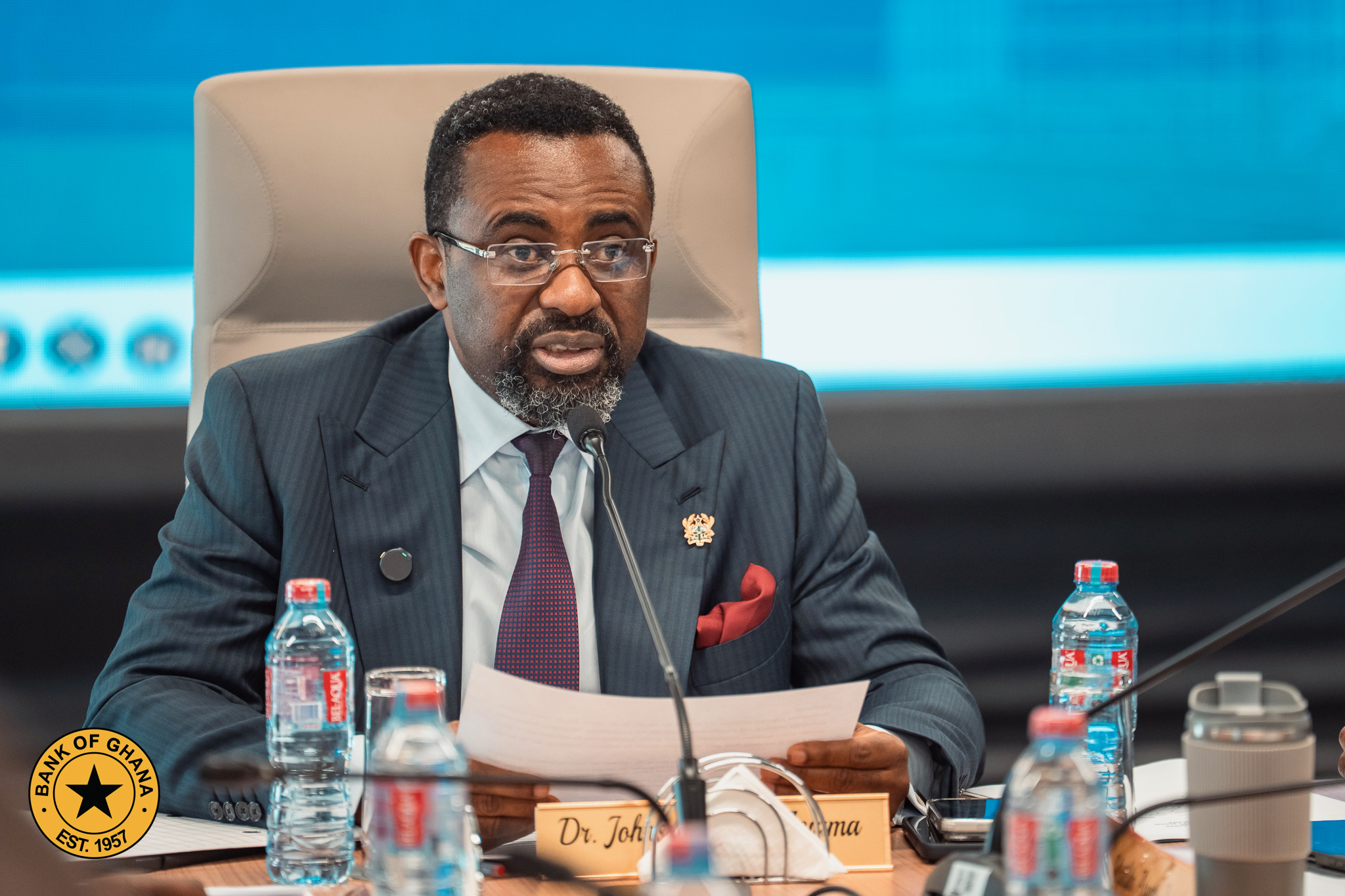
Gross International Reserves fell from US$13.8 billion in December 2025 to US$12.1 billion in November 2026, equivalent to 4.4 months of import cover, Governor of the Bank of Ghana (BoG), Dr Johnson Pandit Asiamah, has disclosed.
Speaking at a press briefing on Wednesday, November 18, following the 133rd Monetary Policy Committee meeting, Dr Asiamah attributed the decline to increased external payment obligations, geopolitical tensions and pressures from foreign exchange demand.
He said the factors had placed pressure on the central bank’s reserve position despite Ghana recording stronger export earnings and an expanding trade surplus.
“Higher external payment obligations, driven largely by geopolitical tensions and foreign exchange demand pressures, weighed on the central bank’s reserves,” he explained.
Ghana’s trade surplus nevertheless improved to US$13 billion between January and October 2026, compared with US$8.7 billion recorded during the same period in 2025.
Gold remained the dominant contributor to export earnings, accounting for approximately 67 per cent of total exports.
Despite the decline in reserves, Dr Asiamah expressed confidence in the external sector’s outlook, saying strong export receipts were expected to provide support even as volatility in global markets persisted.
“The external sector is expected to remain firm, supported by strong export receipts, despite the likely volatility in global markets,” he said.
Fiscal position improves as public debt rises
On the fiscal front, government recorded an overall budget deficit of 1 per cent of GDP during the first ten months of 2026, significantly below the target of 3 per cent.
The primary balance also posted a surplus of 1.4 per cent of GDP, bringing the government close to its full-year target of 1.5 per cent.
However, public debt continued to increase, reaching GH¢759.3 billion at the end of October 2026, representing 47.5 per cent of GDP.
This compares with GH¢641.1 billion, equivalent to 44.7 per cent of GDP, recorded at the end of December 2025.
The latest figures present a mixed picture of Ghana’s economic position, with an improving trade surplus and fiscal performance occurring alongside declining international reserves and rising public debt.