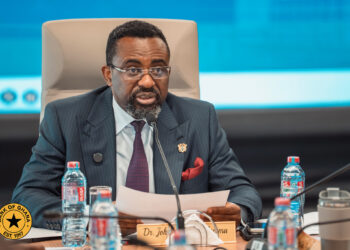













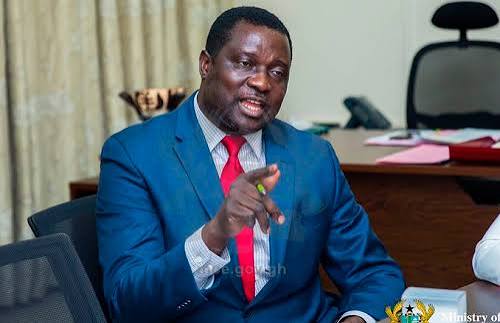
Former Education Minister and Bosomtwe MP, Dr Yaw Osei Adutwum, has called for education and skills development to become central pillars of Ghana’s New Economy agenda, warning that increased gold exports alone cannot deliver meaningful economic transformation.
He has challenged Finance Minister Dr Cassiel Ato Forson to reconsider the economic policy direction outlined in the 2027 Budget, arguing that Ghana must prioritise human capital development and industrial skills to compete in the Fourth Industrial Revolution.
Contributing to the parliamentary debate on the 2027 Budget Statement and Economic Policy on Friday, November 20, Dr Adutwum said the government’s transformation agenda lacked a critical foundation if education and skills development were not explicitly incorporated into its priorities.
“Go back to the classroom and learn about the New Economy. The New Economy is not what we are saying we are going to do. A New Economy that doesn’t have education and skills development explicitly as a pillar is not a New Economy,” he stated.
The former Education Minister argued that Ghana’s economic transformation must focus not only on exploiting and exporting natural resources but also on developing the technical expertise and industrial capacity required to add value to those resources.
He specifically questioned an approach that measures economic progress largely through increased gold exports without adequately addressing the skills needed to drive industrialisation.
“I want the Finance Minister to revise his economic notes and know that we are in the Fourth Industrial Revolution. And in this Fourth Industrial Revolution, it’s no longer about exporting more gold and saying that your country is being transformed,” he said.
Dr Adutwum further stressed the need for stronger collaboration between the education sector and industry, insisting that economic planning must connect skills development to the productive needs of businesses.
“The value addition from education to industry. The alignment is what is important here. You cannot operate the economy in silos,” he added.
He maintained that aligning education with industrial development was essential to building a competitive economy capable of creating jobs, promoting innovation and generating greater value from Ghana’s natural resources.