














Ghana is set to embark on an ambitious economic transformation drive, with government committing US$10 billion over four years to industrialisation, local production, infrastructure expansion and job creation under its 2027 Budget.
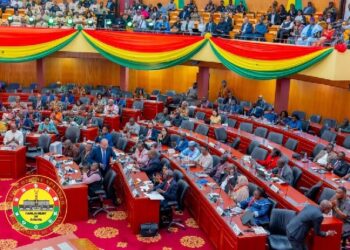
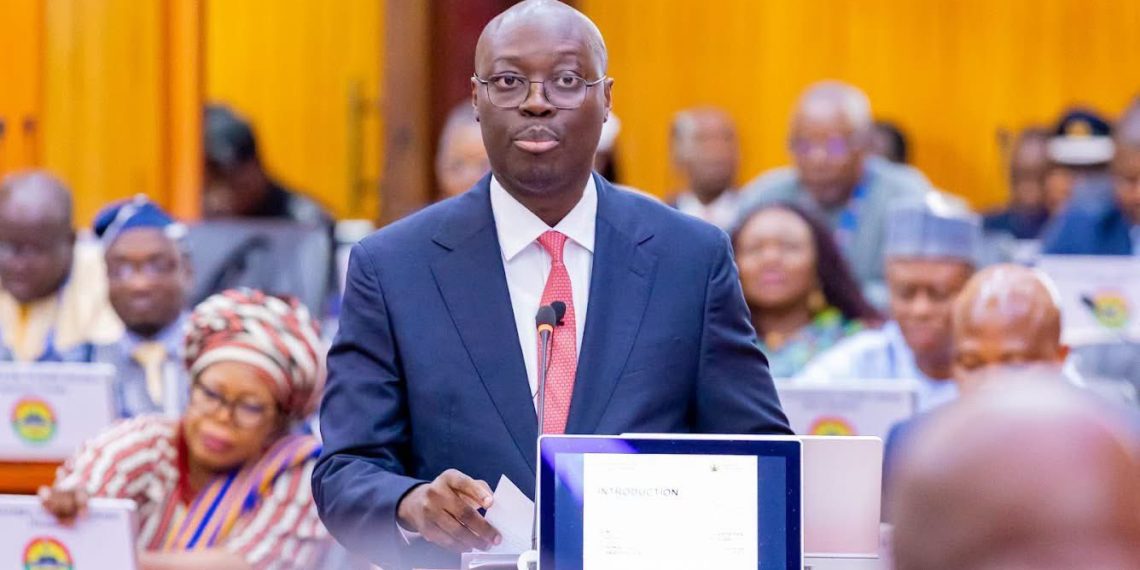
The programme, branded The New Economy: New Ghana, Jobs and Prosperity, is one of the major highlights of the 2027 Budget Statement and Economic Policy presented to Parliament by Finance Minister Dr Cassiel Ato Forson on Thursday, November 12, 2026.
The initiative, which will run from 2027 to 2030, is intended to move the country beyond economic stabilisation towards a more productive and diversified economy, reducing its dependence on raw commodity exports.
Government has allocated GH¢30 billion, representing 1.5 per cent of Gross Domestic Product (GDP), as initial funding for the programme in 2027.
The transformation agenda will be implemented through eight priority areas: macroeconomic stability and affordable finance, commercial agriculture, energy infrastructure, critical minerals value addition, tourism and creative arts, textiles and garments, pharmaceuticals and biomanufacturing, and the technology economy.
A major feature of the budget is government’s decision not to introduce new taxes in 2027. Instead, revenue mobilisation will focus on improved tax compliance, digital economy taxation and measures to address revenue leakages.
Total revenue and grants are projected at GH¢323.4 billion, while total cash expenditure is expected to reach GH¢389.2 billion.
To encourage investment in renewable energy, solar panels and batteries will also be exempted from import duties and Value Added Tax (VAT).
Government is placing significant emphasis on infrastructure investment, with direct capital expenditure projected at GH¢100.4 billion. The allocation rises to GH¢120.5 billion when capital transfers to other government units are included.
The spending plan also includes measures to reduce the country’s debt burden. Dr Forson announced the early redemption of GH¢29 billion in Domestic Debt Exchange Programme (DDEP) bonds due in February 2027.
Government also intends to settle a US$590 million Eurobond obligation due in January 2027 by December 31, 2026. Together, the payments are expected to retire more than GH¢36 billion in debt ahead of schedule.
On industrialisation, the budget outlines plans to restrict selected raw material exports and commercial food imports to create opportunities for domestic manufacturers and processors.
Government is targeting a ban on commercial rice imports by 2030, 100 per cent local processing of cocoa by the same year, and an end to raw artisanal and small-scale gold exports by December 2028.
Restrictions on raw manganese and bauxite exports are also expected by the end of 2030.
The proposed Buy Ghana policy will further support local industries by requiring public institutions to prioritise locally manufactured products in procurement.
Schools, hospitals and security agencies are expected to source selected food items, uniforms and textiles from Ghanaian producers. Locally manufactured medicines that meet Food and Drugs Authority (FDA) standards will also receive priority where suitable alternatives exist.
Government is also committing US$2.2 billion to energy infrastructure, with the aim of reducing electricity generation costs from 16 US cents per kilowatt-hour to eight US cents or less.
The programme includes a proposed 1,450-megawatt state-owned thermal power plant, a 600-megawatt solar facility and 2,000 megawatt-hours of battery storage.
The government also intends to phase out emergency power plants by 2030 and invest US$200 million in a 24-month nuclear-readiness programme, including training more than 2,000 scientists.
Beyond energy, the budget outlines plans to finance major road and railway projects through revenues from Ghana’s natural resources rather than additional borrowing.
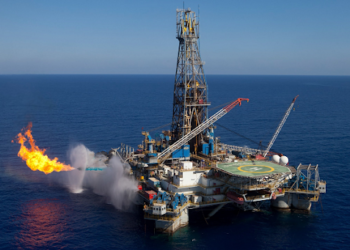
According to Dr Forson, government has accumulated US$3 billion at the Bank of Ghana from oil revenues and mineral royalties to fully finance the Accra-Kumasi Expressway.
The arrangement is expected to generate savings of more than US$1 billion against initial project estimates and provide resources to finance the Accra Orbital Expressway.
Government also plans to apply the resource-backed financing model to the Western Corridor Railway Line, linking Takoradi to Nyinahin, in 2027 and 2028.
In another major policy shift, government intends to establish a Ghana Sovereign Wealth Fund through the merger of the Minerals Income Investment Fund (MIIF) and the Ghana Infrastructure Investment Fund (GIIF).
The proposed fund will serve as an equity investment partner for projects under the 24-Hour Economy initiative and other strategic national investments.
A Natural Resource Revenue Management Act and a new Loans Act are also expected to strengthen the management of resource revenues and impose tighter controls on public borrowing.
The State Proceedings Act will also be amended to prevent judgment creditors from garnishing the Consolidated Fund and Contingency Fund.
Meanwhile, government is targeting increased funding for youth employment and domestic poultry production through changes to the existing earmarked funds framework.
The proposed uncapping of revenue from the Communications Service Tax is expected to release an additional GH¢1 billion for youth employment, skills development and apprenticeship programmes.
Government also plans to uncap levies allocated to the Ghana EXIM Bank, with at least 40 per cent of the proceeds earmarked to support local poultry and animal feed production.
The measures form part of the government’s broader strategy to strengthen domestic industries, create employment opportunities and reduce Ghana’s dependence on imported goods as the country approaches its 70th anniversary of independence in 2027.