














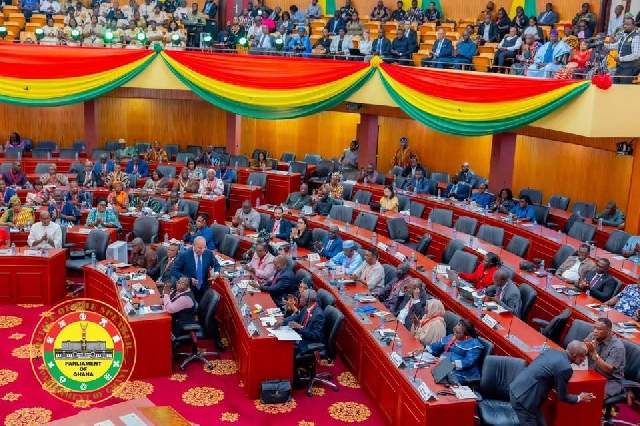
Parliament has reopened the legislative process for the Human Sexual Rights and Family Values Bill, 2025, after lawmakers voted to reverse their earlier decision approving the controversial legislation, following the discovery of inconsistencies in the final draft.
The decision, announced by Speaker Alban Bagbin on Tuesday, November 10, 2026, effectively returns the bill to the consideration of the House, creating an opportunity for MPs to review and correct provisions that do not accurately reflect decisions taken during its earlier consideration.
The reversal follows concerns raised by Parliament’s Legislation Drafting Department, which identified discrepancies between resolutions adopted by MPs and the language contained in the final version of the bill after its third reading.
Explaining the development, Mr Bagbin said the drafting department had detected errors in the legislative text but lacked the authority to independently amend provisions that had already been approved by the House.
According to him, correcting such inconsistencies required Parliament to formally revisit its earlier decision.
“The draft people could put them right. But once there are decisions, they cannot tamper with the decision of the House. It has to be brought back for the House to do the proper thing,” the Speaker explained.
Following his explanation, the Speaker put the motion to a voice vote, with the Majority of members supporting the reversal.
“Honourable members, the ayes have it. The House has accordingly rescinded its earlier decision, which was taken on Friday, May 29, 2026, in respect of the third reading of the Human, Sexual Rights, and Family Values Bill 2025,” he declared.
The development means the bill, popularly known as the Anti-LGBTQ+ Bill, will require further parliamentary consideration before the House can determine its next legislative steps.
Among the issues expected to attract attention during the renewed consideration are its sentencing provisions and other sections requiring clarification to ensure consistency between the intentions of lawmakers and the actual wording of the legislation.
The latest parliamentary action does not amount to an outright rejection of the bill. Rather, it reverses the House’s earlier resolution on its third reading to allow MPs to address the identified drafting inconsistencies.
The legislation has generated considerable public debate, attracting competing arguments over human rights, constitutional protections, religious and cultural values, and the role of the state in regulating issues of sexuality and family life.
Parliament’s decision to reopen the process therefore places the controversial legislation back on the legislative agenda, with its eventual fate dependent on further deliberations and decisions by the House.