
















The fatal shooting that marred this year’s Homowo festival at Omanjor has raised troubling questions about Ghana’s security preparedness, with community leaders in Sowutuom pointing to ignored intelligence and police inaction as the root causes of the tragedy.
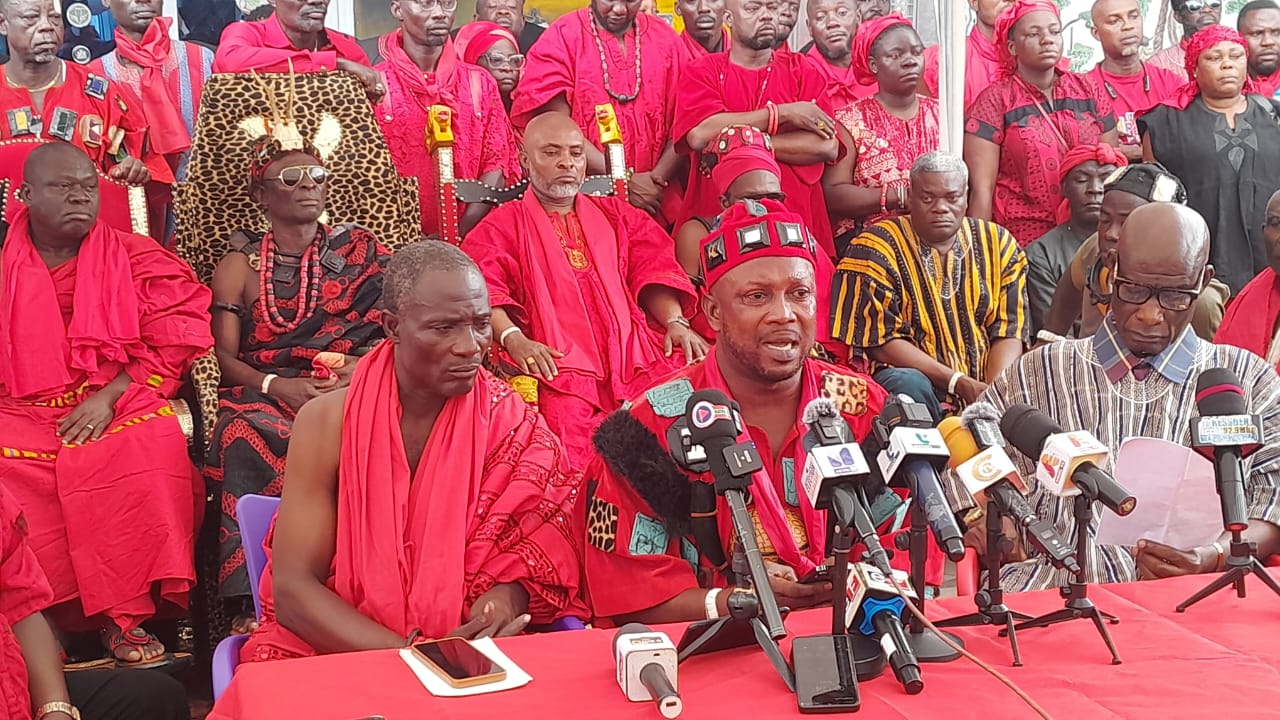
On Wednesday, September 3, chiefs and elders of Sowutuom gathered at the Sowutuom Chief’s Palace to address the killing of Abu Ramadan Sarbah, also known as Nii Lartey Kwashie I, the Kwashie-Bu Mantse and biological son of Sowutuom Mantse Nii Osabu Akwei I. The young chief was gunned down during clashes on August 30, 2025, despite prior warnings from state and traditional authorities about the potential for violence.
At the press conference, Nii Adotei Okropong II, Manklalo and Regent of Oshuman, disclosed that official intelligence had anticipated bloodshed. He read aloud a letter from the Ministry of Local Government, Chieftaincy and Religious Affairs, which had instructed the Greater Accra Regional Police Commander to enforce a ban on the sprinkling of kpoikpoi in Omanjor, Pokuase, Kojo Ashong, Ahorhuma, Oshuman, and Afiaman due to “the likelihood of severe clashes between two or more feuding parties.”
Despite the ban, celebrations went ahead in Omanjor, ending in violence that claimed three lives, injured many, and exposed weaknesses in law enforcement’s ability to prevent predictable conflict.
The Ga Traditional Council has since condemned the killings, while community leaders in Sowutuom accused the Ghana Police Service of negligence and even complicity, alleging that officers are shielding prime suspects instead of acting on clear intelligence.
“This was avoidable,” Nii Okropong II lamented, urging the government, Ga Mantse Nii Tackie Teiko Tsuru II, and Sempe Mantse Nii Adotey Otintor III to take decisive steps. “We respect the rule of law and do not want to take the law into our own hands. But act swiftly,” he warned.
Beyond the call for arrests, the Sowutuom community has presented a list of demands: relocation of the local police station, an independent ministerial investigation into security lapses, and a framework for reconciliation led by the Municipal Assembly.
The incident underscores long-standing tensions linked to land disputes and traditional boundaries in the Ga State, where armed groups and chieftaincy rivalries have frequently spilled over into open conflict. For many, however, the key issue remains the apparent disconnect between intelligence gathering and preventive policing.
As the nation reels from yet another deadly festival clash, the question looms: how could authorities have had prior warnings and still failed to stop the bloodshed?






