The Ghana Journalists Association (GJA) has raised alarm over what it describes as the increasing use of legal action to intimidate journalists and media organisations, cautioning that the trend could undermine press freedom and discourage investigative reporting in Ghana.
The Association says while individuals have a constitutional right to seek legal remedies to protect their reputations, the courts should not become instruments for suppressing public interest journalism through costly and prolonged litigation.
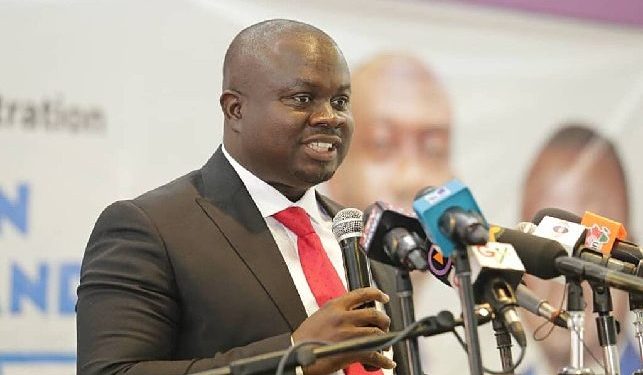
Speaking at a press conference in Accra on Thursday, July 9, GJA President Albert Kwabena Dwumfour said the Association is increasingly concerned about the emergence of Strategic Lawsuits Against Public Participation (SLAPPs), which he described as legal actions designed primarily to intimidate journalists rather than seek justice.
“The GJA recognises and strongly affirms that every citizen has a right to protect their reputation through the courts. No journalist is above the law. No media organisation is entitled to defame with impunity. Responsible journalism requires accuracy, fairness, and accountability,” he said.
Mr. Dwumfour, however, stressed that there is a clear distinction between legitimate legal action and lawsuits intended to silence critical reporting.
“But there is a crucial distinction between legitimate legal redress and the weaponisation of litigation. Lawsuits are filed, not primarily to secure justice, but to intimidate journalists, exhaust resources, bury critical reporting at a legal cost, or send a chilling message to others. Then those suits become something else entirely. They become Strategic Lawsuits Against Public Participation, in short, SLAPPs,” he stated.
According to him, SLAPPs have become a growing global challenge, particularly targeting journalists investigating corruption, abuse of office, procurement irregularities, environmental crimes, financial misconduct and other issues of public interest.
He warned that similar patterns are beginning to emerge in Ghana, where journalists and media houses are increasingly confronted with lawsuits seeking substantial damages and lengthy legal proceedings.
“More and more, journalists, editors, and media houses are facing lawsuits with enormous damages, repeated claims, and legal pressure that can stretch long after the story has been published. In many cases, the objective appears not to be truth, but intimidation. The aim is to make the cost of reporting so high that the newsroom is forced into silence, caution, or self-censorship. This is unacceptable in a democratic society,” he said.
The GJA President cited the recent imprisonment of The Herald Editor, Larry Alans-Dogbey, as a development that highlights concerns about the chilling effect legal actions can have on journalism.
Alans-Dogbey was sentenced to seven days’ imprisonment for contempt of court after the General Jurisdiction Division of the High Court in Accra found that he had breached an interlocutory injunction in a civil case brought by businessman Kevin Okyere and Springfield Exploration and Production Limited.
Mr. Dwumfour described the case as “a worrying example of the broader menace of SLAPPs,” stressing that such proceedings risk discouraging journalists from pursuing stories that serve the public interest.
Despite its concerns, the GJA reaffirmed its commitment to responsible journalism, urging media practitioners to uphold the principles of accuracy, fairness and ethical reporting while continuing to hold power to account.