
















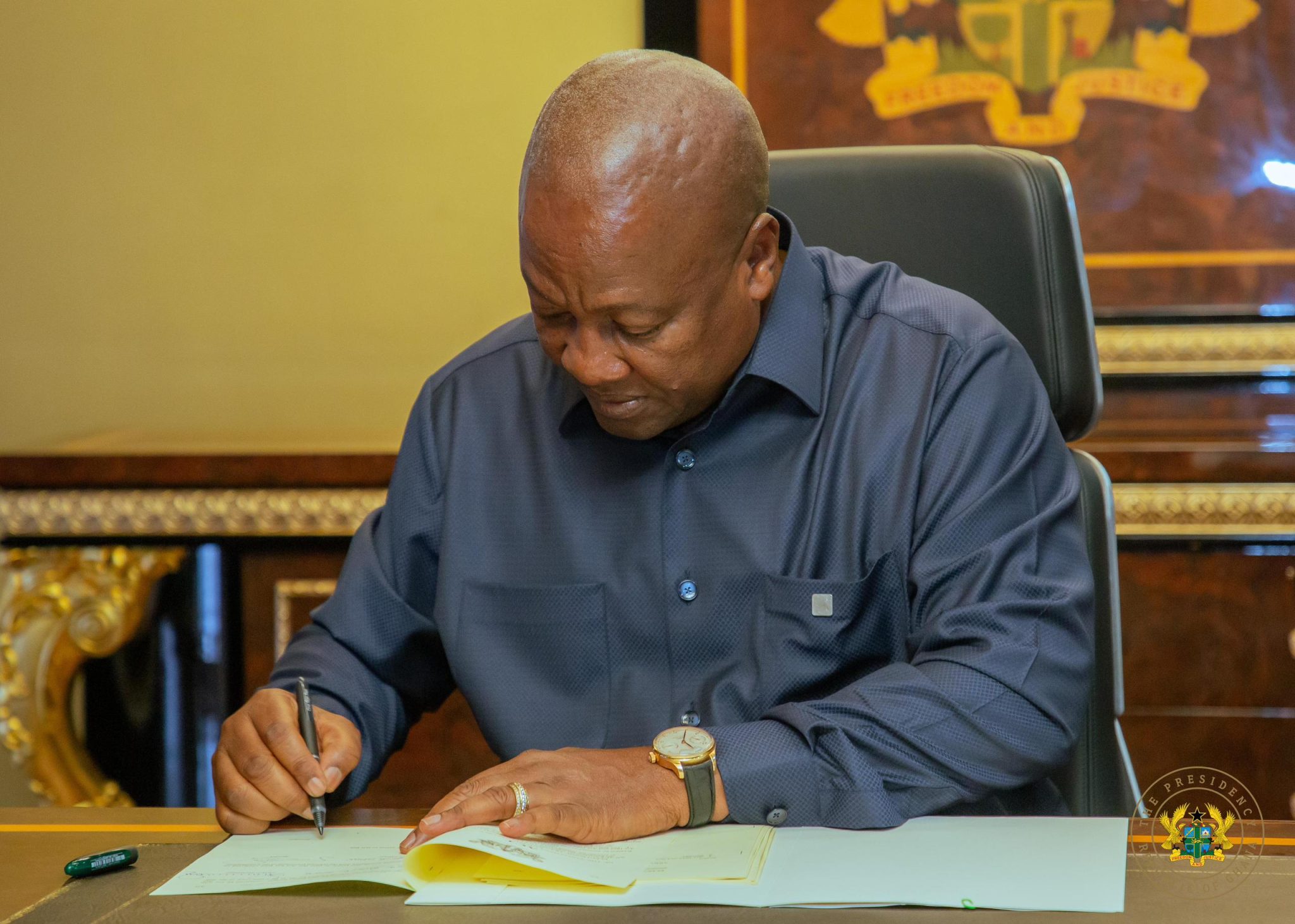
President John Dramani Mahama has officially signed the Goldbod Bill, 2025, into law, ushering in a new era for Ghana’s gold industry. The legislation, which seeks to regulate and formalize the sector, is expected to address key challenges such as illegal mining, environmental degradation, and price volatility for miners, while boosting the sector’s contribution to the national economy.
The new law establishes the Ghana Gold Board, which will oversee the implementation of reforms aimed at enhancing transparency and governance within the gold industry. A key feature of the law is the introduction of the Goldbod initiative, which designates the Gold Board as the sole purchaser of gold from licensed small-scale miners. This provision ensures that miners are offered fair prices for their gold, creating a more stable and sustainable income stream while improving working conditions across the sector.
Beyond economic regulation, the Goldbod Bill emphasizes environmental responsibility, marking a commitment by the government to balancing economic growth with environmental sustainability. The Ghana Gold Board is tasked with enforcing measures that reduce the environmental impact of gold mining activities, addressing concerns about pollution, deforestation, and water contamination that have plagued the industry in recent years.
“The signing of this Bill is a significant step in formalizing the gold sector, ensuring that miners operate in fair conditions, and minimizing the negative environmental impacts associated with mining,” said President Mahama during the signing ceremony. “This law will foster a more transparent, equitable, and sustainable gold industry that will benefit both the people and the economy of Ghana.”
The Goldbod Bill is seen as a strategic move to tackle longstanding issues within the gold mining sector, particularly illegal mining practices, which have undermined the country’s gold revenue and caused considerable environmental harm. With the implementation of this law, Ghana aims to improve the governance of its lucrative gold sector, enhance its global competitiveness, and provide fair opportunities for small-scale miners, who form the backbone of the industry.
By formalizing the sector, the government also hopes to attract more foreign investment, as a transparent and regulated gold market will increase investor confidence. Additionally, the Goldbod initiative is designed to support the financial inclusion of small-scale miners, who will now have a more structured and accessible market for their gold.
The law’s enactment comes at a time when Ghana is looking to capitalize on its position as one of the world’s leading gold producers, while ensuring that the industry’s growth is inclusive, responsible, and sustainable.






