
















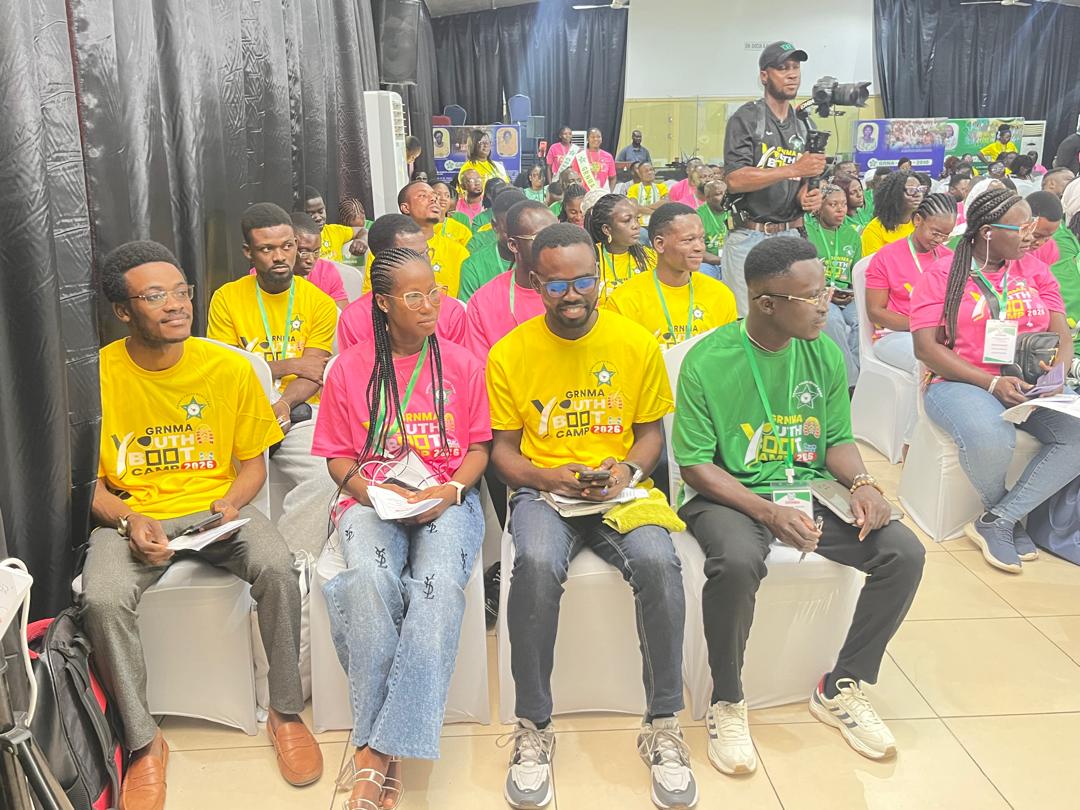
Young nurses and midwives have been urged to move beyond their traditional clinical roles and take a more active part in shaping health policies and decisions that affect Ghana’s healthcare system.
Professor Charles Ampong Adjei, a Lecturer at the Public Health Nursing Department of the University of Ghana, said the increasing number of highly educated young nurses and midwives presented an opportunity for the profession to play a stronger role in health-sector governance.
He, however, noted that the growing educational advancement of the profession had not been matched by adequate representation of young professionals in health-policy and decision-making spaces.
Prof Adjei made the call in Accra at a programme organised by the Youth Committee of the Ghana Registered Nurses and Midwives Association (GRNMA) to commemorate this year’s International Youth Day.
He said nursing and midwifery education had undergone significant transformation, with professionals now able to progress from certificate-level training to bachelor’s, master’s and doctoral degrees.
The availability of flexible learning opportunities, he added, had further enabled nurses and midwives to pursue advanced education without necessarily leaving their workplaces.
“In the past, either you opted for the University of Ghana or Kwame Nkrumah University of Science and Technology-these were the two options. Once you missed any of them, then you could not find your future,” he said.
According to Prof Adjei, the transformation had produced a younger generation of nurses and midwives with stronger research capabilities and greater exposure to evidence-based practice.
He said the challenge now was to ensure that these qualifications translated into greater influence in the formulation and review of policies governing healthcare and the nursing and midwifery professions.
He referenced research conducted about five years ago on nurses’ participation in health-policy development and review, which identified several barriers to their involvement.
These included inadequate knowledge and skills in policy formulation, perceptions of professional inferiority compared with other health professionals and reluctance among some nurses to participate in political and policy processes.
Prof Adjei therefore urged young professionals to deliberately equip themselves with knowledge of the areas in which they sought to make an impact.
“If you want to influence policy, you must understand policy. If you want to influence nursing education, you must understand nursing education. If you really want to influence the healthcare system, you must understand the healthcare system,” he said.
Research key to policy influence
The University of Ghana lecturer also challenged young nurses and midwives to take ownership of research rather than relying entirely on external researchers to undertake their academic and professional work.
He said active participation in research would strengthen their credibility and provide them with the evidence needed to influence policy discussions.
He urged postgraduate students in particular to understand every stage of the research process, including developing research questions and objectives, collecting and analysing data, and presenting findings.
Prof Adjei said young professionals should not wait until they attained senior positions before contributing to discussions on healthcare policies and professional development.
“Start in your ward, start writing in your health-facility meetings, and start in your professional association,” he advised.
Meanwhile, the President of the GRNMA, Mrs Perpetual Ofori-Ampofo, commended the National Youth Committee and regional youth coordinators for their efforts to promote the interests and development of young nurses and midwives.
She said sustained investment in young professionals and the creation of opportunities for them to participate in the association’s activities would help build a stronger, more resilient and forward-looking nursing and midwifery profession.
Unemployment concerns
The programme also drew attention to unemployment among trained and licensed health professionals, with concerns over young nurses and other health workers who had completed their training but remained without jobs.
Prof Adjei appealed to the Government, through the relevant ministry, to provide timely financial clearance and establish a comprehensive recruitment plan to absorb outstanding batches of trained health professionals.
The Acting National Youth Coordinator of GRNMA, Mrs Laurena Blader, also called on stakeholders to create more opportunities for young professionals to take leadership roles.
She urged young nurses and midwives to contribute to research and policy discussions, embrace technology to improve patient care and use their professional skills to represent Ghana positively at both local and international levels.






