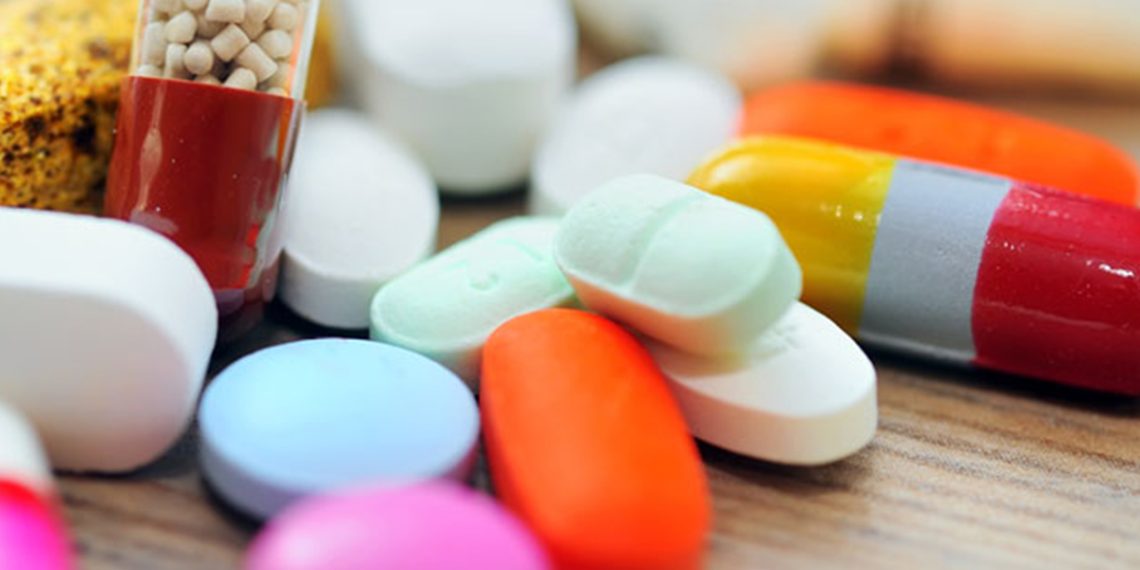
Ghana is seeking to reduce its dependence on imported medicines after pharmaceutical imports rose from about US$250 million a decade ago to more than US$750 million currently, according to the Ghana Pharmaceutical Manufacturers Association (GPMA).
The development has renewed the focus on expanding domestic drug production following the launch of the Ghana Pharmaceutical Manufacturing Policy, which aims to attract investment, strengthen local manufacturers and position the country as a pharmaceutical export hub for West Africa.
The Executive Secretary of the GPMA, Dr Lucia Addae, who spoke on behalf of the association’s president at the launch, said Ghana continued to rely heavily on imported medicines, with the country reportedly importing about 70 per cent of its pharmaceutical needs while local manufacturers supplied the remaining 30 per cent.
“We always hear that we import 70% and manufacture 30%, and people have stated that that figure has not changed over the years. Ten years ago, that figure was about $250 million. Today, that figure sits a little over $750 million,” she said.
The figures highlight the scale of the challenge facing the government as it seeks to build a more competitive domestic pharmaceutical industry and reduce the country’s exposure to disruptions in international medicine supply chains.
Minister of Trade, Industry and Agribusiness Elizabeth Ofosu-Adjare said the new policy would provide a framework for translating the government’s commitment into increased production, investment, exports and employment.
“With this clear direction from the head of state, my ministry’s responsibility is to translate that commitment into factories, products, exports and jobs,” she said.
She added that the policy would accelerate investment, promote local manufacturing and improve the competitiveness of Ghanaian pharmaceutical companies.
The government’s ambition, she said, was to ensure that Ghana produced safe, quality and affordable medicines for domestic consumption while supplying markets across West Africa.
Germany’s Ambassador to Ghana, Frederik Landshöft, welcomed the initiative, saying the COVID-19 pandemic had exposed the risks associated with concentrating the production of essential medicines and vaccines in a few countries.
He said Germany welcomed Ghana’s ambition to become a regional pharmaceutical manufacturing hub and was working with the country to unlock trade opportunities.
The policy is expected to guide efforts to expand domestic production capacity, attract private investment and improve the competitiveness of local pharmaceutical manufacturers.
Its success will depend on how effectively the government translates the policy into increased production and investment, helping local manufacturers capture a greater share of the domestic market and develop export opportunities across the region.