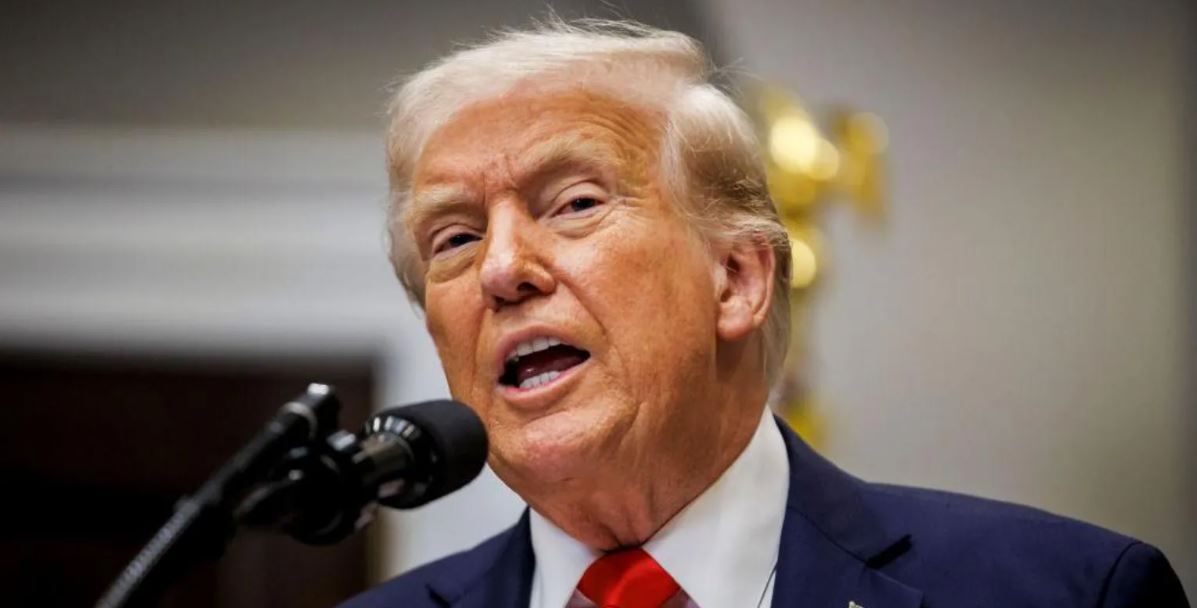
US President Donald Trump has defended his military action against Iran, claiming the operation helped protect Britain and other European countries from a potential nuclear threat.
Trump said Iran could have targeted Europe with a nuclear weapon if it had succeeded in developing one, arguing that the US intervention was therefore in the broader security interests of its allies.
Speaking to GB News, he said the action had prevented what he described as a serious future threat to Britain.
“I’m saving your country from a problem because they would use it,” he said.
Trump also renewed his criticism of Britain for declining to support US efforts to reopen the Strait of Hormuz, a strategically important route for global oil shipments.
He criticised former UK Prime Minister Keir Starmer over Britain’s position, arguing that the country was heavily dependent on the waterway for oil supplies.
The dispute comes as tensions surrounding the Strait of Hormuz continue to create uncertainty for global energy markets, with concerns about the route affecting oil supplies and fuel prices.
Beyond the Iran conflict, Trump also stepped up his criticism of London Mayor Sadiq Khan, describing him as a “nasty guy” and linking what he characterised as changes in London to immigration.
The US President warned that Britain could face “disaster” unless it took stronger measures to control the arrival of migrants.
He also claimed that there were parts of London and Paris where police were afraid to operate, without providing further details.
A source close to Mayor Khan rejected Trump’s characterisation, arguing that the US President failed to understand the achievements of London under the mayor’s leadership.
The latest comments add to a growing series of disputes between Trump and British political leaders over Iran, energy security, immigration and the direction of UK policy.
Trump maintains that his actions were necessary to prevent a wider security threat, while his critics continue to question the consequences of the US military intervention and its implications for relations with European allies.