
















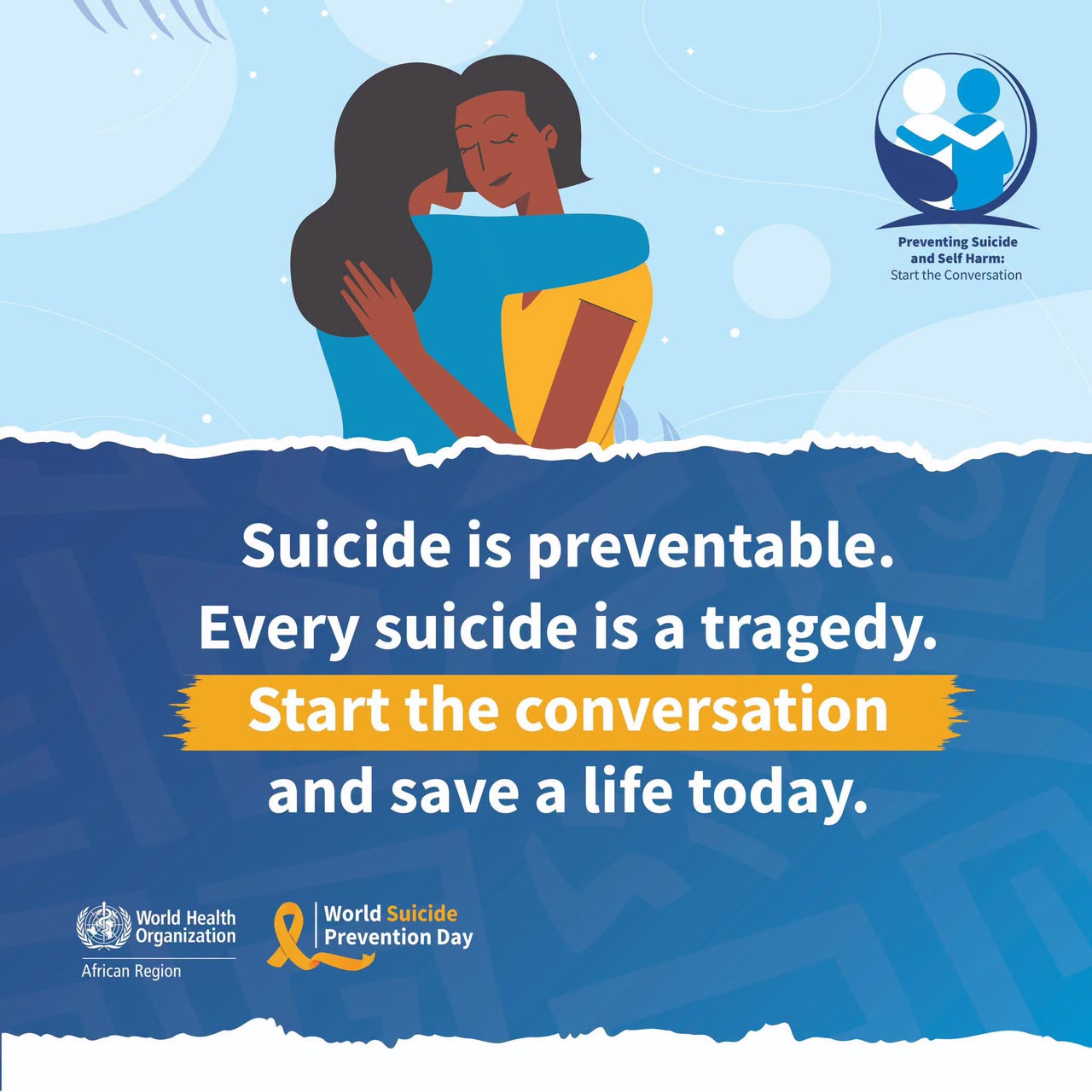
The World Health Organisation (WHO) has called for greater openness and compassion in conversations about suicide as Ghana records a rise in reported cases.
The call forms part of activities marking World Suicide Prevention Day, observed annually on September 10 to raise awareness about suicide prevention and encourage communities to support people experiencing emotional or mental distress.
According to a WHO release shared with the Ghana News Agency, available data in Ghana showed a 3.8 per cent increase in suicide cases between 2024 and 2025, heightening concerns among health professionals and other stakeholders.
Globally, suicide claims the lives of more than 720,000 people each year, with the impact extending beyond those who die to families, friends, workplaces and communities.
This year marks the third and final year of the World Suicide Prevention Day 2024–2026 theme, “Changing the Narrative on Suicide,” which carries the call to action, “Start the Conversation.”
The campaign seeks to challenge misconceptions surrounding suicide and reduce the stigma that often prevents people experiencing distress from speaking about their struggles or seeking help.
The WHO said changing the narrative required societies to move away from silence and misunderstanding towards empathy, openness and support.
It also stressed that suicide prevention should extend beyond individual interventions to broader changes in public policy and health systems.
Governments and institutions, it said, needed to prioritise mental health and suicide prevention by developing evidence-based strategies, expanding access to quality care and ensuring that people in distress could obtain appropriate support.
World Suicide Prevention Day was established in 2003 by the International Association for Suicide Prevention in collaboration with the WHO.
The annual observance brings together governments, organisations and communities around the recognition that suicide is preventable.
Mental health advocates have subsequently renewed calls for stronger awareness campaigns, early intervention and more accessible support systems to address the challenge.
They have also urged the public to listen without judgment, show compassion and encourage people experiencing distress to seek professional assistance.
The campaign’s central message is that creating safe spaces for honest conversations can help break the silence surrounding suicide and make it easier for people at risk to access support.






