
















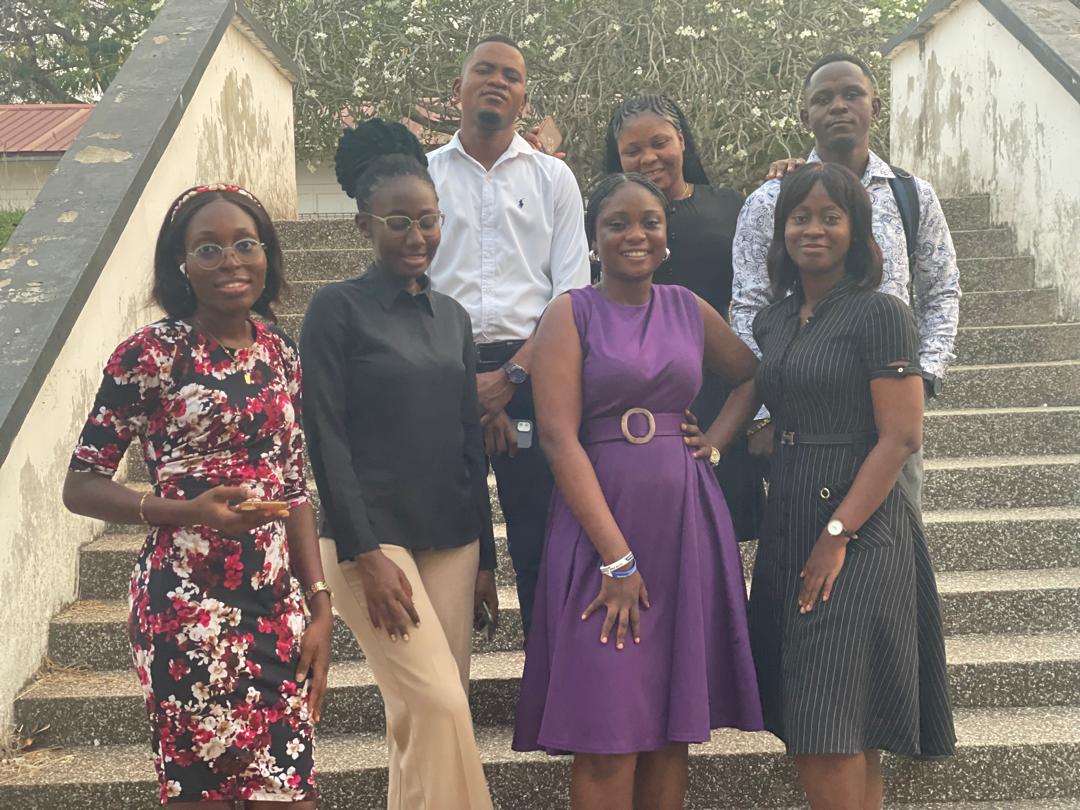
A group of Master of Philosophy (MPhil) students from the Department of Psychology at the University of Ghana is calling for a behavioural science-driven approach to national transformation, offering a structured framework to support the government’s “Resetting Ghana” initiative.
In a research paper titled “Resetting Ghana”, the students argue that meaningful national change must go beyond structural reforms and instead prioritise behavioural transformation at the individual, team, and organisational levels. Their work introduces psychological theory and change management models as essential tools in addressing the nation’s deep-rooted governance and socio-economic challenges.
Speaking to the Ghana News Agency, group members Mr. Bright Uwumborti Ijon, Miss Anita Sonkroh, Miss Akosua Dzandu, and Mr. William Atiemo-Allotey said their goal was to contribute evidence-based, academically grounded insights into public policy and reform strategies.
Drawing on established models such as Kurt Lewin’s Three-Step Model, Kotter’s Eight-Step Change Process, and Cummings and Worley’s General Model of Planned Change, the students outlined a comprehensive strategy to catalyse sustainable national reform.
“Unfreezing the status quo is the first step,” explained Miss Anita Sonkroh, emphasizing the need for the public and policymakers to recognize the gap between current practices—such as corruption and inefficiency—and desired outcomes like transparency and accountability.
The students highlighted the importance of forming a guiding coalition made up of policymakers, private sector leaders, academics, and civic actors to build consensus around a shared national vision.
“The success of any reset depends not just on policy but on people. Change must be internalised,” said Mr. Ijon, stressing the need to remove both structural and psychological barriers to change.
The research also champions the role of Industrial and Organisational (I/O) Psychologists in public reform. According to Mr. William Atiemo-Allotey, I/O psychologists are equipped to guide transitions, address resistance to change, and design interventions tailored to specific institutional contexts.
“Our discipline is not just academic—it has practical applications in designing change, resolving resistance, and sustaining improvement,” he noted.
Miss Akosua Dzandu added that stakeholder education and regular feedback loops are critical to ensuring long-term success, urging policymakers to adopt continuous evaluation mechanisms throughout the change process.
This student-led initiative underscores the growing relevance of academic research in national policy dialogue, showcasing how Ghana’s intellectual community can provide solutions rooted in scientific rigor and social understanding.
As the “Resetting Ghana” initiative gathers momentum, the University of Ghana team is encouraging collaboration between government, academia, and civil society to ensure that transformation efforts are not only strategic—but also psychologically sustainable.






