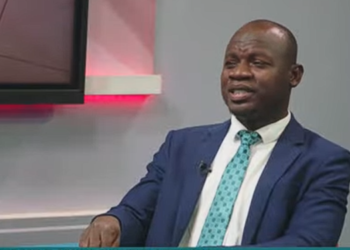
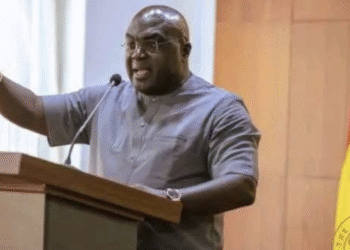
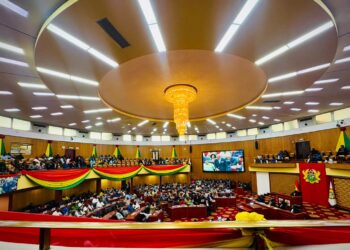
The Supreme Court has dismissed two key objections raised by former Attorney General Godfred Yeboah Dame, reinforcing the authority of the Acting Chief Justice and the court’s internal processes.
The objections were part of legal maneuvers aimed at stalling proceedings connected to the ongoing motion seeking to halt the removal of Chief Justice Gertrude Torkornoo. Dame, representing plaintiff Vincent Ekow Asafuah, had called for the recusal of Acting Chief Justice Paul Baffoe-Bonnie and challenged the reconstitution of the panel presiding over the motion.
Dame’s arguments hinged on perceived bias, alleging that Justice Baffoe-Bonnie stood to benefit from the outcome and should therefore not oversee the case. He also cited Article 157(3) of the Constitution to argue that a panel which had already commenced hearing the matter should not be changed.
However, in a decision seen as reinforcing the stability of the judiciary’s internal mechanisms, the court ruled that the Acting Chief Justice acted within constitutional bounds. It pointed to Article 144(6), which grants an Acting Chief Justice full authority to perform the functions of the office, including the constitution of panels.
The court further rejected the claim that the panel’s reconstitution violated constitutional procedure, clarifying that Dame’s interpretation of Article 157(3) was inapplicable in the present context.
The ruling underscores the judiciary’s resistance to external pressure and legal technicalities that could undermine its independence or delay proceedings of public interest.
Legal analysts say the court’s dismissal sends a strong signal about its commitment to institutional integrity, particularly at a time when the country’s judicial leadership is under scrutiny.
The full reasons for the ruling are expected to be made public on May 21, 2025.