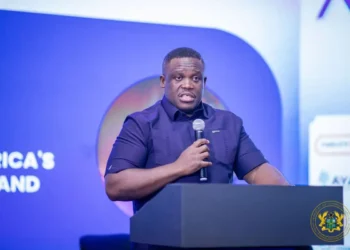
Ghanaian lawyer and governance advocate Ace Ankomah has challenged African leaders, educators, and young professionals to position the continent as a creator of technology by embracing ethical leadership in the age of artificial intelligence.
Delivering the 2026 Commencement Address at the SOS-Hermann Gmeiner International College in Tema, Mr Ankomah argued that the rapid rise of AI presents a unique opportunity for Africa to shape the future of technology rather than remain on the sidelines of global innovation.
Speaking on the theme, “Cultivating Ethical Leadership for an AI-Driven Future: A Collective Pan-African Obligation,” he said Africa must pursue technological sovereignty by developing digital systems that reflect the continent’s values, realities, and aspirations.
According to him, technological tools are never neutral, as they often embody the perspectives and priorities of those who create them. For that reason, he stressed the importance of Africans taking a leading role in designing technologies that address local challenges and serve local communities.
Mr Ankomah highlighted Africa’s rich traditions of communal responsibility, human-centred decision-making, and social solidarity as strengths that could help shape a more ethical approach to technological advancement.
He called for the development of a new generation of innovators who combine technical excellence with moral responsibility.
“Africa needs coders, but conscientious coders. Engineers, but ethical engineers. Entrepreneurs, but principled entrepreneurs,” he told graduates.
The legal luminary warned that relying heavily on technologies developed outside the continent could lead to systems that fail to account for African realities. He cited potential risks in sectors such as healthcare, finance, and language technology, where inadequate representation of African data and experiences could produce unfair or ineffective outcomes.
Mr Ankomah noted that AI systems lacking an understanding of Africa’s diversity could unintentionally deepen inequality, marginalise communities, and reinforce existing biases.
He also expressed concern about the accelerating pace of AI development, cautioning that increasingly advanced systems could challenge humanity’s ability to maintain oversight and control.
Despite these concerns, he maintained that ethical leadership remains the most important safeguard in the digital age, arguing that technological progress must be guided by values, wisdom, and human conscience.
He therefore called for educational institutions across Africa to place greater emphasis on character formation, ethics, and responsible leadership alongside science, technology, engineering, and mathematics.
The address formed part of the college’s 2026 graduation ceremony and encouraged graduates to use their knowledge and skills to help shape an African future where innovation is driven not only by intelligence and efficiency but also by integrity, compassion, and social responsibility.