














He argues that although the government has made progress in restoring macroeconomic stability, the next phase of economic management must focus on stimulating business growth, expanding industrial capacity and creating sustainable employment.
Prof. Bokpin said excessive reliance on expenditure cuts, particularly reductions in government spending on goods and services, could weaken the private sector and undermine the broader recovery process.
He cited a reduction of more than 47 per cent in government expenditure on goods and services before 2025, explaining that while the measure helped narrow fiscal deficits, it also affected small businesses that depend on government contracts and procurement.
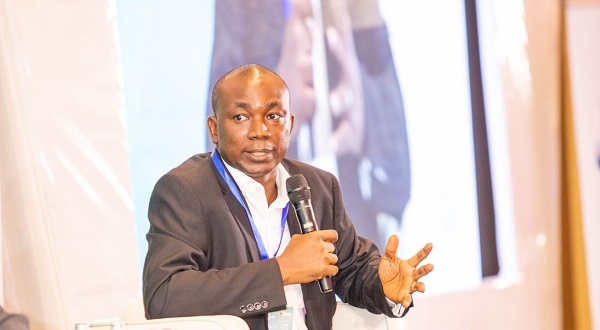
Speaking in an interview on the sidelines of the National Policy Dialogue on Philanthropy and Social Investment in Accra, he stressed that fiscal discipline must be complemented by investments capable of generating economic activity and improving livelihoods.
“Government expenditure on goods and services is important because it supports a lot of small businesses. When you cut that expenditure by more than 47 per cent, you are also affecting businesses that depend on government,” he said.
He maintained that the government must move beyond efforts to balance the books and prioritise spending that creates opportunities for domestic enterprises, strengthens local production and expands the economy’s productive base.
Agriculture, infrastructure key to recovery
Prof. Bokpin identified agriculture, agribusiness and agro-processing as critical sectors that should receive greater attention in the country’s investment priorities.
He said improving agricultural productivity and expanding agro-processing capacity would help create jobs, strengthen local businesses and reduce the economy’s dependence on imports.
He also highlighted the importance of rural-urban road infrastructure, arguing that better connectivity would improve access to markets, facilitate the movement of goods and services and unlock economic opportunities in communities outside major urban centres.
According to him, investments in these areas must be coordinated to ensure that improvements in infrastructure reinforce productivity and business expansion.
Ghana needs 15 years of consistent policies
Beyond immediate fiscal and economic interventions, Prof. Bokpin cautioned that Ghana should not expect macroeconomic stability to translate into economic transformation overnight.
He estimated that the country could require approximately 15 years of sustained reforms, strategic investments and consistent economic policies to achieve meaningful structural transformation.
“Normally, moving from macroeconomic stability to greater economic transformation takes close to 15 years of doing the right thing consistently and the necessary reforms bundled together reinforcing each other,” he said.
He explained that countries that had successfully transformed their economies achieved such progress through long-term policy consistency and coordinated reforms rather than interventions tied to individual budget cycles.
He therefore stressed the need for successive governments to maintain a clear economic direction and avoid frequent policy reversals that could disrupt long-term development plans.
Calls for technology-driven productivity
Prof. Bokpin further called for the integration of artificial intelligence and other digital technologies into Ghana’s economic management systems to improve productivity, strengthen revenue mobilisation and reduce inefficiencies.
Drawing lessons from China’s development experience, he argued that deliberate investments in technology and infrastructure could accelerate Ghana’s economic transformation, particularly by extending productivity gains to businesses and communities at the grassroots level.
He maintained that technology must form part of the country’s broader development strategy rather than remain confined to isolated digitalisation initiatives.
Meanwhile, the government is expected to provide further details of its New Economy Agenda in the 2027 Budget, scheduled for presentation on November 12.
The proposed agenda is expected to outline the government’s economic priorities, as attention increasingly shifts from restoring macroeconomic stability to building a more productive economy capable of delivering sustainable jobs, business growth and improved living standards.