MTN Ghana is positioning the country’s gaming industry as a major new digital growth opportunity, with the company seeking to connect local developers to its millions of customers and create a larger market for locally produced games.
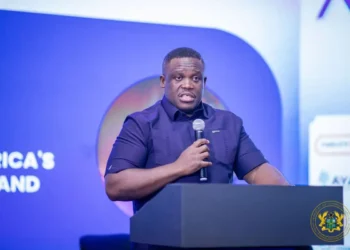
Chief Executive Officer of MTN Ghana, Stephen Blewett, said the company’s gaming business was growing faster than any other area of its digital strategy, making the sector an increasingly important part of its future growth plans.
Speaking at the MTN Gaming Conference in Accra on October 1, 2026, Mr Blewett said Ghana had no shortage of talented developers but needed a stronger market capable of turning their ideas into sustainable businesses.
“People develop, they have great games, but where do you sell it?” he asked.
He said MTN’s customer base of about 31 million could provide local developers with direct access to a large pool of potential players, helping address one of the major challenges facing Ghanaian game studios.
The initiative comes as MTN expands its network capacity following the award of new 5G spectrum by the National Communications Authority (NCA).
MTN Group announced on October 2 that it had been notified of the award of spectrum in the 700 MHz and 3 GHz bands for 5G and mobile broadband. The licences, which run for 15 years, have a combined fee of US$202 million.
Mr Blewett said MTN was also adding 500 network sites as it works to strengthen its connectivity infrastructure.
The company believes improved connectivity could support the growth of mobile gaming, particularly multiplayer and other services that depend on fast and low-latency networks.
Mr Blewett said Africa should also develop games that reflect its own cultures, environments and experiences rather than relying predominantly on products created outside the continent.
He argued that gaming could serve purposes beyond entertainment, including education and social engagement, particularly among young people.
He also identified e-sports and multiplayer gaming as emerging areas that could create income opportunities while connecting young people across different markets.
Artificial intelligence, he added, could further reduce the cost of developing games and enable studios to produce more titles, although its application in the industry remains at an early stage.
As part of efforts to strengthen the sector’s talent base, MTN has partnered with Ashesi University to develop skills for Ghana’s gaming industry.
The partnership was announced during the conference, which MTN organised with Ghanaian game development studio Leti Arts as part of its two-month DigiFest programme.
The conference brought together industry stakeholders, including Leti Arts Chief Executive Officer Eyram Tawia and Glenn Gillis of South Africa’s Sea Monster.
Mr Blewett said developing the necessary skills would be critical to enabling young developers to transform creative ideas into commercially viable games.
The DigiFest programme will also feature conferences on artificial intelligence and user interface design, as MTN expands its focus on digital services and emerging technologies.