President John Dramani Mahama has firmly ruled out the privatisation of the Electricity Company of Ghana (ECG), stating that his administration will pursue public-private partnerships to revive the ailing power distributor rather than cede it to private hands.
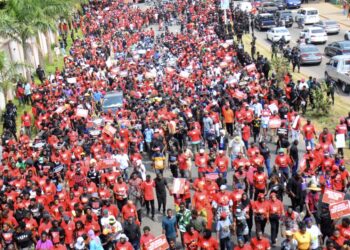
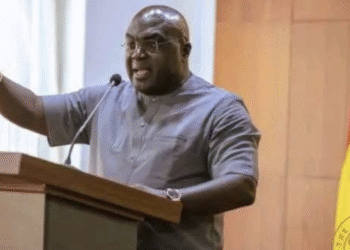
Speaking at the 2025 May Day celebration at Black Star Square in Accra, the President directly addressed growing fears among labour unions and the general public that ECG could be sold off to foreign or private interests.
“It is not my intention to privatise ECG as an institution,” he declared. “Our attention is more on public-private collaboration to inject efficiency into our downstream electricity distribution system.”
Mahama attributed ECG’s deteriorating state to what he called a “culture of poor governance over the last eight years,” revealing that the company’s debt had ballooned to ₵68 billion.
He warned that if no action is taken, “our power system will collapse.”
While dismissing outright privatisation, the President stressed the need for urgent reforms to improve power distribution efficiency and lower electricity tariffs.
His approach, he said, would protect ECG’s public ownership while leveraging private-sector expertise and resources.
The President’s comments are seen as a strategic attempt to balance economic reform with political caution, particularly as stakeholders in the energy sector remain wary after past attempts at concession deals, such as the controversial PDS arrangement under a previous administration.
Mahama’s assurance is likely to calm nerves among ECG workers and union leaders, many of whom have been vocal in opposing any sale of the national power utility.
However, the call for reform remains urgent, as the public continues to grapple with high tariffs and inconsistent service.
The key question now is whether a public-private model can succeed where state control alone has failed—without repeating the mistakes of the past.