
















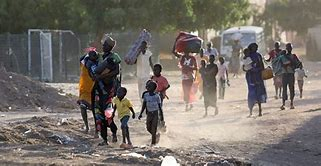
The Gbinyiri land conflict in northern Ghana is fast escalating into a humanitarian and food security crisis, with more than 13,000 people forced to seek refuge in Côte d’Ivoire, while thousands more remain displaced within Ghana’s borders.
Interior Minister Mohammed Mubarak Muntaka, speaking on Joy FM’s Super Morning Show on Thursday, September 4, confirmed that 13,253 Ghanaians had crossed into Côte d’Ivoire, according to figures supplied by Ivorian authorities.
The clashes have displaced families across four regions, with many abandoning homes, farms, and livestock at the peak of the farming season. Mr. Muntaka cautioned that if the crisis is not resolved quickly, food insecurity could worsen in the affected areas.
“Many of them left their animals and their farms unattended. If we don’t resolve this quickly, it will lead to a lot of food insecurity in that area,” the minister warned.
Government, local assemblies, and international partners — including the United Nations High Commissioner for Refugees (UNHCR) — are coordinating support for those displaced. The minister expressed gratitude to the government of Côte d’Ivoire for accommodating the refugees and praised Ghana’s security services for their sacrifice in keeping the situation under control.
At the same time, traditional authorities and the Peace Council are intensifying mediation efforts. A high-level delegation from Gonjaland was meeting the Yagbonwura on Thursday to seek lasting solutions, with a committee expected to be set up by early next week to investigate the conflict and recommend preventive measures.
Mr. Muntaka indicated that plans are underway to facilitate the safe return of displaced families once security conditions permit. “We are optimistic that with the meetings underway, we may soon be able to announce to all the displaced persons to return to their homes,” he said.
The Gbinyiri dispute has once again highlighted the deep-rooted challenges of land conflicts in Ghana, where unresolved chieftaincy and boundary disagreements often spill into violence, displacing thousands and disrupting livelihoods.






