
















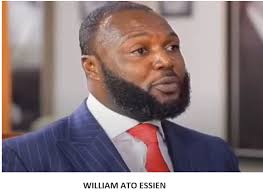
A petition has been submitted to former President John Dramani Mahama, urging him to grant a presidential pardon to William Ato Essien, the entrepreneur and founder of First Capital Plus, which later became Capital Bank. Essien is currently serving a 15-year prison sentence after being convicted of misappropriating over GH¢90 million in liquidity support provided by the Bank of Ghana to Capital Bank.
The petition, authored by lawyer Andrew Appiah-Danquah, challenges the fairness of Essien’s conviction, arguing that his imprisonment undermines his contributions to Ghana’s financial sector. It claims that Capital Bank’s collapse was politically motivated rather than a result of fraud, asserting that Essien refused to yield to political pressure to relinquish control of his bank.
According to the petition, the GH¢620 million liquidity support extended to Capital Bank was a commercial loan rather than fraudulent funds. It highlights that Capital Bank had already repaid GH¢336 million in interest over two years, demonstrating that the funds were being lawfully managed. Furthermore, the petition contends that the GH¢480 million categorized as a “shareholder loan” was a strategic financial restructuring, a standard practice in the banking industry, rather than an illegal transaction.
A central argument in the petition is that other individuals who faced similar charges—Dr. Tetteh Nettey, Rev. Fitzgerald Odonkor, and Kate Quartey-Papafio—were acquitted. It questions why Essien alone was convicted when the court ruled that payments tied to their transactions were legal and accounted for.
The petition also alleges that Essien was coerced into accepting a plea bargain to avoid a prolonged trial, agreeing to repay GH¢90 million, an amount allegedly exceeding the actual financial loss. Despite paying GH¢43.75 million so far, he was unable to meet the remaining installment deadlines, leading to his custodial sentence.
Supporters of the petition argue that granting Essien a presidential pardon would correct a judicial injustice and reinforce confidence in Ghana’s financial sector. However, critics view the request as an attempt to shield a high-profile banker from accountability. As the debate unfolds, the decision on whether to grant clemency remains uncertain, raising broader questions about justice, corporate governance, and political influence in Ghana’s banking sector.






