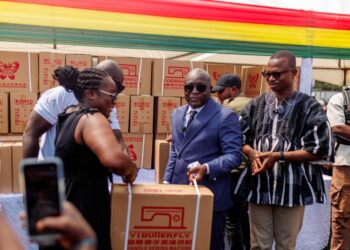
In a renewed push to bridge the early learning gap in northern Ghana, the second phase of the Quality and Inclusive Early Childhood Education Services for All Children (QAIECE 2) has officially commenced in the North East Region. The three-year project, worth US$2.14 million, is aimed at enhancing public kindergarten (KG) education for over 122,000 children aged four to five in East and West Mamprusi municipalities.
Led by ChildFund Korea and implemented by Children Believe Ghana and AG CARE, the initiative seeks to address the systemic challenges affecting early childhood education in underserved communities. These include poor infrastructure, lack of trained teachers, and inadequate learning materials.
Tangible Deliverables and Training Initiatives
Under QAIECE 2, 10 fully furnished kindergartens will be built, along with water, sanitation, and hygiene (WASH) facilities. The project also includes the drilling of five boreholes, distribution of over 10,000 workbooks, digital equipment for six schools, and training for 136 teachers in early childhood pedagogy and ICT integration. Additionally, 120 community facilitators and 285 members of school management and parent-teacher associations will be trained, while 224 vulnerable children will receive targeted support.
Building on Phase One Successes
Speaking at the launch in Nalerigu, Mr. Donghyun Lee, Country Director for the Korea International Cooperation Agency (KOICA), said QAIECE 2 is building on the success of the first phase, which significantly improved classroom infrastructure and parental engagement. However, he pointed to persistent challenges, particularly the lack of qualified KG teachers in the region. “Only seven out of 40 teachers assessed in nine schools were qualified in early childhood education,” he noted, calling for targeted capacity-building.
Advocating for Early Learning Investments
Children Believe Ghana’s Country Director, Madam Esenam Kavi De-Souza, stressed that learning must begin before primary school if Ghana hopes to build a resilient human capital base. “The early childhood period provides a unique window of opportunity,” she said, urging Metropolitan, Municipal, and District Assemblies (MMDAs) to prioritise early childhood education in their development plans.
Her sentiments were echoed by Miss Beuniel Ko, Country Programme Manager for ChildFund Korea, who described QAIECE 2 not just as an infrastructure or material-based project, but one focused on giving children the space and opportunity to dream.
Government Commits to Stronger ECE Support
In a speech delivered on his behalf, Education Minister Mr. Haruna Iddrisu thanked the Korean government and partners for their investment and reaffirmed Ghana’s commitment to early childhood education reforms. “This excellent and timely initiative will help lay a solid foundation for Ghana’s future,” he said.
North East Regional Minister, Mr. Ibrahim Tia, also pledged to ensure the project’s resources reach the intended beneficiaries. He called on local governments to collaborate with education directorates to deliver value and impact.
A Step Toward SDG 4
The QAIECE 2 project directly supports the achievement of Sustainable Development Goal 4, which mandates inclusive, equitable, and quality education for all. With early learning increasingly seen as a determinant of future educational success, the initiative represents a critical investment in Ghana’s youngest learners and its long-term development agenda.