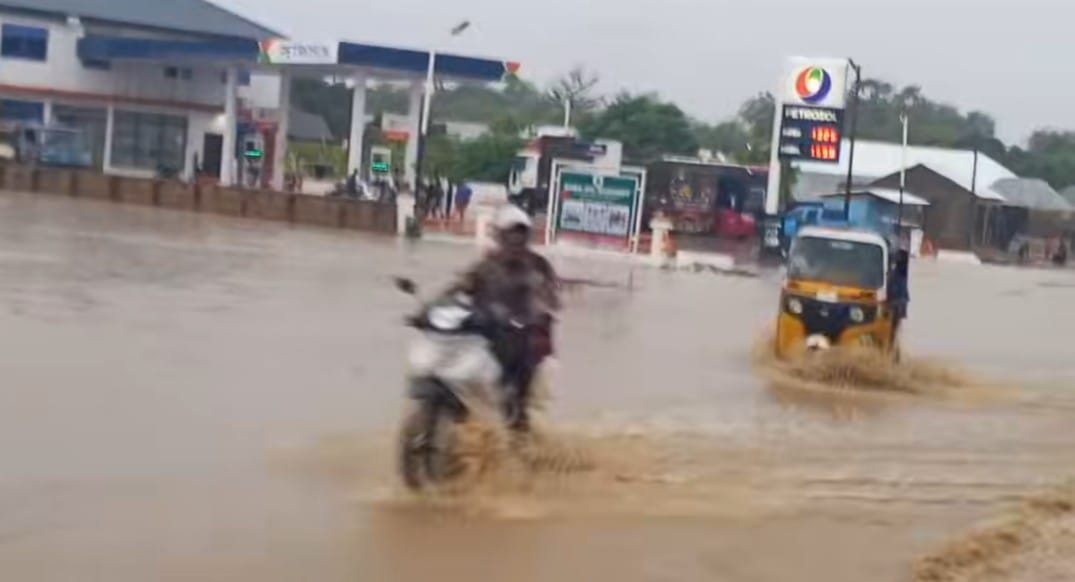
Recurring flooding in parts of Wa has been linked to both human activities and inadequate infrastructure, raising concerns among residents and disaster management officials.
The Upper West Regional Director of the National Disaster Management Organisation, Osman Abdul-Latif Sinsew, says indiscriminate waste disposal and construction on waterways are major contributors to the problem.
Following a heavy downpour on March 29, which flooded areas such as Mangu, Kambali, and Kpaguri, he explained that clogged drains prevent the free flow of water, forcing it into homes and businesses.
He added that the situation is worsened by already inadequate drainage systems, which struggle to handle large volumes of rainwater.
Mr. Sinsew warned residents against dumping refuse into gutters and building on waterways, stressing that such practices continue to trigger flooding whenever it rains. He noted that NADMO has intensified public education ahead of the rainy season and called for stricter enforcement against offenders.
However, residents say the issue goes beyond human behavior. A victim of the flooding, Bright Owusu, pointed to poor road conditions and the absence of proper drainage infrastructure in areas like Kpaguri as key factors behind the persistent problem.
He appealed to the Wa Municipal Assembly to invest in road construction and drainage systems, especially in newly developed communities, to help reduce future flooding.
The situation highlights the dual challenge of infrastructure deficits and human practices in addressing flooding in the municipality.