Despite significant advancements in Ghana’s educational infrastructure, rural students sitting for the Basic Education Certificate Examination (BECE) continue to face harsh logistical challenges that experts say require urgent policy redress.
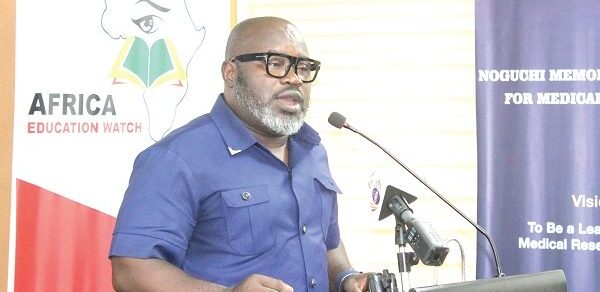
Mr. Kofi Asare, Executive Director of Africa Education Watch, has urged the government to decentralise BECE examination centres to better serve candidates from remote communities. His call comes amid the conclusion of the 2025 BECE, which saw over 600,000 candidates participating nationwide.
In an interview with the Ghana News Agency, Mr. Asare highlighted the recurring hardships rural students endure—some of whom must travel miles to nearby towns and sleep in churches or classrooms just to write their exams.
“Twenty-four years ago, during my national service in Twifo, I saw this firsthand. Students lodged in churches to sit for the BECE. Today, they still do,” he lamented. “Yet ballot boxes can reach those same villages during elections. It’s time for a rethink.”
According to him, the makeshift accommodations expose students to mosquito bites, poor hygiene, and psychological stress—conditions that negatively impact their performance.
While commending the government and the Ghana Education Service (GES) for a smooth and financially secure examination process this year, Mr. Asare stressed that more must be done beyond logistics.
He also praised the inclusive decision to allow pregnant girls to take part in the exams, calling it a “heartwarming and resilient” gesture. He recommended that health facilities be stationed at all examination centres to provide care, particularly for pregnant candidates.
Africa Education Watch is also advocating for comprehensive sex education at the basic school level to curb rising teenage pregnancy rates, which often result in dropouts.
Mr. Asare further warned of a growing trend of BECE candidates abandoning exams to engage in illegal mining activities (galamsey), and called on parents and local leaders to take a more active role in safeguarding their children’s education.
At the Abavana Compound “A” Centre, examination supervisor Mr. Kwasi Botwe described the process as “cool” and incident-free, but suggested that future exams be held in better-equipped central locations to avoid the undignified scenario of students bringing their own chairs to centres.
He also proposed that the academic calendar be adjusted to ensure schools remain open during BECE periods to ensure continuity in learning and support for candidates.
With 603,328 candidates—comprising 306,078 females and 297,250 males—registered this year, the BECE remains a major national assessment milestone. However, stakeholders insist that without targeted reforms, rural candidates will continue to face unjust barriers that threaten to widen the educational equity gap.