The Shama District Assembly in the Western Region is set to cut its sanitation expenditure by about GH¢80,000 every month following the acquisition of a nine-acre parcel of land for the development of a landfill site.
The land, located near Atwereboanda, will enable the Assembly to end its dependence on the Sekondi-Takoradi Metropolitan Assembly (STMA) for waste disposal services.
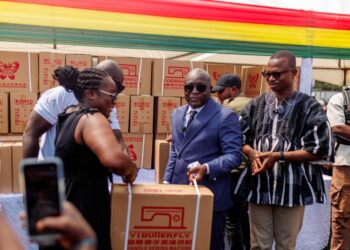
The District Chief Executive for Shama, Mr Paul Otis Dentu, disclosed this during a town hall meeting at Dwomo, where he presented an account of the Assembly’s development activities and ongoing projects.
He said the decision to establish an independent landfill site would not only reduce the financial burden on the Assembly but also give the district greater control over waste management operations.
Mr Dentu said the Assembly was also investing in healthcare infrastructure, including the construction of a new Community-based Health Planning and Services (CHPS) compound and nurses’ quarters at Dwomo.
To improve access to potable water, he said mechanised boreholes had been drilled at Daboase Junction, Supomu Dunkwa, Esiaman, Ohiamadwen, Aboso and other communities.
The DCE further disclosed that the Assembly had acquired two pick-up vehicles to strengthen its administrative and operational activities.
On road development, Mr Dentu said several feeder roads in the district had been tarred, while equipment obtained under the District Road Improvement Programme (DRIP) was being used to reshape and grade roads periodically.
The interventions, he said, were intended to improve the movement of residents, goods and agricultural produce across the district.
The town hall meeting formed part of the Assembly’s efforts to promote transparency and accountability while allowing residents to provide direct feedback on development priorities.
The Chief of Aboadze, Nana Kobena Ntahiaka II, commended the Assembly for its development initiatives but called for broader stakeholder participation in local governance and development planning.
“Politics is not only about voting for leaders. It is about the development process, and that process requires the involvement of chiefs, opinion leaders, and other stakeholders,” he said.