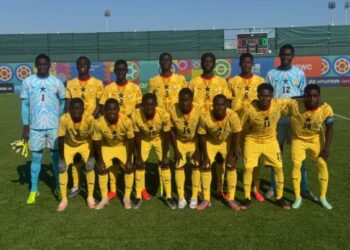
Senegal’s Prime Minister Ousmane Sonko has abruptly cancelled a planned U.S. training camp for the national women’s basketball team, framing the decision as an act of national sovereignty following the refusal of U.S. visas to several team members.
While the stated reason for the cancellation is the visa denials, the move comes against a backdrop of growing diplomatic tension between the United States and several African nations, including Senegal. The U.S. government is reportedly preparing to impose expanded travel restrictions on 25 African countries, sparking concerns of a deeper geopolitical rift.
“Informed of the refusal of issuing visas to several members of the Senegal women’s national basketball team, I have instructed the Ministry of Sports to simply cancel the ten-day preparatory training initially planned in the United States of America,” Sonko said in a statement posted on social media Thursday.
The players were due to prepare for the 2025 Women’s AfroBasket tournament in Ivory Coast next month. Reports say five players and 13 team officials were expected to join the rest of the team and coaching staff who were already in the U.S. However, the visa rejections scuttled the plan.
Instead, the team will now conduct their pre-tournament preparations in Dakar, which Sonko described as a “sovereign and conducive setting,” a pointed rebuke that underscores a growing sense of discontent over the treatment of African nationals by Western countries.
Wider Ramifications for U.S.-Africa Relations
The cancellation coincides with a leaked diplomatic cable indicating that the U.S. is expanding travel restrictions on countries that, according to American officials, are failing to meet key security and immigration standards. The list reportedly includes Senegal, and reasons cited range from visa overstays to non-cooperation with deportation orders and anti-American rhetoric.
While the U.S. Embassy in Dakar has yet to officially explain the reason for denying the basketball team’s visa applications, the timing has raised diplomatic and public concerns. Senegal’s Foreign Ministry has responded by urging citizens to strictly adhere to visa rules when traveling to the U.S., while stating that it remains engaged in dialogue with American authorities.
Athletes Caught in the Middle
Senegal’s women’s basketball team, one of the top-ranked teams in Africa, has long been a source of national pride and a symbol of African athletic excellence. Many of its players are contracted to elite clubs in the U.S., Europe, and Egypt, and the visa denials are being viewed not just as a sports issue, but as part of a wider pattern of travel access inequality.
“These athletes represent the country on the international stage. To deny them entry—without explanation—sends a troubling message,” said a senior official at Senegal’s Sports Federation.
Economic and Strategic Fallout Looms
Elsewhere, the backlash to U.S. visa policies is beginning to take economic dimensions. Nigeria’s Foreign Minister Yussuf Tuggar warned that Washington’s hardline stance could jeopardise future trade and energy partnerships, particularly those involving rare earth minerals and oil, in which several West African nations are key players.
“If we are treated as security threats rather than partners, deals will go elsewhere,” Tuggar cautioned.
As the AfroBasket tournament approaches, Senegal’s team must now recalibrate its plans in the face of uncertainty. But the broader question remains: how will these emerging diplomatic fissures between the U.S. and African nations affect everything from sports and migration to trade and diplomacy?