
















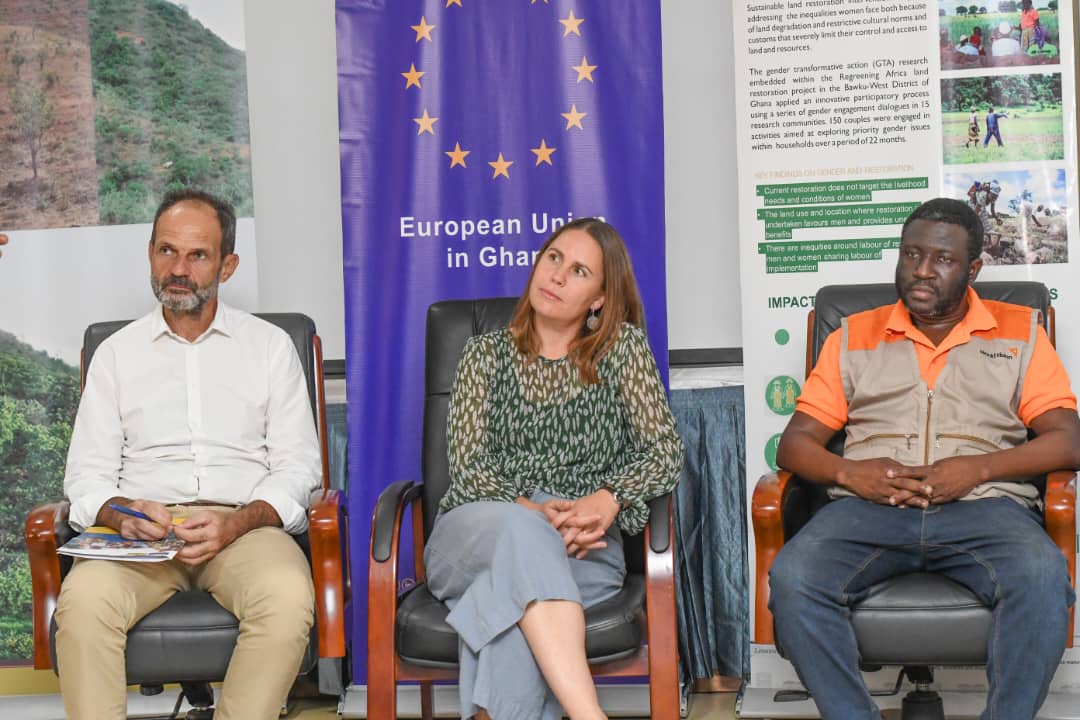
In a bid to combat desertification and restore degraded lands, environmental experts, policymakers, and development organizations have convened in Tamale to launch the second phase of the Regreening Africa Programme. This initiative, funded by the European Union (EU) at an estimated €15 million, aims to enhance climate resilience, improve food security, and create economic opportunities for vulnerable communities across Africa.
The programme’s second phase builds on the achievements of its first implementation (2017-2023), which successfully restored nearly one million hectares of land and supported over 600,000 households across eight African countries. Led by the Center for International Forestry Research and Investment Information and Credit Rating Agency (CIFOR-ICRAF), this phase will continue its work in Ghana, Somalia, Ethiopia, Nigeria, Mali, Senegal, and Niger in collaboration with partners like World Vision, Catholic Relief Services (CRS), CARE, Sahel Eco, and Agronomes & Veterinaires Sans Frontieres (AVSF).
Ghana has been allocated €2 million under this phase, with a focus on the Upper East and Northern Regions, where land degradation and climate change have severely impacted agriculture and livelihoods. The programme seeks to empower smallholder farmers and pastoral communities with sustainable land management practices such as agroforestry, tree planting, soil and water conservation, and Farmer-Managed Natural Regeneration (FMNR).
Mr. Massimo Mina, Head of Cooperation at the EU Delegation to Ghana, highlighted the EU’s commitment to supporting northern Ghana in addressing environmental challenges. “Extreme dry spells, declining tree cover, and reduced soil fertility are major concerns. Our funding will help restore lands, create jobs, and promote market linkages for forest-based products,” he stated.
Stakeholders at the inception workshop emphasized the need for strong policies to sustain restoration efforts. Key discussions focused on securing community access to restored lands, promoting decentralized natural resource management, and resolving conflicts between farmers and pastoralists.
Madam Mieke Bourne, Regreening Africa Programme and Stakeholder Engagement Lead at CIFOR-ICRAF, underscored the need for targeted interventions. “We are expanding on proven restoration practices while addressing gaps such as integrating pastoral areas, improving access to quality tree-planting materials, and strengthening regreening-linked value chains,” she noted.
Development partners are optimistic about the programme’s impact. Mr. Maxwell Amedi, Food Security and Resilience Technical Programme Manager for World Vision Ghana, emphasized the broader vision. “We aim to scale up interventions, build strong linkages, and establish evidence-based strategies to enhance climate change resilience across the region.”
Mr. Edward Akunyagra, Programme Director for Agriculture and Livelihoods at CRS Ghana, reinforced the urgency of action. “This initiative is not just about planting trees—it’s about restoring ecosystems, securing livelihoods, and ensuring a sustainable future for generations to come,” he said.
With climate change posing increasing threats to agriculture and rural economies, the Regreening Africa Programme offers a lifeline for communities struggling with land degradation. Through collective action, Ghana and other participating nations are taking bold steps toward restoring their landscapes and fostering long-term resilience.






