
















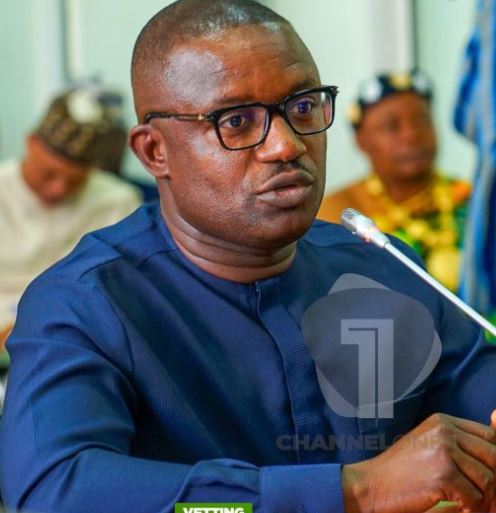
The Minister for Energy and Green Transition, John Jinapor, has reiterated his strong support for utilizing gold-backed foreign exchange (forex) as a strategic tool to strengthen Ghana’s economy.
Speaking on JoyNews’ PM Express on Tuesday, March 18, Jinapor emphasized that leveraging gold reserves could provide much-needed financial stability, particularly benefiting Bulk Distribution Companies (BDCs), Independent Power Producers (IPPs), and other key economic sectors.
“I fully endorse the purchase of gold and using that forex to backstop not just the BDCs, but even the IPPs and other critical sectors of the economy, in order to stabilize the currency and bring about a high level of predictability,” he stated.
He argued that this approach would help the government better control forex inflows, ensuring a more structured and efficient economic system. However, he also acknowledged inefficiencies in previous policies, particularly the over-involvement of middlemen, which often led to financial losses.
To address these issues, the Minister highlighted the importance of integrating private sector stakeholders such as BDCs and Oil Marketing Companies (OMCs) into the process while eliminating unnecessary intermediaries.
“…You want to bring in the private sector players, the BDCs and the OMCS, around the table, so that there is a high level of transparency,” Jinapor noted.
He further revealed that the gold purchase policy has been temporarily suspended to allow for a thorough review. A joint committee, co-chaired by the Deputy Minister of Finance and the Deputy Minister of Energy, is currently working on a roadmap to ensure a more sustainable and transparent system that benefits both the government and private sector players.
Reflecting on past economic missteps, Jinapor pointed out that the previous administration’s handling of the policy resulted in significant financial setbacks, with the Bank of Ghana incurring losses estimated at nearly a billion Ghanaian cedis.
“So far, our record shows that the Bank of Ghana incurred huge losses, almost about a billion thereabouts. And so you might satisfy one arm, but then it’s been taken through the other arm. We don’t want that. We want a workable, efficient system that protects both government and private sector players and makes that forex available,” he explained.
The Minister assured that moving forward, the revised policy will prioritize accountability, efficiency, and long-term economic sustainability, ensuring that Ghana’s forex reserves are managed in a way that strengthens key sectors and prevents financial vulnerabilities.






